Follow Us on Google
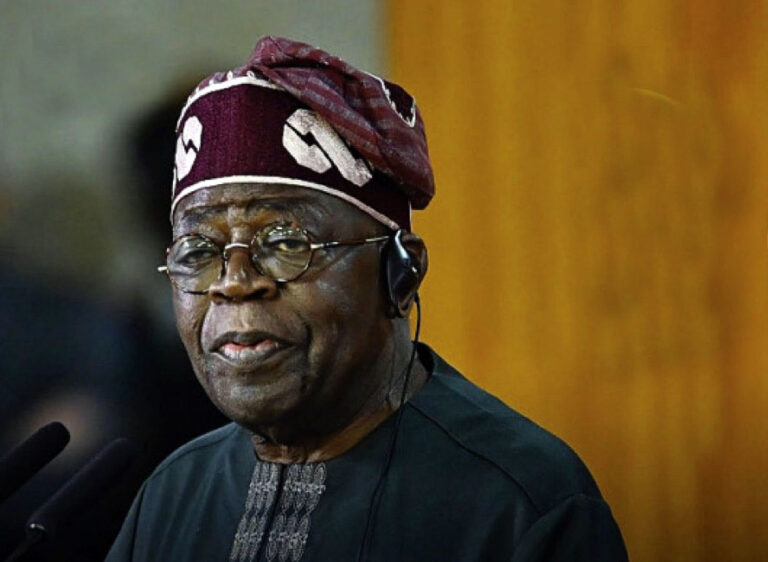
President Bola Tinubu last Wednesday made an impassioned appeal to Nigerians to ‘forgive’ him if he had “sinned against them”. It was a day Christian and Muslim faithful began this year’s Lenten and Ramadan season. It’s one of the rare occasions such fasting period would coincide. While asking for forgiveness for any perceived wrongdoing, Tinubu urged Nigerians to embrace unity, peace, and moral renewal. He noted that the overlap between Lent and Ramadan this year should serve as a reminder of shared values.
Ordinarily, a leader asking for ‘forgiveness’ entails an admission of guilt. It follows the path of reconciliation and contrition if the leader ‘sins no more’. But, I’m not too sure if President Tinubu understands what apologies can and cannot do before forgiveness is sought and granted. True peace and unity come before forgiveness is given or received. I am not trying to sound preachy here, but this is how it works. Barbara Kellerman, a professor of Public Leadership at Harvard’s John F. Kennedy School of Government in Cambridge, Massachusetts, USA, has written extensively on the sort of forgiveness President Tinubu is asking from Nigerians for perceived “sin against them”.
In her research published in the Harvard Business Review, April 2006, she writes that “a leader’s apology is a performance in which every expression matters and every word becomes part of the public record”. This, she says, will help a leader avoid both “foolhardy stonewalling and unnecessary contrition”. The crux of the matter is this: when we wrong someone, even unintentionally, we are expected to apologise. The person we hurt feels entitled to an admission of error and an expression of regret. To ameliorate the situation, the offender says, “I’m sorry”, and perhaps makes restitution.
According to Kellerman, for leaders, the circumstances are different. This is because they are responsible not only for their own behaviour but also for that of their followers, who might number in their thousands or millions.
The degree of damage for which forgiveness is sought, is another issue of concern. Undoubtedly, President Tinubu and his party – the All Progressives (Congress)- have hurt Nigeria and the citizens much more than any leader or party had done in our recent history. The hurt is so severe and painful like pouring acid on a festering wound. A series of ill-advised policies have ripped people and livelihoods apart, crushed their purchasing power and threw millions into extreme poverty. Today, national debt has reached all-time high of N153trn from N87trn that Tinubu inherited on assumption of office May 29, 2023.
The hardship that has been the lot of millions of Nigerians can be compared to what Rehoboam, King Solomon’s son unleashed on the people of Israel during his reign. The gravity of the sin that any apology and forgiveness will require goes beyond the level of the individual but also at the level of the institutions that have suffered collateral damage as a result of the leader’s unconscionable errors. In the last three years of Tinubu presidency, the meaning of democracy in Nigeria has been devalued like the currency itself. Our democracy no longer guarantees legitimacy. Apathy and disillusionment have set in. Despair has supplanted hope in Nigeria. Elections no longer offer valid choices. People’s votes no longer count. Election Day is gradually becoming a mere fulfillment of ‘all righteousness’.
The worse may be ahead as we approach 2027. In his treatise, “Mea Culpa: A Sociology of Apology and Reconciliation”, Nicholas Tavuchis, writes that apologies speak to acts that cannot be undone, but cannot go unnoticed without compromising the current and future relationships. The question as it relates to Tinubu is: Do you teach the paths of the forest to an old gorilla?
Tinubu knows what he’s doing. He feels he’s too big to fail. He is an ambitious, cynical political player adept at amassing power. He has ‘conquered’ Nigeria. The mass defections to APC is not for nothing. It’s driven by the “fear factor”. That fear is the emergence of a ‘strongman’ in Nigerian politics.
The ‘forgiveness” he asked for any perceived “sin” committed, is what manipulative leaders do when they calculate the costs of not doing so. As Kellerman explains, “Leaders will apologise if and when they calculate that staying silent threatens a current and future relationship” between them and one or more key constituencies – followers, stakeholders or the public.
Other News
Tinubu’s abject apology at this period of Lenten and Ramadan season is contrived. It came from the head, not from the heart. It will be hard to receive forgiveness. A good apology must be seen as genuine when the ‘sinner’ shows full remorse and offers a heartfelt promise not to commit the ‘sin’ again. Tinubu and APC have refused to acknowledge their mistakes, missteps and wrongdoings against Nigerians. Instead, more ‘sins’ are being committed without regrets. Let’s take the controversial Electoral Amendment Bill 2026, as an example. The lightning speed with which Tinubu signed it into law last week, despite protests and heated objections in both chambers of the National Assembly, raises serious concerns about transparency, democratic consultation, and respect for the will of Nigerian people.
Though several sections of the Electoral Act 2026 are of concern, at the centre of the present controversy is real-time transmission of election results from the polling units. Remember that Tinubu was until he became president reported to be an advocate of real-time transmission of election results.
Ahead of 2015 election, Tinubu said real-time transmission of results was long overdue. He argued then that e-transmission of results would be a safeguard against manipulation and undue political interference. And you begin to ask, why the sudden change? Fact is, Tinubu has never been a genuine democrat. No genuine democrat will do what he did with the Electoral Amendment Act 2026. Even Muhammadu Buhari in his unhinged moment, showed a little sense thoughtfulness. But not with this president. That’s why power reveals more than it hides.
What unfolded before our very eyes last week came close to what American historian and presidential biographer, Robert A. Caro wrote about Lyndon Johnson(36th U.S. President). In the words of Caro, “when a leader gets enough power, when he becomes president, of his country, then we can see how he always wanted to treat people, and we can also see – by watching what he does with the power he has desperately accumulated”. In spite of ‘conquering’ about 30 states, is President Tinubu and APC afraid of a possible defeat in 2027? What we are seeing now is an archetypical politician that Tinubu is. He trades favours and flattery in generous measures.
With opposition parties in disarray as a result of government’s sleight of hand, the judiciary compromised, the National Assembly now a lap dog, and the electoral umpire very suspect ahead of 2027, the rejection real-time transmission of election results is not only a setback for electoral transparency and public confidence in the integrity of the process, it’s a signal that 2027 elections may be a charade. Reading the biography of Lyndon Johnson by Caro, I see a bit of Tinubu’s style. Lyndon Johnson once said, “I’m just like a fox. I can see the jugular in any man and go for it”.
When people call Tinubu the “Jagaban”, they are describing a politician who can deploy enormous political power to achieve whatever he wants, even at the detriment of the country, the people and democratic institutions. Imagine Tinubu applauding Wike for his “political muscles” for APC sweep in last Saturday’s Federal Capital Territory(FCT) election. A praise for a man who ordered a total lock down of Abuja because of municipal election and deployed a shameless military and police team to enforce the order. Who says our democracy is not already in grave danger? Tinubu has also figured out the weaknesses of members of the National Assembly. He is using that against them to achieve personal goals.
I do not think Tinubu sought power to accomplish real goals for Nigeria and Nigerians. If you assess his economic reforms so far, you will see a pattern that runs through all of them. The drive for power seems inseparable from what he wanted power all along. In some ways, power for him means being able to bend people to his will. He has succeeded in accomplishing that goal. What remains? 2027 will tell the rest of the story where Nigeria be, going forward. Taken a whole, I don’t know exactly how history will judge Tinubu as a leader and as President of Nigeria. But I guess that when historians will write about his presidency, it will be with kind and harsh words. The storyline for his presidency will drip with harsh, and flattery in equal measures.
For me, Tinubu presidency is a case study of lessons in power, especially for students doing research in power and leadership. It’s an insight about the nature of power, the complexity of ambition and the nuanced picture of leadership at the highest level of Nigerian politics. Perhaps more than anything else, Tinubu represents that popular political conversation that, “No one can really lead who does not first acquire power, and no leader can be great who does not know how to use power”. These are the words of Robert Caro. The question is: Why is the combination of the two skills rare for Nigerian political leaders to use to achieve great purposes? The answer is part of the deficits in present administration.