Follow Us on Google
From Obinna Odogwu, Awka
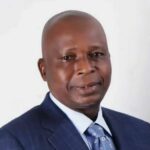
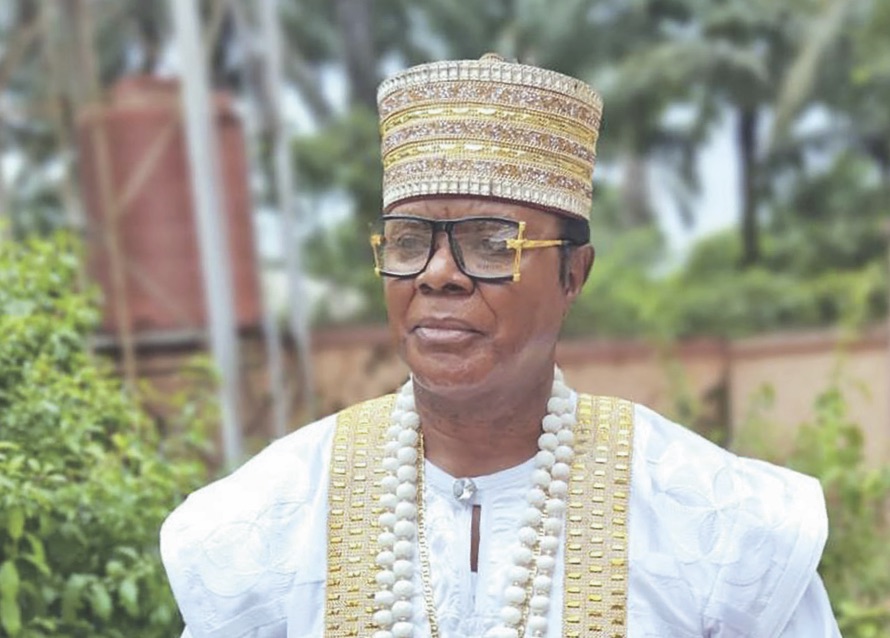
Igwe Chuma Agbala is the traditional ruler of Uke community in Idemili North Local Government Area of Anambra State. He was recently appointed Secretary of the Anambra State Traditional Rulers’ Council (ASTRC) by the governor, Prof Chukwuma Soludo.
A quantity surveyor by training, Igwe Agbala is the Principal Partner at Procost Consultants, a consortium of quantity surveyors, architects, and engineers.
In this interview, he spoke on a number of issues.
What can you tell us about your emergence as the secretary of Anambra State Traditional Rulers’ Council (ASTRC)? And how do you intend to use your new position to foster a peaceful relationship between the Anambra monarchy and the government?
Well, I will start from the beginning. I was given the certificate of recognition as Igwe of Uke community in Idemili North Local Government Area in 2016 and since then I have been conducting myself properly and working for the community and the government as the Igwe of my community. Within two or three years, I became the chairman of Idemili North Traditional Rulers’ Council. I was there for some time and by the time I was seven or eight years on the throne, I became the chairman of Idemili North and South Traditional Rulers’ Forum. Then, the same period I became the Vice-Chairman of the Anambra Central Senatorial Zone Traditional Rulers’ Council. And just this year, on January 5 as the letter read, I was appointed by the governor as the secretary of the newly reconstituted Anambra State Traditional Rulers’ Council. So, my emergence is that the former council was dissolved by the government of Prof. Chukwuma Soludo and restructured to encompass all the traditional rulers in the state. Hitherto, it was the selected people that were the members of the council. But after the restructuring by the government via the Anambra State Traditional Rulers’ Law of 2024, the council became an embodiment of all the recognised traditional rulers in the state; which means that the council now have the capacity or the number which represents the traditional rulers that are alive. Out of the 189 communities in Anambra State, any traditional ruler that is alive, recognised by the government is a member of this Anambra State Traditional Rulers’ Council. And we hold our meetings once in three months because it is the apex council of the traditional rulers. And down the line you have the traditional rulers’ council for the three senatorial zones – North, Central, and South. They hold their meetings once every two months. And every traditional ruler that is recognised in the zone will be part of that zone. And down to the local governments, you have traditional rulers’ councils in the 21 Local Government Areas of the state. So, from there, issues generate from the grassroots to the apex body which is the Anambra State Traditional Rulers’ Council of which I am the secretary. So, it is zoned. The leadership by this new law is zoned. That is, the chairmanship position for ASTRC is zoned to these three senatorial zones starting from the North. And the North has taken. It has come to the Central Senatorial Zone which is my zone. And the chairman emerges from that and also the secretary. So, the people from the local government presented me or clamoured for me to be secretary; according to them, from my past records, experience and hard work. And the Central Senatorial Zone traditional rulers also unanimously also agreed for me to be appointed secretary. And then, up to the Central – most of the zones approved of it. And that was how the issue, I believe, attracted the attention of the governor and he made his own enquiries and so on and appointed me as the secretary general this year. So, I have assumed office immediately and there we are. And we are poised to make positive changes that will make Anambra State grow and add to the development and progress of the state. That is why I accepted to be part of the new change and the new dispensation.
Now that you’re the secretary of the council, what novel thing are you bringing to the table? What do you plan to do differently?
I have studied the system when I was not the secretary but participating actively in the affairs of the council. So, I observed that the traditional rulers don’t seem to have a voice in some of the activities or issues that pertains to the people from government. It becomes as if we’re not vocal enough to help project the good intentions of the government. So, I intend to work on that by making sure that on most issues where we have meetings, we try and issue out a communiqué showing the minds of the traditional rulers on the issues and giving advice where it is needed. And commending the government where it has done well. That is one. We intend to launch a radio programme where two or three traditional rulers will come and disseminate vital cultural and traditional information to the people, explaining some of the cultures and traditions of the people; asking people to preserve the good ones; and even re-orientating our minds on the core value system of the Igbo man which stems in hard work, truthfulness and transparency, so to say, and emphasising on our commerce and our education because from the look of things, our youths are declining from education, commerce and the core values of hard work; and educating the people on the think home philosophy of the government because our businesses are being destroyed in some states. They will come and say that you have done this or that, and then destroy your business. We will encourage them to come home and invest in commerce and industry. We have the land, the manpower, and the enabling environment to do that. These are the things we will be explaining in such fora and then encouraging our people to do the right thing; informing them, explaining; maybe something like marriage; to discourage them from the ostentatious marriage celebrations, high bride price or funerals; discourage them and align with the government and tell them, let us do these funerals in one day because things are not the same again as in the past. So, we tell them about these things and the funeral law of the state. And encourage our people to enforce them strictly so that we won’t spend many days celebrating the dead and leaving the living. So, we will now emphasise helping one’s brother or sister while they are alive. Help your mother and father while they are alive; not when they die you start spending so much money on their funerals, the same money you failed to give them while they’re alive. You start killing many cows and showing off to people that you’re very wealthy. So, these are the issues we will be telling them and be discussing with them. We will also talk to them about certain issues where we overdo things. It will be a phone-in radio and TV programme. We are on it now and soon it will take off.
Other News
Beyond that, what programmes do you have for the traditional rulers in the state, programmes that will help enhance their capacities in discharging their royal duties?
We have a forum for training and development of the traditional rulers, bringing to their knowledge what and what is expected of them in their conducts, in their communities and elsewhere; on how they carry and comport themselves and how they relate with people. This will be done in the form of annual seminars. It can be once or twice. And we intend to partner with the private organisation so that we won’t depend on the government to fund everything. We will move on to the private people also in a Public Private Partnership approach. These are the issues so that the Igwes will be able to live above board. Those seminars, we will talk about morals, comportment, progress and development in our communities. We’ll talk on peace approach, management and every other thing. We will make them active catalysts in promoting progress and development in their communities. We have been doing it but now we will put more vigour to it so that we’ll be able to discourage the bad elements and channel them to the things of this world like computer literacy.
Since you became the traditional ruler of Uke community, what positive changes have you brought to the community?
When I became the traditional ruler, the first thing I did was to sue for peace amongst the various villages and so on. Some have yielded results; some are still lingering. Two, I looked at the community and saw that the festivals that the community has are divided between the Christians and the pagans. They have pagan festivals and the Christian festivals. For the Christian festivals, you have Easter, Christmas and others. For the pagans, you have Uzo iyi, Emem Eke, etc. And there is apathy between the two. When the pagans are doing their own, the Christians will not partake. And when the Christians are doing their own, the pagans will not partake. But there is this desire to have a festival that will encompass everybody; so that when we are having it, everybody, both the Christians and the pagans will come together. And from there we generate developmental visions and templates; because when everybody comes together for a festival there will be mutual interaction. And when there is mutual interaction we find out that our people will now know, start marrying one another because you cannot marry somebody you have not seen. What we discovered in the community was that our beautiful and good girls are being married to other states – Ebonyi, Enugu, Abia, Imo, and so on. And our males also marry from those areas, because they are the people they see in the township. But we need our people to be marrying our people so that the culture and tradition of the people will still be conserved. Because sometimes when you marry from another place, they would want to infuse their culture into your own. So, this is a way to encourage marriages amongst our youths, the males and the females. And then from that festival, we will be able to talk about developments, the areas we need them. And launch for such things like roads, markets, town halls and so on. So, we do fundraising and from there we’ve been building it. Of course, when you have that festival you make people of various strata attend. Masquerades will be there; they will be dancing and entertaining people. Those who want to come and watch the masquerades will come. Those who are blessed, who want to come and help the community and in doing financial launching of projects will come; and those we invited will also come. And from there we invite commissioners to talk to us, Commissioner for Works or Local Government to talk to us on issues of interest. And even the governor. And when we use it to attract the governor he can do a road for us. So, these are the visions we have to get the people together. We call it Uke Day Celebration celebrated every December which is devoid of any religious inclination. So, if you see masquerades there, you know that they are there for entertainment. And some people come for sightseeing or enjoyment or recreation. And others come for serious business like making donation for the commencement of new projects. We use that forum again to encourage our people; give them awards and certificates for those who did well in various fields of endeavour so that others will emulate them. So, that was the first thing I did.
Before emerging the traditional ruler of your town, were there things you did for them or development projects you executed to move the community forward?
I worked in the government. I retired as a director in the Ministry of Housing. I used my position then to attract some things for the community. I attracted some road works. I attracted from the Federal Government, the nursery and primary school that was built and equipped with all facilities for the nursery schools. And I had participated in all talks to approach the government to help us; and have been talking to people to come home and invest in our community. Now as the traditional ruler, I am still working hard for the development of my community. So, I have been trying to galvanise our people into future development and we are doing it and we are succeeding. We have provided a peaceful atmosphere for many to build roads. Some have built roads, asphalted roads with streetlights. One built one kilometre, the other one is building three kilometres and so on. Those in the diaspora built an ultramodern health centre. The other one has built a town hall for their village. So, we have been encouraging them and assisting them; giving them an enabling environment to move on. And I have been brokering peace among the villages; sometimes there is acrimony and I invite them. Those who go to the police, I go to the police station to take back the case and settle it amicably. In that case, I use that position to adjudicate on such matters. So, that is what I have been doing. I have settled so many of them. Even for families that defy solutions, God is helping me on that side. And my council members are learned people that are well versed because I have lawyers there; doctors, engineers and strong businessmen with experience. And I have those that are versatile in tradition and culture. So, we form a formidable team to settle any dispute that comes our way. So, that is the way we have been moving. So far, so good.
Governor Soludo would be sworn in on March 17 for his second term. How would you rate his last four years in office? Are you satisfied with his performance so far?
Soludo has lived up to expectations in the eyes of the people because he has tackled so many projects in so many fields. If you want to score him along the different areas, you see that he scored very highly. Let me start with housing infrastructure. He completed this new Government House that was moribund for more than 30 years. It was started by the then Governor Mbadinuju and since then it was abandoned for over 30 years. He came and took up the challenge and completed it and broke the jinx because the government, since the creation of the state, had been housed in a road camp of the Lodigiani Nigeria Ltd, a highway construction company that constructed the Enugu – Onitsha Expressway. It was a camp, a makeshift camp. And that was where the Government House of Anambra State was for over 30 years. And it was becoming an eyesore. But now, he has completed this one and it is a beauty to watch. I think it is the best in Nigeria or West Africa and, even, the aerial view is magnificent. And I commend him for that. He has packed into it, breaking the jinx of staying in a ramshackle government house. So, that’s one of the things that I commend him for because I am a quantity surveyor and I know about cost construction. I retired as director in the Ministry of Works, Housing and Urban Development. I was involved in the initial planning and construction of the project. I didn’t know he would complete that project because by the time he came, the prices of building materials had skyrocketed much more above the initial contract sum. And I was wondering how he would make it. I even advised that he procure some loans to complete it but he never procured any loan for that project and completed it. So, I think he did excellently well there. Other housing projects have equally been done. The Solution Innovation District (SID) will soon be completed. Then if you come to roads, he concentrated on that area too; and did wonderfully well because I am impressed by the way he planned the road network, linking all the major cities with dual carriage express roads so that when you migrate from the roads in the hinterlands and you join the dual carriageways, you get to the city you want to get to. If you want to go from Awka to Ekwulobia, in 20 minutes you’re there. If you want to go from Agulu to Nnewi, in 25 minutes you are there because these are the dual carriage ways he has been planting in strategic places. Just like if you want to go to Onitsha from Awka, you enter the expressway and in a few minutes you are there. He has also planted flyovers where they are very, very necessary. With those flyovers, gridlocks on our roads will be a thing of the past. So, he has done wonderfully well on roads. If you assess him in health, he has also done very well. From the inception of pregnancy, the government takes over the pregnant woman. The antenatal care is free; delivery is free even with caesarean operation. That child, when he grows up, from primary school to secondary school up to SS3 is free; which means from inception to SS3, the government is paying for every child in Anambra State. And that makes some women, when they get pregnant, rush to Anambra State to partake in this good gesture of Prof. Chukwuma Soludo. It is a wonderful thing. He has employed many qualified doctors, nurses, lab scientists and other health professionals so that government hospitals will not be empty again. And our hospitals and rural health centres are now being well managed and funded. So, in that area he has done very well. If you come to social life, the Solution Fun City in the heart of Awka metropolis is attracting visitors in thousands every day. And the social life of the people living in Awka has improved. If you go there on weekends you wonder if this is Anambra or not because of the influx of people and the entertainment therein. And he has made impacts in so many other areas. So, he has done very well and I rate him very highly.
So, in what areas would you want him to pay more attention to in the next four years as he begins his second term?
I would want him to improve more on these areas and consolidate on them because continuity is the best form of development. If you develop, you consolidate, you maintain and you improve on them. Then, there are areas he earmarked which fascinates me in particular. It is about the rail line system he has mapped out in Anambra State; the first of its kind in this area. It would help the movement of goods and services at a very cheap rate. So, that one we want to see it done. It will be a novel thing in Anambra State. It will help bring down the prices of goods and items in the state because transportation costs are adding very highly to the price of goods in all the states because of the price of petrol. So, when the price of the transportation of goods is low, then the prices of the goods will be low too. And that will make Anambra State one of the cheapest states to live in.