Follow Us on Google

By Lukman Olabiyi
The race for the 2027 presidential election is set to witness a major policy showdown as the Political Intelligence Group (PIG) of Politico.ng has announced plans to organise a three-hour presidential debate involving six candidates on January 10 at the Transcorp Hilton, Abuja.
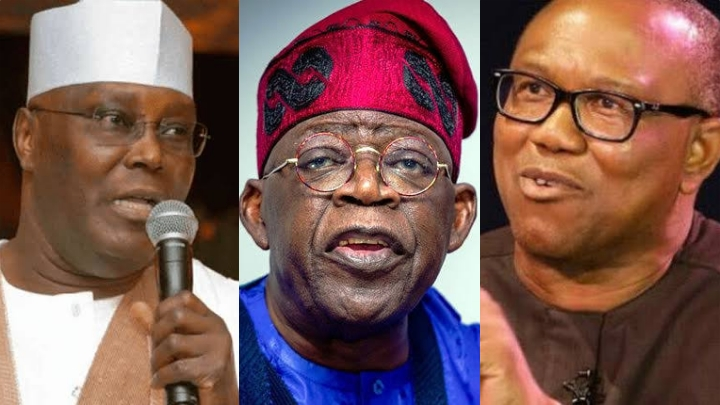
The candidates expected to participate are President Bola Tinubu of the All Progressives Congress (APC), Atiku Abubakar of the African Democratic Congress (ADC), Peter Obi of the Nigeria Democratic Congress (NDC), Seyi Makinde of the Allied Peoples Movement (APM), Donald Duke of the Peoples Redemption Party (PRP) and Adewole Adebayo of the Social Democratic Party (SDP).
The convener of the group, Lai Omotola, who disclosed this at a press conference in Maryland, Lagos, on Friday, said the debate was designed to provide Nigerians with an opportunity to scrutinise the candidates, compare their policy proposals and assess their preparedness to lead the country.
He described the 2027 general election as potentially the most consequential in Nigeria’s history, arguing that presidential debates should become a more consistent feature of the country’s democratic and electoral process.
Omotola lamented the limited history of presidential debates in Nigeria, recalling that the first was held in 1993 between the presidential candidates of the Social Democratic Party (SDP), Chief MKO Abiola, and the National Republican Convention (NRC), Alhaji Bashir Tofa.
He said only eight presidential debates had been held since then, describing the development as a setback to the culture of issue-based political engagement and informed electoral choices.
According to him, the proposed debate would give undecided voters an opportunity to engage with the candidates’ ideas, compare their positions on critical national issues and subject their campaign promises to public scrutiny.
He added that the exercise would also test the candidates’ ability to make decisions under pressure, respond to criticism and demonstrate their leadership capacity.
“Presidential debates are important because they allow yet-to-be-decided voters to see candidates directly, compare them and subject their policies and campaign promises to scrutiny,” he said.
Omotola said the debate would promote accountability and transparency, bring pressing national policy issues to the forefront and enable candidates to reach voters they might otherwise not have the opportunity to engage.
On the format, he explained that the three-hour programme would be divided into five segments, featuring different participation arrangements, including standing, semi-seated and seated sessions, as well as interactions with members of the audience through virtual platforms.
He said each candidate would have five minutes to respond to questions and two minutes for rebuttals.
The convener maintained that the organisers had developed the format in line with international best practices, expressing optimism that the event would attract international attention.
To ensure transparency and credibility, he disclosed that five representatives nominated by each participating candidate would serve on five committees established to oversee different aspects of the debate.
On the candidates’ commitment, Omotola said formal invitations had been sent to all six contenders, with only two confirming their willingness to participate as of Thursday.
“Official invitations have been sent to all six candidates. They are all aware of the proposed debate, and as of yesterday, two of the candidates had confirmed their willingness to participate,” he said.
He disclosed that the organisers would begin personally delivering the invitations to the remaining candidates from next week.
According to him, the visits would also provide an opportunity to explain the debate’s modalities, listen to concerns from the candidates and explore possible adjustments to address them.
Omotola, however, cautioned against speculating about the willingness or capacity of any candidate to participate, insisting that the debate would not involve physically demanding activities.
He explained that the event would take place in a controlled indoor environment rather than an open-air venue, adding that the real test would be the candidates’ ability to respond convincingly to challenging questions.
He said the questions would require serious preparation, a firm understanding of Nigeria’s policy challenges and practical solutions to the country’s problems.
“These are not ordinary questions that candidates can approach casually. Anyone who intends to perform well in the debate must begin preparing from the outset,” he stated.
He stressed that candidates would be expected to demonstrate a sound grasp of the issues, relevant experience and clear implementation strategies for their campaign promises.
“It will not be enough for someone to simply declare, ‘I want to do this’ or ‘I want to do that.’ They must demonstrate how they intend to achieve those objectives,” he added.
On the issues to be examined, Omotola identified the economy, justice and constitutional matters, education, infrastructure and security as the five major thematic areas.
He said other critical sectors, including health and technology, would also feature in the discussions.
The convener further explained that the selection of the six candidates was guided by established criteria rather than arbitrary considerations, noting that the large number of presidential aspirants and the limited time available made it necessary to adopt specific benchmarks.
He said the organisers assessed the candidates’ professional and leadership experience, public engagement through town hall meetings, preparedness of their manifestos and popularity, among other considerations.
Omotola urged Nigerians to approach the 2027 elections with greater attention to policy choices, leadership capacity and the practical solutions offered by those seeking public office.
He warned against political disorder, violence and confusion, arguing that after 66 years of independence, the country should have developed a more deliberate approach to choosing its leaders.
“We should be clear in mind and deed to know the policies that will work and those that will not work. We should be able to know the best man for the job and not jump at every banana thrown at us,” he said.
He warned that Nigeria could no longer afford leadership choices driven by personal interests at the expense of national development.
Omotola said the proposed debate was ultimately aimed at strengthening democratic accountability and promoting an informed electoral process in which candidates would be assessed on the quality of their ideas, understanding of national challenges and capacity to deliver on their promises.