Follow Us on Google
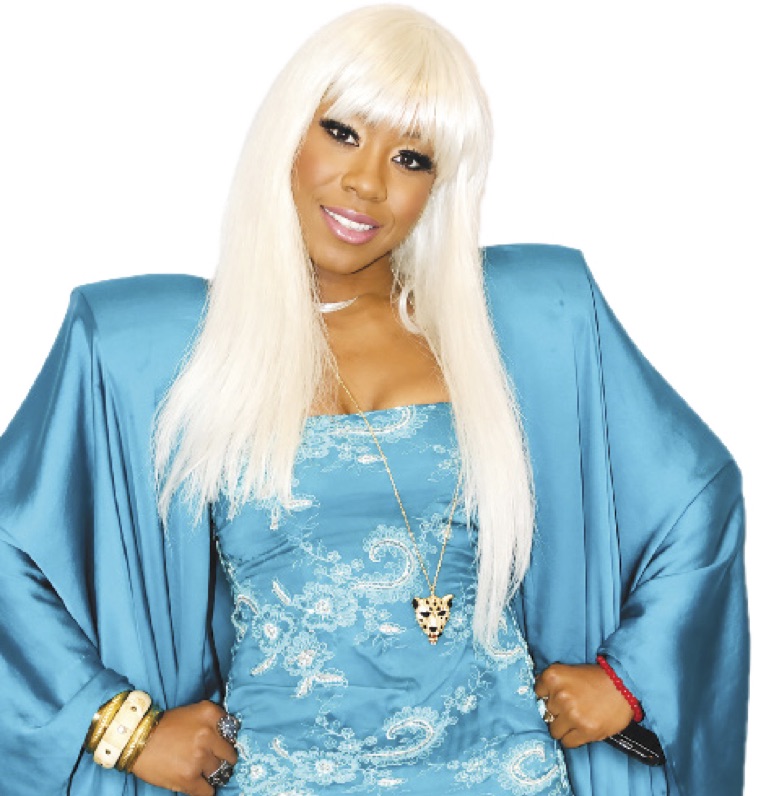
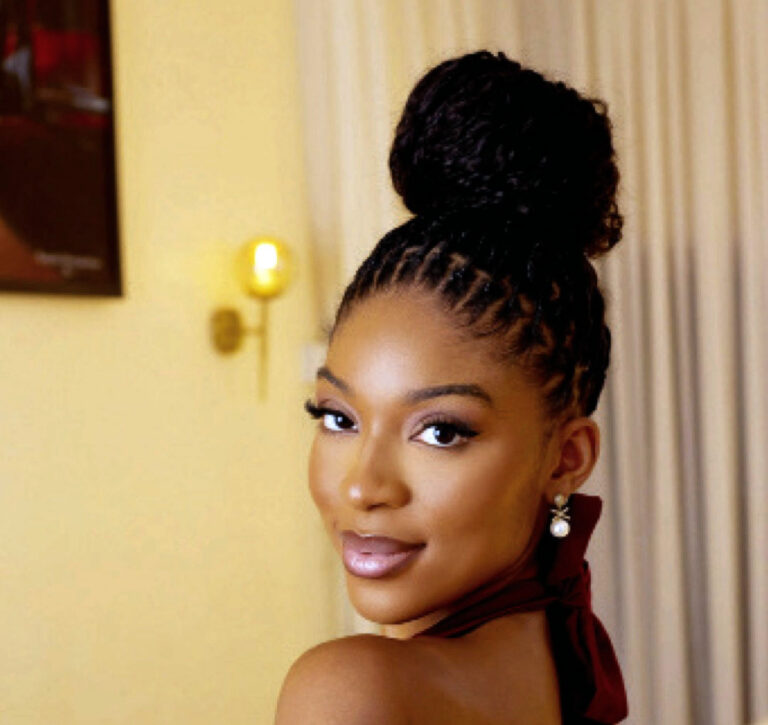
Once a familiar face on Nigeria’s music scene, May Odegbami, popularly known as May7ven, has spent the past decade largely out of the spotlight, focusing on behind-the-scenes work and raising her family.
In this interview with Sunday Sun, the singer, dancer and self-styled “Queen of Afrobeats” reflects on her pioneering years in the industry, the challenges of being an independent female artiste, her role in promoting Afrobeats globally, and her plans to return to music.
Enjoy!
Your stage name, May7ven, is sort of unique. How did come about it?
I was born on May 7, and I have always made a big deal about my birthday. When I decided to become a professional artiste and was preparing to release my first single, my younger sister pointed out that I talked about my birthday a lot.
Seven is also a very significant number in our family. When my dad played football, his jersey number was seven. We lived in a house numbered seven, and my sister was also born on the seventh. My brother was supposed to be born on the seventh, but he arrived on the eighth. Considering how significant the number seven was to our family, my youngest sister, Funmi Odegbami, suggested that my stage name should be May7ven. That was how the name came about.
What has been happening with your music career?
I was born a musician, and I will die a musician. Music never left me. I did everything I wanted to do early in my career. I experimented and innovated, and I was among the first to do many great things in the industry.
Being first doesn’t necessarily mean being the biggest, but I was determined to be the best. I have always strived for excellence in everything I do.
Being one of the pioneers also meant I had to learn many hard lessons in the industry, which those who came after me could learn from. I say this with all my heart: when I started, there was very little basic infrastructure for Nigerian artistes. There was hardly any structure to support Nigerian music stars.
When I started singing, there were not many female music stars. We had Weird MC. Goldie wasn’t in the music industry yet; she came later. Sasha was there, but most female artistes at the time were rappers.
So, when I entered the Nigerian music scene as a sexy female singer, it was unlike anything else. I was winning awards for my music videos across Africa, not just in Nigeria. I was also among the first female artistes to gain exposure on MTV Base and other mainstream platforms.
I have done many great things in the industry. But one challenge of being an innovator is that you are not always the immediate beneficiary of the path you helped create.
I had to learn about marketing and public relations and how to operate on a big stage. Eventually, I established my own marketing and public relations firm to market myself. I also started working with other artistes, creatives and DJs.
I spent a lot of time running my music career alongside marketing and PR projects and advertising campaigns for some of the best artistes in the world, who are now well known. I have been one of the forces behind some of the great movements in the industry, particularly Afrobeats, including its development, naming, marketing and branding internationally.
That was one of my callings. So, making music took a back seat for many years.
I have not officially released anything for about 10 years, but I am still involved in the marketing side of music. I sometimes get invitations to perform at shows, but I don’t do it.
My son is also a musician now, and I’ll be returning to creating and releasing music very soon.
It has taken me a long time because I was also in a relationship with a gentleman who suffered a stroke. It was difficult to balance my career, help him through his recovery, and manage both his career and mine.
It wasn’t easy going into the studio to make music because making music is my happy place, and at that point, I didn’t feel like being happy.
So, those are some of the difficult and positive experiences that made me step back from making music for all these years.
How did you navigate the challenges of becoming a star at a time when the industry was largely male-dominated?
I didn’t really see them as challenges back then because there were no templates to follow. I wasn’t looking at other female artistes and trying to figure out how they had made it work. Unlike those who came after me and could say, “May7ven did it so that I can do it,” there were not many female artistes in my time to look up to.
So, in a way, I was happy to be on the journey.
Not many female musicians appeared on Globacom and MTN music shows. It was usually myself and Kaffy who were paving the way in the worlds of music and dance. I was both a singer and dancer, so I occupied a unique space as an artiste at the time, and I loved it.
I loved P-Square, who put me on several stages and even brought me on their tour bus. I was the first female artiste to open for D’banj in London for two consecutive years.
At one point, I was one of the most-followed Nigerian music artistes on social media, at a time when Nigerian music had not yet exploded globally. We didn’t have the kind of exposure artistes enjoy today because social media had not become what it is now.
There were also financial challenges. I was already a mother before my career took off. I had three children and was married before I launched my career, so I had to fund the career myself.
In music, you don’t necessarily make money for many years. You pour money into it as an investment, and that was one of the sacrifices I had to make.
I was an independent artiste; I wasn’t signed to a record label. That was a challenge because I was constantly raising money to fund different aspects of my career.
If you want to set the bar and be among the best in the field, you have to look like you are doing great things. I didn’t just want to look like I was doing something; I wanted to be an ultimate creative and a great artiste.
So, I worked hard to produce good music videos at the time. I invested in tours, budgets, production, choreography, costumes and the energy I put into my stage performances. I worked hard to make sure everything was excellent.
So, there were relationship challenges as well as financial challenges.
For a while, we have not heard much from you, either musically or personally. What have you been up to?
Yes, I have been focusing on everything else apart from making music. I decided to work behind the scenes. I think it is a great position because you can actually do a lot more. There is pressure when you are in front of the scenes. You make music, appear on television and go on tours, but the real work also happens behind the scenes.
Behind the scenes is where you work and make power moves silently. I like being silent when it comes to my business. The best moves are silent moves.
I learned that from the way chess is played and applied it to business. You don’t know what I am thinking, what I am planning or what I am working on.
How many children do you have, and is any of them into music?
I have three children, and my youngest son is now a popular musician. My eldest son is more of a bookworm and is also an influencer. My daughter is in the beauty industry. She has her own nail and hair salon.
My youngest son is a music producer, rap artiste, and influencer.
Your dad was a famous footballer back in the day. How much did he support your music career, especially at a time when many parents wanted their children, particularly girls, to study medicine or law?
My parents were very supportive. My dad, especially, was extremely supportive of my music career. My dad is also creative. After football, he went straight into the media and started his own company, Worldwide Sports. So, he introduced me to television, presenting and producing.
My mum was also very supportive. She is one of the greatest women in the world. Whenever I said, “Mum, please hold the kids; I am going to the studio,” she was always there for me. She would say, “Yes, let’s do it.” She always wanted me to be okay and allowed me to do what I needed to do.
I am blessed to have such supportive parents. To this day, my dad remains my biggest fan.
He wanted me to do music and would even give me songs to write. He also introduced me to Afrobeats.
The marketing idea came from my dad and Mr Wale Akinboboye. At the time, I was focused on becoming an international artiste, and they told me I needed to infuse our culture into my music.
They introduced me to the Gorillas, who were working with Tony Allen around 2003. My dad wanted me to name the kind of music I was making.
Back then, P-Square called their genre R&B, while D’banj called his Afro-pop. Mr Wale Akinboboye suggested that we call mine “AframB”, meaning African R&B.
They invited me and another DJ to Nigeria to perform, establish AframB, and find a way to trademark it. But the team felt the name did not sound like something they could market.
After that, they introduced me to the Gorillas, who were working with Tony Allen at the time. Tony Allen was Fela Anikulapo-Kuti’s drummer, and Afrobeat was the genre they were associated with. They practically added an “s” to make it “Afrobeats”.
That is the story of how Nigerian beats became what they are today, as I experienced it.
The creation of the Afrobeats concept involved my dad, Mr Wale Akinboboye, the DJ who said AframB sounded silly, and me. That is history.
From there, we created Afrobeats radio and the Afrobeats festival. That is part of our history, and our children need to know it.
I am the Queen of Afrobeats, and no one can take that away from us.
You have not been to Nigeria in a while. Are you planning to return and rekindle your music career?
I used to come to Nigeria twice a year, up until about two years ago. I have been extremely busy working with my son. I d3am praying and hoping that we will come soon. There are also plans to relaunch my music career.
What are your thoughts on the Nigerian music industry today?
The Nigerian music industry is doing well. We have innovated in many ways, but there is still a lack of creativity in some areas.
People are often waiting for someone to take the lead before they adopt the idea and make it their own. Look at Amapiano, for instance, and even Afrobeats. Not enough people are willing to step out and create something different.
Everyone seems to copy each other, and that is where the industry is at the moment. I don’t think the industry is doing as well as it could.
The big stars at the top are doing well and filling stadiums. The industry has improved significantly over the past 15 years, but we cannot copy and paste forever.
I am coming back to the industry anyway. It is time to show them how to think outside the box in the music space.
We have to create more of our own sounds and our own movements.
Have you ever wished your music had gained momentum now rather than when you started?
No. My music did what it was supposed to do back then, which was to pave the way and inspire other artistes.
Many African artistes never knew they could appear on MTV Base until they saw artistes like myself and P-Square. There were no dancers wearing gele on the front covers of magazines except me at the time. I tried to put Africa into my songs and into the way I dressed. I was simply trying, in my own crazy way, to introduce Africa to the world.