Follow Us on Google
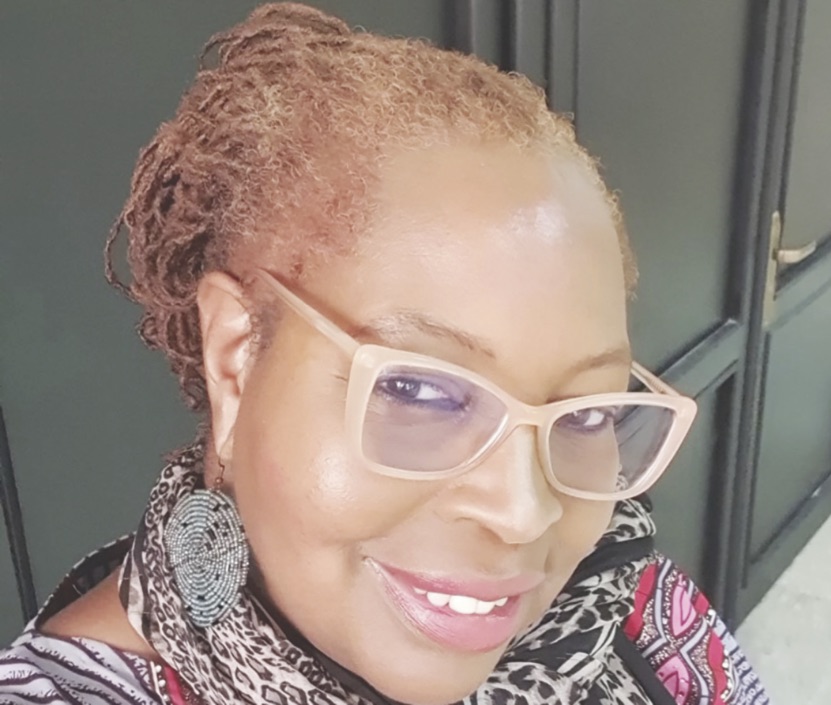
When I came to Nigeria, there were no women in the entertainment industry at all. That, for me, really stood out pretty profoundly. So I created some platforms, really trying to redress that whole phenomenon. It’s passion, just a sense of duty to really give back.
By Vivian Onyebukwa
Dr Ngozi Omambala, Managing Director/CEO of NMO Management Limited is a seasoned promoter and PR specialist who began her career in the United Kingdom as a club promoter and Entertainment Editor of Pride Magazine, one of Europe’s largest selling lifestyle Glossy Magazine for women of colour and Aspire Magazine, before she relocated to Lagos where she establishing NMO Management Limited.
A former head of marketing at MTV Base Africa, with a career history in entertainment, music and publishing spanning over 25 years, Omambala created the LoudNProudLive series in 2011 for major shows in Nigeria.
She is the immediate past chairperson of Lagos Chambers of Commerce and Industry (LCCI) Creative and Entertainment sector, and currently, the Vice Chairman, Nigerian Association of Chambers of Commerce, Industry, Mines, and Agriculture (NACCIMA), Creative Economy.
In this interview, she spoke on the entertainment industry and life generally.
While some people are relocating abroad, you decided to come back from the Uk to stay in Nigeria. What propelled you to do that?
It’s a funny phenomenon. It was a case of when I was in the UK, I was in the entertainment industry there. I worked within radio. I was a magazine Editor. I was doing entertainment events for radio stations. I worked with MTV Base. I came to Nigeria, and I was Head of Marketing for MTV Base. In 2008 when I first came, that was my very first appointment here. So it’s been a progression of bringing the experience I have in Europe and in the U.S. to Nigeria and really starting from scratch. Also, there was a scenario. When I came to Nigeria, there were no women in the entertainment industry at all. That, for me, really stood out pretty profoundly. So I created some platforms, really trying to redress that whole phenomenon. It’s passion, just a sense of duty to really give back. I’m Nigerian, after all. I’m very proud. I’m patriotic. So why wouldn’t I want to invest my resources and my knowledge at home. And I think over the last decade or so, we’ve seen a lot of progress. We’ve seen the industry really rise from the ashes. We’ve seen a lot of women coming into the industry and doing well globally. Only the other day, I was with Tiwa Savage. And she did an amazing performance. When I saw her backstage, we were talking. And she remembered when she first did my platform, Loud and Proud. She was one of the first people to do Loud and Proud when I started. It was a female-only platform. I said that was in 2010. She said, no, it was 2011. So she actually corrected me. But it was just seeing her perform, this magnificent female queen, and doing so well. That’s the kind of satisfaction I get, which is priceless.
What do you think the government can do more to support the creative industry?
I’m not a politician, but I’m a creative. Sometimes politics gets immersed into the creative sector. All I can say is that it’s never too late to join the train.
And for me, so far the administration has been very, very supportive of what we’re doing. You can see that Lagos Chamber of Commerce, Cooperatives, Trade, and Industry are involved in what we are doing because they’re actually seeing the connection between the creative industry and the commercial landscape. And it’s great that we’re starting to see these synergies.
It’s great that we’re starting to see the similarities and how we can galvanise together moving forward. Politics isn’t just about oil and gas. You would find that a majority of the sectors within the industry are now focusing on non-oil sectors. And even those who are in the oil sector are looking at ways of making sure that their output is sustainable, clean. So, you know, little steps are happening, and I think that the creative sector is at the forefront of all these because it knows no prejudice. It’s a language that everybody can understand, being creative or being in the creative industry, appreciating art, appreciation, passion, loving food, seeing your children in workshops and being stimulated creatively. This is what we’re trying to do. And at the same time, drive the economy and create tourism for our continent.
Can you highlight some of your achievements as the chairperson of the Creative and Entertainment Sector of the Lagos Chambers of Commerce and Industry (LCCI)?
We created a lot of brands within the LCCI. I’m sure I saw you at some of our symposiums. We created the Easter Festival Symposium. It’s called the Easter Festival Parade. And that really was a talking shop for us all within the creative sector to air our grievances. Anybody who has any issues within the industry, whether it’s sexism, tribalism, religious issues, it was a platform for that. And I’ve always said that it’s really important that people air their views out because the only way you can resolve them and address issues is by talking about them and bringing them out into the open. So that was one of the platforms we created.
When I first started, we actually did the entertainment festival at LCCI for one year. But I’ve continued it with this, which is a more elaborate form of my main thinking at the time. We’ve been creating a lot of people, members within the LCCI. Some of the adults have children. They come to a lot of our platforms, Loud and Proud, GPT auditions, music fashion runway. LCCI members had come up to me to say, ‘my child wants to sing or my child is a fashion designer.’
So it was really an open forum for a lot of members to come and express, ‘what do I do; how do I get my child who’s showing creative influences?’ So a lot happened within the LCCI.
What do we intend to achieve in NACCIMA?
Yes, this event is being supported by NACCIMA. This is my third month actually.
It feels like a lot longer. As I said, we have the support of the entire organisation. It’s now NACCIMA Global. Just to give you an idea of what NACCIMA vision is. We have our National President, Engineer Dr. Jani Ibrahim, who is a force of nature and understands the power of the creative sector. So we’re hoping to have him attend our opening event here in Lagos, as well as members of Lagos State, administration, governors, and also LCCI. We’re bringing together the creative industry and the corporate sector, coming together because the corporate sector has the money. The creative sector has the talent. So bringing the two together, I think, is a marriage made in heaven.
Why do Nigerian artists prefer to go on the global stage than to perform here on the local stage?
If you’re a Nigerian artist, you can understand the mechanics of why. And it goes back to our economic landscape. Everybody needs to put food on the table for a family, and artists are no different. And you’re going to go where the money is. Unfortunately, the money isn’t here. And, you know, a lot of them have been working hard over their careers, maybe some, you know, five, ten years, and they’ve blown. And this is the opportunity now for them to reap and get their returns on their investments. And hopefully it can be reversed because we need our Nigerian artists here. We love to see them abroad, and we love to see them in big stadiums and traveling the world. But we also need them at home. That’s why the strap line for the ‘Artistic Pulse Festival’. The strap line is, home is where the heart is. Join the movement. Feel the pulse and invest – Nigeria first. You know, it’s great what’s going on, but bring it back. Nigerians in the diaspora are investing. It’s one of the fastest growing parts of the economy – Nigerians remitting funds to Nigeria. So it’s something that shouldn’t be overlooked. It is happening in different sectors. So, you know, sincerely speaking, the future is bright.
What is the idea behind the Artistic Pulse Festival?
I think Africa needs it. Nigeria needs it. I think Lagos needs it. It’s really bringing together, integrating all of those sectors of the creative industry that are segmented at the moment. And there’s a lot of synergy, a lot of interface and connectivity to be derived from fashion, with film, food, art, technology. All of these areas are interrelated.
And for the life of me, I don’t understand why we segment them because with fashion, for instance, and the festival being sustainable, we can be using sustainable materials when we’re designing clothes in a designer’s collection. So we’re actually looking after the planet.
We’re creating jobs within the community because everybody is involved. We know what’s happening with music. Music is a powerful force on its own.
Our artists are doing fantastic ambassadors across the globe now. And so that speaks for itself. Let’s not forget art. We have so many beautiful, curated art events across Nigeria, and we have a lot of talents. But we don’t have enough in terms of platforms to showcase some of these amazing artists. So the Artistic Pulse Festival is one of those platforms that’s really generating a lot of, I’d say energy, making sure that our creative sectors are on that global map.
And so we’re, in a way, generating tourism. We’re generating jobs. We know that our industry, our population, 230 million, and 60 percent or 70 percent are under the age of 30.
We’ve got a huge youth, you know, capital, human capital resource, and a lot of talent. So we need festivals like this to be put on the map so that we can create tourism, so we can create jobs, we can drive the community with a trade fair, and everybody can be a positive contributor to the economy. So for me, that’s the rationale behind it.
Being a member of the Lagos Chamber, being Vice Chair at NACCIMA, and also being part of the Lagos State programmes have really given me a lot of understanding, information, and knowledge about what, how the creative sector can be galvanized to support the economy, individuals, youth, to support women, sustainability. And at the same time, it’s all being done when we’re having fun. So, that’s how the Artistic Pulse Festival was born.
I’m lucky enough to have been in the industry for a long time, so seeing the synergy between all of those different groups was pretty transparent for me. But it’s important that we try to integrate, streamline, and our artists really should be there, front and center, pushing this. Artists like Jordan Sparks, I think, are great because she’s a global phenomenon.
She wants to come to Africa. We’ve got so many resources here that our brothers and sisters across the Atlantic really want to come and really want to be welcomed. A lot of the time, they don’t know anybody here.
They hear some of the horror stories, but they’re musicians, they’re talented musicians, just like we have talented musicians here. Can you imagine the synergy when these two forces come together; we’re unstoppable. So the Artistic Pulse Festival is an accumulation of all of these areas.
What economic and creative effects are expected after this program?
It’s not going to take one festival to move mountains. But, you know, I think we have got to start. If you don’t start and you’re always procrastinating, it’s never going to happen. But if you start and people come on board and you create enough momentum to push things forward, come year two, year three, I don’t think you’re going to be comparing it to year one. So it’s about belief. It’s about being passionate. It’s about collaborating. It’s about partnerships. And it’s about creativity, being at one with everybody. It’s called the Easter Festival Parade. That’s it.