Follow Us on Google
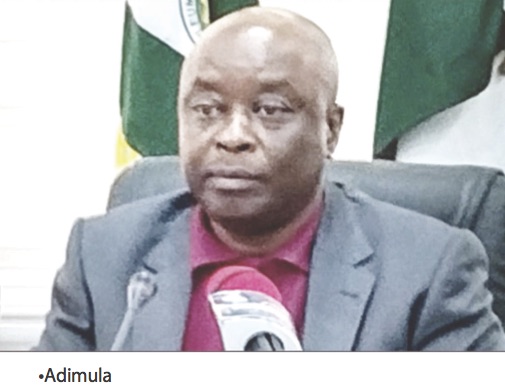
From Ben Dunno, Warri
Dr. Henry Adebowale Adimula is principal, Petroleum Training Institute (PTI), Effurun, Uvwie Local Government, Delta State. In this interview, he spoke about the institute is fairing in the area of research in improving the oil and gas sector of the economy.
How has it been overseeing PTI in the past three years?
It has been challenging but, nothing that we cannot manage. In the three years we have done well as an institute. We set up with the vision to align ourselves more closely to the needs of the oil and gas industry in Nigeria.
We are set up primarily to train and develop capacity for the oil and gas industry. By the time we came in, we saw that there was a gap between what we do and the needs of the industry. And I set out to close that gap.
I approached the Offshore Petroleum Industry Training Organisation (OPITO), the umbrella body of operators in the industry and the Nigerian Content Development and Monitoring Board (NCDMB), for local content. We invited OPTO to look at what we do and have its input.
That way, we know that when we train people here, it meets the needs of the industry. They have hand in the curriculum we are using and that has helped us. With our partnership with the National Benchmark Tests (NBT) and NCDMB, we are able to bring out graduates that meet the accreditation purposes. They can stand anywhere in the world. It has been good it has been fantastic.
What would be your general assessments of the school from inception till now?
I’ve been with the institute for over 30 years. I was confirmed as the
Let me just put everything in context. I’ve been here since principal in 2021. We have evolved over the years.
Last year, we celebrated our 50th anniversary, which was an opportunity for us to show to the world what we have achieved. The testament to what we have achieved is in our products.
People manning top positions in the oil and gas industry today, are testifying they had part of their training at the institute or some of them have the entire training in the institute. We have contributed our quota to the industry and to the nation’s economy.
In 50 years, we have moved from just developing technicians to develop even full fledge engineers who are operating in the oil and gas industry. Apart from our regular programmes, the diploma the higher engineering courses, we do a lot of short and booster courses where people come and to upscale them to meet the mother needs of the oil and gas industry today.
We look forward to the next 50 years. We believe we cannot just rest on our oars, we must continue to strife. The industry that we serve is very dynamic, so heavily dependent on technology.
Technology is changing very fast. We also have to adapt and we are changing fast. I’m proud that we are still very relevant to the industry today. Last year, we trained some of the technicians of the Nigerian Natural Gas. That’s about the best company in the country today and they entrusted us to train their technicians.
What are the challenges facing the institution presently?
The challenges we face are not too different from the challenges that any institution in Nigeria today faces particularly in the area of funding. Unfortunately, the national cake is not that big for every institution to get something that is big enough to do what they want to do.
We also acquire the latest technology that has a lot of challenges. Unlike other tertiary institutions funded by the TETFUND, PTI is not funded by TETFUND. This is the industry that makes the largest share of the national cake.
We believe the industry should equally benefit from that share. That has been an aberration. We are not fully funded, making funding a big challenge to us.
In terms of research, how do you rate the institution?
In the areas of research and development, we have done our part. I happened to be the first Director of Research and Development (R&D) in PTI. We have in the past won research grants competition organised by the Petroleum Technology Development Fund (PTDF).
We have won a lot of grants and we have used that to make products that are useful to the industry. When I became R&D director, I created research clusters. We had a cluster studying each of these problems. That helped to improve the capacity of the researchers and to contribute more meaningfully to the problems of the industry.
What are the plans you have for staffs and students this year?
I pray it’s going to be a wonderful year, it will be far better than 2023. Staffs and students should be more committed and dedicated. There are challenges the economy is not what it should be.
We will continue to do our best within the limited resources that we have. For our students, things have changed a lot. It’s not like it used to be.
We have steady power they still have to bear. They have to understand that things are changing and as things change they also must change. Gone are the days when we used to expect that government would fund everything.