Follow Us on Google
From Juliana Taiwo-Obalonye, Abuja
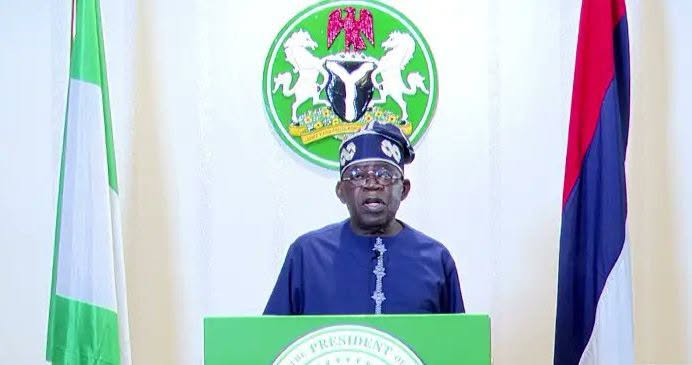
President Bola Tinubu on Sunday called on African leaders to present a united front in condemning the recent Afro-phobic attacks, also known as xenophobia, in South Africa, insisting that such acts of intolerance have no place on the continent.
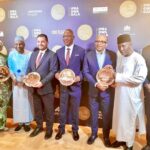
Represented by Vice President Kashim Shettima at the 69th Ordinary Session of the ECOWAS Authority of Heads of State and Government in Freetown, Tinubu said African nations must collectively denounce the attacks and take the matter to the African Union.
The President disclosed that Nigeria had “already evacuated over 1490 of its citizens from harm’s way in seven batches and is prepared to engage further on this matter.”
“Nigeria condemns, in the strongest terms, the recent attacks on its citizens and other Africans in the Republic of South Africa. As already stated by His Excellency, the President of Ghana, ECOWAS should present a united voice in this condemnation and table the matter before the next session of the Authority of Heads of State and Government of the African Union.
“This would send a clear message that this type of intolerance is totally unacceptable under any guise. South Africa should be reminded that the freedom it currently enjoys is the result of the sacrifices and liberation efforts of African countries, including Nigeria,” he said.
Beyond the xenophobia issue, Tinubu reaffirmed Nigeria’s support for the newly developed ECOWAS Compact for the Future of Regional Integration, describing it as a framework that reinforces the region’s “shared commitment to rebuilding trust between citizens and public institutions, ensuring that regional integration remains resilient and relevant in the face of evolving geopolitical realities.”
He said the Compact represented a major milestone in the regional bloc’s integration efforts and reflected the collective determination of member states to renew the ideals of ECOWAS.
According to him, the document will “strengthen regional solidarity, and build a more resilient, prosperous, peaceful, and people-centred Community capable of meeting the aspirations of its over 400 million citizens.”
Tinubu urged West African leaders to intensify collective efforts against insecurity and unconstitutional changes of government, stressing that Nigeria remained committed to promoting regional peace, economic integration and democratic governance.
“As the largest economy and one of the key founding members of our Regional Economic Community, Nigeria remains steadfast in its historic responsibility to continue the promotion of regional unity, peace, economic integration, and democratic governance.
“Nigeria will continue to work closely with Member States and all stakeholders to ensure the effective implementation of the Compact and the realisation of its six strategic pillars,” he said.
On governance and security, the President said sustainable development could not thrive in an atmosphere of instability.
“On peace, security, and democratic governance, Nigeria reaffirms that sustainable development cannot be achieved in an environment of insecurity and instability. Nigeria remains firmly committed to the principles enshrined in the ECOWAS Protocol on Democracy and Good Governance and other regional frameworks.
“Nigeria supports the Compact’s commitment to constitutional governance, the rule of law, respect for human rights, and zero tolerance for unconstitutional changes of government,” he declared.
Tinubu also reiterated Nigeria’s commitment to establishing the ECOWAS Counter Terrorism Force and strengthening the ECOWAS Standby Force, saying the initiatives would “enhance counter-terrorism cooperation, intelligence sharing, joint security operations, and preventive diplomacy to safeguard peace and stability across our region.”
He further pledged Nigeria’s support for initiatives aimed at eliminating trade barriers, improving cross-border infrastructure and facilitating the free movement of persons, goods and services across West Africa.
Highlighting the role of technology in regional development, the President welcomed the Compact’s emphasis on science, technology, innovation and digital transformation.
He said the establishment of a Digital Single Market, alongside regional frameworks on artificial intelligence, cybersecurity cooperation, digital infrastructure and innovation ecosystems, would unlock new “opportunities for economic diversification, entrepreneurship, education, financial inclusion, and job creation, particularly for young people,” while positioning West Africa as a competitive player in the global digital economy.
Tinubu also reaffirmed Nigeria’s commitment to promoting gender equality, expanding opportunities for women in leadership, investing in education and skills development, supporting youth entrepreneurship and ensuring young people play active roles in shaping the future of the region.
Earlier, Sierra Leone’s President and ECOWAS Chairman, Julius Maada Bio, said the summit was convened to review the bloc’s progress and chart its future through the ECOWAS Vision 2050 agenda.
He described the vision as a pathway to “a peaceful, integrated, and prosperous West Africa, founded on democratic governance and driven by the energy and creativity of its people.”
Bio, however, urged member states to adapt to emerging global realities.
“We should work on partnerships that expand our opportunities, while remaining firmly anchored in our own interests and barriers.
“Dependency narrows the very freedom that challenging partnership is meant to strengthen, and in this changing international environment, regional integration is a strategic necessity.
“It ensures a responsibility that demands foresight, preparation, and collective action. It is shaped by the crisis we build, the capabilities that we build, and the reason we confront before they become crises,” he said.
He also warned that climate shocks and global conflicts continue to strain national economies and disrupt supplies of food, fuel and fertiliser across the region.
United Nations Deputy Secretary-General Amina Mohammed reaffirmed the UN’s support for ECOWAS efforts to combat terrorism and other transnational crimes.
“The United Nations Security Council must clearly hear the voice of Africa and stand behind the solutions that Africa offers. We have seen what it looks like in this region. There is new momentum and dialogue across political divides and across geography,” she said.
Also speaking, President of the ECOWAS Commission, Omar Alieu Touray, said the regional body had strengthened governance and accountability mechanisms while enhancing cooperation against terrorism, violent extremism, organised crime and other transnational threats.
The summit also witnessed the signing of the Intergovernmental Agreement for the African Atlantic Gas Pipeline (AAGP) project.