Follow Us on Google

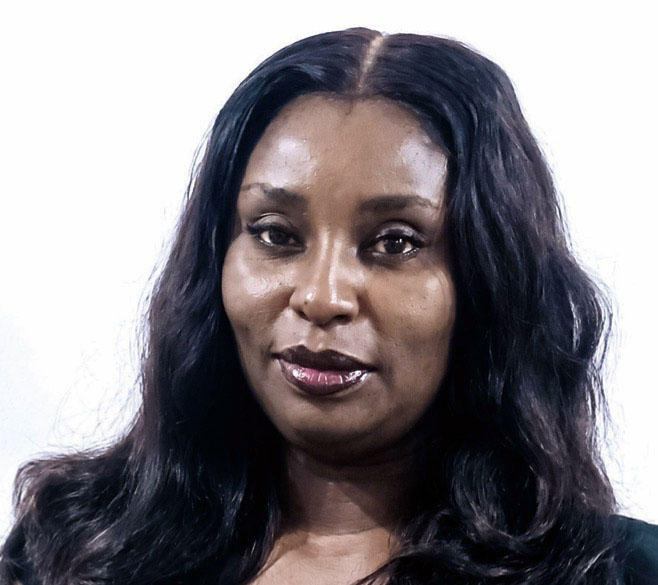
“I have always naturally been manly in my disposition to life. I have a degree in engineering; a profession that is largely male dominated. So, thriving in hitherto considered male territories is very natural to me. For my fellow women, I encourage you not to look back on whatever you lay your hands upon, especially agribusiness, because the world belongs to those who dare”
By Josfyn Uba
Engr. Mrs. Chinonyelum Ugo-Ogoke is a woman who speaks the language of disruption. A Computer Engineer by training and a corporate veteran of MTN Nigeria, she transitioned into entrepreneurship in 2011 to launch Shelflife Enterprises.
Driven by the mantra that ‘everything starts with thought,’ she has cultivated a brand that is rapidly dominating the Nigerian food and snack market.
From high-demand staples like Habib Yoghurt & Fura to a wide range of house-manufactured delights like Usque’s Coconut Candy, Elemus Bars, a diverse snack portfolio—from Simdi Snackies and Anu Kilishi to Granola on-the-Go, her company is set on a clear trajectory to become a leading name in the FMCG landscape.
In this interview, Engr. Ugo-Ogoke sits down with Daily Sun to discuss how she is redefining the standards of distributive trade in Nigeria and she shares her vision for a future defined by bold thinking and local manufacturing.
What was the specific moment or experience that convinced you that you could bridge the gap between northern dairy production and the Lagos consumer market?
We didn’t really need to re-invent the wheel, because there has always been an existing massive market between the largely production intensive population up North and the dairy thirsty market down South. The sprawling arable land in the north makes this possible. So, all we needed to do was to understand this market and upscale it by infusing innovation so the products align more perfectly with the needs and taste buds of customers.
You are navigating two distinct cultural and economic landscapes. How do you integrate the traditional methods of the north with the fast-paced, modern demands of Lagos?
The language of trade is very simple and single-minded and it revolves around value delivery and value addition. The infrastructural landscape may look different but it is the same language of value and profit, up North as it is down South. Like they say, the colour of money is always green. And because we understand and speak this same language of value addition, it was quite easy for us to make a quick inroad into the market.
How did you start this dairy business?
There is no formula to life or put in other words – life is not necessarily linear. Like we say in this part of the world, na small small monkey de take cross road, we got into the business “like play, like play” out of curiosity and realized there was money in it. So,we decided to take the bull by the horn
What was your biggest fear, and how did you overcome it?
We’ll rather speak the language of challenges rather than that of fear. Yes, we were challenged but we were never afraid. We were worried but we were not overwhelmed. So, we started off with Nigeria’s leading yoghurt brand, Habib Yoghurt and Fura. Unlike most other brands, this brand does not have preservatives, and that makes it very healthy. But this has a flip side – the fact that the shelflife was therefore naturally short – just 4 weeks. That was our biggest worry – how do we ensure a quick shelf offtake, such that the products get to my customers’ meal tables while it was still fresh. We had to deploy a street-sense intro strategy plus good stock management skills – that helped us immensely to navigate the twists and the turns.
What are the biggest logistical hurdles you’ve faced in maintaining the quality and freshness of your products while moving them from the North to the South?
A massive investment in the right cold chain plan was the only way out. What made it tougher was the fact that our production facility is in the Kaduna, but with the benefit of logistics experience spanning over 30 years of market leadership, we kept getting better. And today, we are sure of having the products get into the Lagos market weekly without any major logistics or storage hiccups.
The agricultural sector in Nigeria faces unique challenges – from security concerns to infrastructure deficits. Can you share a time when you almost reached a breaking point, and what kept you going?
Unfortunately these factors have remained perennial. So, as business people we bother more with how to navigate around them than just bemoan them. We thus had to look in the direction of backward integration. We also had to adopt an impeccable hedging strategy in order to buffer the effects of the vagaries of these external factors.
As a female entrepreneur in a traditionally male-dominated field, what has been your experience in breaking barriers, and what advice would you give to other women looking to enter the agribusiness space?
I have always naturally been manly in my disposition to life. I have a degree in engineering; a profession that is largely male dominated. So, thriving in hitherto considered male territories is very natural to me. For my fellow women, I encourage you not to look back on whatever you lay your hands upon, especially agribusiness, because the world belongs to those who dare.
You can never go wrong with FMCG (fast moving consumer goods) businesses. Once there’s a mouth to feed, FMCG businesses will always service. Even during the COVID lockdown, FMCGs were still posting good profits.
Are you finding ways to promote sustainable farming practices within your supply chain?
Like we said earlier, we have strategically made huge investments in backward integration. That way we have managed to even out the ups and downs of production processes that rely heavily on farm products as inputs. Thus sustainability runs through the concepts and designs of our processes.
If you could change one policy or infrastructure issue to make the Nigerian dairy industry thrive, what would it be?
Our roads are not in the best of shape. That is very counterproductive to anybody who is into distributive trade. So, for us better transportation infrastructure, especially investment in rail should receive priority attention. This will make movement of goods quicker and cheaper particularly for far flung markets. And this has the capacity of re-calibrating even our GDP.
When you aren’t managing logistics or supply chains, how do you recharge?
I read, I read and I read. You can never go wrong with personal development. I also hang out with family and friends. After all, Bodi no be firewood na.
10 years from now, when people look back at the “dairy bridge” you’ve built between the North and Lagos, what do you want your legacy to be?
I am an incurable optimist and I’ll want to leave a legacy of possibilities, because I know for sure that for those who dare, nothing is impossible.