Follow Us on Google
From Okwe Obi, Abuja
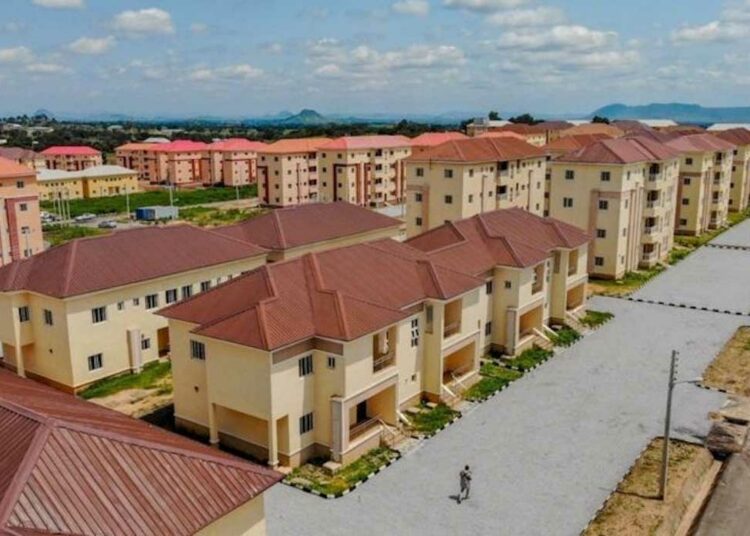
Managing Director and Chief Executive Officer of Footstool Estates Limited, Tpl. Fanda Zichat Augustine, has identified weak policy reforms, public-private pact and high cost of construction as factors affecting affordable housing.
He identified limited access to land, inconsistent government policies and weak trust within the real estate sector as some of the major factors responsible for the country’s growing housing deficit.
According to him, land remains the foundation of every housing project, making transparent and efficient land administration critical to reducing the cost of housing.
Augustine, who spoke on a monitored television programme, argued that affordable housing should not be misconstrued as the construction of cheap buildings but rather the provision of decent, quality homes that are accessible to ordinary Nigerians.
“We don’t build houses in the sky. The first challenge is access to land. Government policies determine how easily developers can acquire land and how affordable building materials become. If these issues are addressed, the cost of housing will naturally reduce,” Augustine stated. He called for stronger partnership between government and private sector developers to address Nigeria’s housing deficit, saying affordable housing can only become a reality through deliberate policy reforms, improved access to land and sustainable financing.
“Housing is one of the basic needs of man. After food and clothing, everyone deserves a decent place to live.
Affordable housing is not about building cheap houses; it is about ensuring that every Nigerian has access to comfortable and sustainable shelter,” he said.
The real estate expert also urged governments to simplify land allocation processes, stressing that Nigerians who meet the necessary requirements should not have to wait years before obtaining land titles.
He noted that private developers incur substantial costs beyond land acquisition, including compensation to host communities, provision of roads, electricity, drainage systems and other infrastructure needed to make estates habitable.
“Developers are almost like local governments because we provide roads, electricity, transformers and other infrastructure before people can comfortably live in these estates,” he said.
Augustine maintained that government should focus on providing enabling infrastructure and creating policies that encourage credible developers to invest in mass housing, while developers should embrace innovation and place greater emphasis on social impact rather than excessive profit margins.
He also advocated reforms to Nigeria’s mortgage financing system, describing existing requirements as unrealistic for many civil servants and low-income earners.
“Civil servants are expected to make equity contributions of about 25 per cent before accessing mortgage facilities. Where will the average worker raise such money? The system should be restructured to make home ownership easier, with lower equity contributions and better financing arrangements,” he said.
The developer further recommended tax incentives for private firms that invest in affordable housing projects, arguing that such measures would encourage more developers to build homes targeted at low- and middle-income families.
Drawing lessons from countries such as Singapore, Augustine said Nigeria must adopt long-term urban planning strategies that integrate housing with schools, hospitals, markets, transportation networks and other public facilities to create functional communities rather than isolated housing estates.
He lamented that many neighbouring states surrounding the Federal Capital Territory had failed to maximise their proximity to Abuja through coordinated urban development and mass housing initiatives.
According to him, proper town planning, equitable infrastructure distribution and strategic collaboration between governments and developers would not only reduce pressure on major cities but also make decent housing more accessible to millions of Nigerians.
He added that expanding access to affordable housing and basic infrastructure could also contribute to reducing social inequality and improving national security by enhancing citizens’ quality of life.
He called on policymakers, financial institutions and private developers to work together to implement practical solutions capable of narrowing Nigeria’s housing deficit and making home ownership achievable for more Nigerians.