Follow Us on Google
By Uche Usim
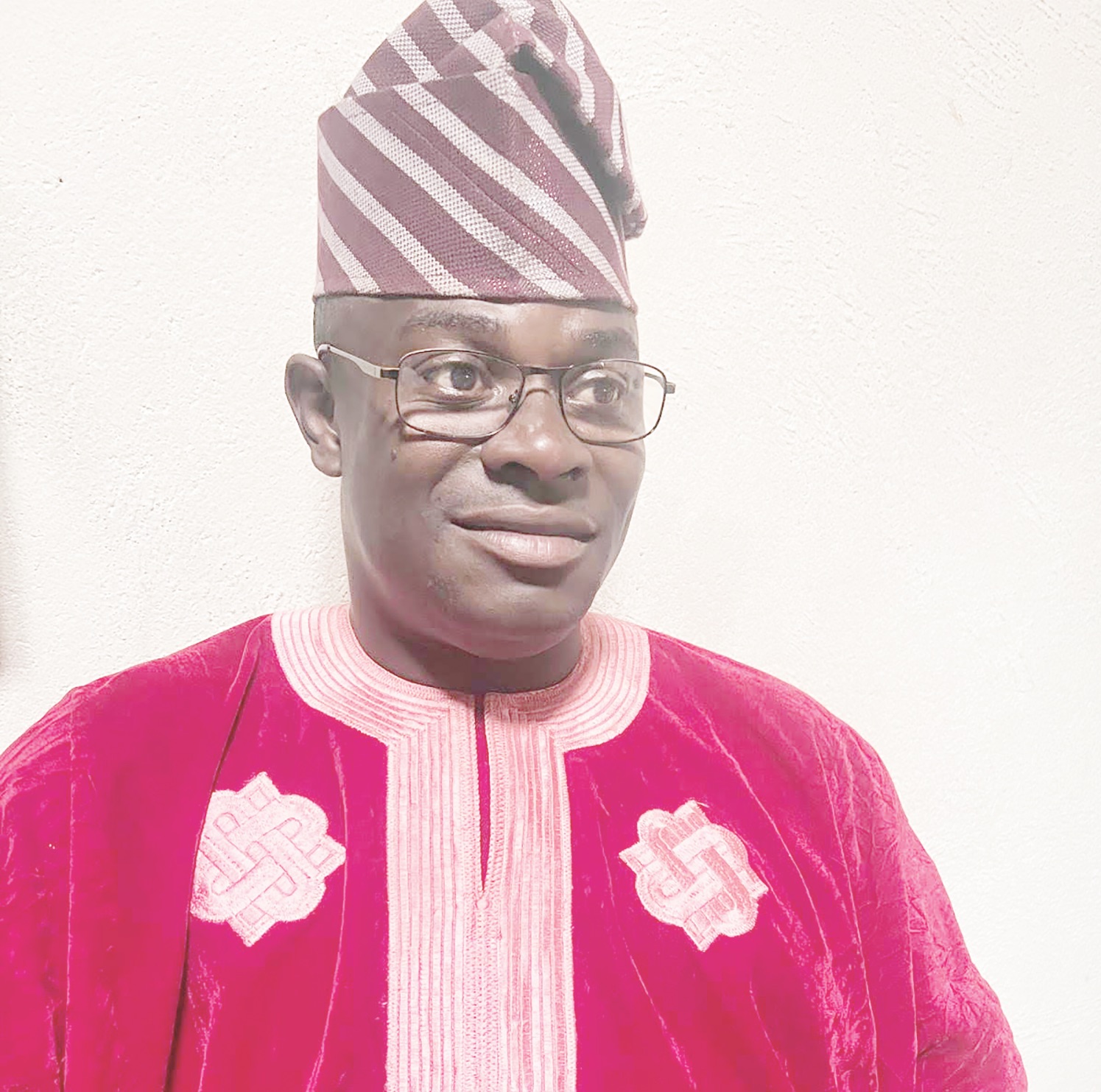
Prince Afolabi Aderemi is the Chairman of Nigerians In Diaspora Organisation (NIDO), Portugal. An indigene of Oyo State, he is a historian from the Tella Gbaagi Olufunu Agunloye branch of the Oyo Royal Ruling House.
In this interview, he recalls the events of 1895, when British colonial forces invaded and bombarded Oyo town, the capital of the Oyo Empire.
It led to the subjugation of the empire and the consolidation of British colonial rule over the Yoruba hinterland.
He said: “History has a heartbeat. But there was a time when that heartbeat was nearly silenced. In 1895, the sacred city of Oyo, seat of the Alaafin and soul of Yoruba civilisation, came under British gunfire in what became known as Ogun Pẹ̀pẹ́, “The War of the Gun Sound.”
As preparations peak to mark 130 years since that epochal event from November 13-15 2025, Aderemi, speaks more about the celebration and its significance.
For those who may not fully understand, what exactly was Ogun Pèpé, and why is it so significant in Yoruba history?
Ogun Pẹ̀pẹ́ was more than a battle, it was the breaking point between two worlds. It took place on 13 November 1895, when the British colonial army attacked the ancient city of Oyo, the capital of the Yoruba civilization. The name Pẹ̀pẹ́ came from the sound, “pepe! pepe! pepe!”, the sharp crack of Canons, British rifles and Maxim guns. That sound was unlike anything our people had ever heard to attack the Alaafin.
Until then, the drum had been our rhythm of life, of governance, of worship, of war. When those guns began to roar, it was as if the sacred drumbeat of our civilization was drowned by the metallic thunder of the empire. The war symbolised the violent interruption of an African sovereignty that had ruled itself for centuries, the Oyo empire.
But even in that tragedy, there was dignity. Ogun Pẹ̀pẹ́ remains the moment when Oyo said to the world: “We will not bow quietly. We are a people of heritage, not of submission.” That defiance lives in us still.
Before the war, Oyo had been at the centre of Yoruba political and spiritual life. How powerful was the Oyo Empire before the coming of the British?
Oyo was not just a kingdom; it was a universe in itself, a federation of nations tied together by culture, diplomacy, and shared ancestry. From Jebba to Dahomey, from Ilorin to Iseyin, from Ile-Ife to the tributaries of the Volta river, the authority of the Alaafin reached across rivers and forests.
The Alaafin, whom we call Iku Baba Yeye, the One Who May Not Die, Father of Fathers, was not merely a monarch. He was the axis of Yoruba existence, chosen by divine sanction and ancestral right, a direct descendant of Oduduwa through Oranmiyan, the Prince that sowed the seed of the Benin empire and Oyo empire, two towering West Africa empires. Alaafin’s palace, the Aafin, was a temple of cosmic balance. Every drumbeat, every council meeting of the Oyo-Mesi, every act of governance flowed from spiritual understanding.
When you stood in the courtyards of the Alaafin’s palace in those days, you were not standing in a political space, you were standing at the center of Yoruba cosmology. The same today, once you walk in through the Oju-abata gate of the palace, you feel ancestral powers. That was the power Oyo represented before the colonial disruption.
What then led to the outbreak of Ogun Pèpé? How did the tension between the Alaafin and the British begin?
It began, as history often does, with arrogance, the arrogance of empire. The British had already subdued Ijebu in 1892 after bombarding Ijebu-Ode. They called it the “Ijebu Expedition,” as if it was a picnic. But for the Yoruba, it was a warning shot.
By 1895, the British had appointed Captain Robert Lister Bower as “Resident Officer” to Oyo. Imagine that! A foreign officer sent to “advise” a sovereign king whose crown predated the British monarchy’s reach in Africa. Alaafin Adeyemi I saw through it. He knew that “advisers” were cousins of conquerors.
The trigger came when a royal messenger, an Aro, named Bakare was executed according to Oyo custom after committing adultery with one of the Asẹ́yìn of Iseyin’s wives. The British found this “barbaric.” Captain Bower demanded the Alaafin surrender his own executioner, Kudefu, for trial under British law.
Alaafin Adeyemi refused. He said, “Oyo has her own laws. The crown that came from Oduduwa bows to no stranger’s gavel.” That single refusal lit the fuse. The British called it rebellion. We called it sovereignty.
Many accounts describe Alaafin Adeyemi I as calm yet unyielding. What do you think made his stance so legendary?
Kabiyesi Adeyemi I was the embodiment of royal dignity. When the British troops began their march toward Oyo, he did not flee. He summoned the Oyo-Mesi, his chiefs, and declared: “Our fathers faced Fulani horses at Ilorin; we shall face these white men with the same courage.”
He knew the odds. He understood the British possessed machine guns and cannons that spat fire. Yet, for him, the issue was not about winning or losing a battle, it was about preserving the soul of the Yoruba people.
There is a saying among us: “Ọba tó ṣ’ọmọ àkín, kò ní jẹ́ ẹrú mọ́”, a king who has seen war can never be a slave. That was Alaafin Adeyemi 1. Even when wounded, even when a part of the palace was burning, he refused to sign submission until he had to, not for himself, but for his people’s survival. His courage was not the kind that roars; it was the kind that endures.
Describe what happened during the six days of that conflict. How did Oyo stand against the British?
It began at dawn, November 1895. The harmattan dust still hung in the air when the first cannon roared. The people had never heard such thunder. Pepe! Pepe! Pepe! echoed through the groves of Oyo. The city trembled.
For six days, Oyo resisted. Warriors armed with muskets, semi-automatic rifles, charms, and courage faced British soldiers armed with repeating rifles and artillery. The Bàtá and Gángan drums played the rhythm of defiance. Women sang war songs. Chiefs debated, but Alaafin Adeyemi said, “Let our drums play, not in mourning, but in defiance.”
When the shells hit the palace, a part of the ancient courtyards, where kings had danced for centuries, went up in flames. Artefacts, bronze heads, ivory carvings, some were looted, others destroyed. A part of our history was stolen that day. Our late Uncle, Alaafin Lamidi Olayiwola Adeyemi III started the repatriation paperwork of many of the artefacts that cost millions of USD today, I am very confident of my royal father, Alaafin Akeem Owoade’s stance to fight it to the end and see the returns of those items from notable museums world over.
By the sixth day, the smoke over Oyo could be seen from miles away. Captain Bower wrote in his report that “order has been restored.” But what he called order was the silence of a wounded civilisation.
Yet, that silence was not defeat, it was meditation. The Alaafin had retreated, wounded by Palm tree stems when he tele-transported but alive, carried to the Owinni River grove, saved by the mysterious power of Egbe, the spiritual flight. Hence that act lives on in the oríkì of the Alaafin: “Alaafin tó fò ile ti ope ti ope, o fo Oke-Owinni tí odo ti odo.”
What was the aftermath of the war for Oyo and for the Yoruba people as a whole?
The British seized the palace, took treasures to Lagos and London, and imposed the colonial protectorate system. Alaafin’s political authority was curtailed, but his spiritual authority remained untouchable, fortified and gallant.
From his refuge, Alaafin Adeyemi composed a song that still resonates: “Ará Ọ̀yọ́ làwa, a lọ́gbọ́n lórí o. aìlọ́gbọ́n lórí ló pa ara ìyókù.”
(We are people of Oyo, wisdom is our crown. It was lack of wisdom that destroyed the others.)
He realised that the new war would not be fought with spears but with wisdom, education and endurance.
He told his chiefs, “Wisdom is the last weapon of the conquered.” And so he rebuilt Oyo not through rebellion but through resilience. He rejected British stipends at first, he called them “chains made of silk.” Eventually, he accepted limited cooperation, not as surrender, but as survival. That is ọgbọ́n àtẹ́gùn, the wisdom of the wind. Oyo rose again, wounded but unbroken.
How did this experience reshape Yoruba civilisation under colonial rule and afterward?
Ogun Pẹ̀pẹ́ marked the end of Oyo’s political sovereignty, but it ignited a deeper consciousness of identity. The British won the battle, but the Yoruba won the narrative.
After 1895, the Alaafin became a bridge between tradition and modernity. He encouraged education, not as imitation but as adaptation. He said, “Ẹ̀kọ́ ni ogun wa tuntun”, learning is our new warfare.
That wisdom bore fruit. The children of Oyo grew to become scholars, politicians, artists, and reformers till date. Alaafin Lawani Agogoja who reigned from 1905-1911 (Great Grandfather of Alaafin Abimbola Akeem Owoade 1) reigned after Alaafin Adeyemi 1. That continuity is not coincidence — it was for a divine purpose. The amalgamation of Nigeria in 1914 was later signed by the Oyo’s crown, Alaafin Siyanbola Oladugbolu alongside Usman Dan Maje who later became Emir of Kano King R Henshaw (Obong of Calabar) and Emir Abubakar Shehu of Borno.
The Yoruba did not vanish under colonialism; we evolved, carrying our drumbeat into every new century, every continent. It’s exemplary in the Caribbean, Europe, the Americas and other Yoruba speaking parts of today’s Togo, Burkina Faso, Ivory-Coast, Republic of Benin, Ghana, etc.
As a descendant of the royal house, what personal connection do you feel to this story of Ogun Pèpé?
It is more than history to me, it is blood memory. My grandfather lived within the palace walls when the war broke out. He used to say, “We saw the day the world changed. We heard the pepe of the gun.”
He described how the Alaafin limped for the rest of his life, the wound from that day was his companion till death. Yet, every morning, he would walk the palace courtyard, reminding his chiefs, “Ọba tó ṣ’ọmọ àkín, kò ní jẹ́ ẹrú mọ́.”
For me, each visit to the palace, each drumbeat at festival time, feels like speaking to those ancestors again. Their resilience runs through our veins. That is why this 130th anniversary is sacred, not just remembrance, but renewal.
The 130th commemoration of Ogun Pèpé is approaching. What should we expect, and why is this event important today?
From November 12 to 15, 2025, Oyo will once again gather to honour those who stood when thunder fell. Under the leadership of His Imperial Majesty, Alaafin Oba Abimbola Akeem Owoade I, we will host processions of drummers tracing the old palace walls, exhibitions of artifacts, dramatic re-enactments of the battle, academic symposia, and recitations of the Alaafin’s verses.
Students will sing “Ará Ọ̀yọ́ làwa, a lọ́gbọ́n lórí o”, not as nostalgia, but as philosophy. It will remind us that wisdom and dignity must walk hand in hand.
This commemoration is not just about the past; it is a call to unity among all Yoruba-speaking peoples. The same blood that resisted in 1895 flows through us all.
It is also a reminder that the preservation of heritage is the duty of every generation. In an age where social media trivialises culture, this anniversary is our way of saying: “We will not let our story be told by strangers. Now every individual that owns a phone is not a historian, I call them cultural criminals, some tag themselves “paid cultural bloggers”, paid to mutilate our shared history and heritage”. Painful and shameful.
What lessons does Ogun Pèpé hold for the Yoruba nation and for Nigeria as a whole?
The first lesson is that no civilisation is conquered unless it forgets itself. The British conquered our soil, but they could not conquer our soul.
The second lesson is unity. When Yoruba stand divided, we lose strength. But when we remember we are one, sons and daughters of Oduduwa, we move mountains.
And the third lesson is wisdom. Power without wisdom destroys; wisdom without courage enslaves. Alaafin Adeyemi taught us that to survive, you must bend like the wind but never break your roots.
Today, our wars are different, wars against ignorance, corruption, and cultural amnesia. Our weapons are the pen, the camera, the microphone, and the ballot. But the spirit is the same. We must fight with intellect the way our ancestors fought with iron, especially social media warriors causing division amongst us.
When the drums of Oyo sound again this November, what do you hope the world will hear?
I hope they will hear more than rhythm, I hope they will hear memories.
When the Gángan and Bàtá play in the palace courtyard, each beat will be a dialogue between past and present. It will summon those who stood in 1895, the warriors, the drummers, the women who hid their children, the Alaafin who refused to kneel.
And when the pattern “pepe! pepe! pepe!” is struck again, it will no longer mean gunfire, it will mean continuity. The gun that once silenced us will now dance to the drum of remembrance.
The British may have written dispatches saying “order restored,” but history has the final word. Today, Oyo stands not as a relic, but as a rhythm reborn. Yorubas in the diaspora across all continents, equals in number the 60 million Yorubas in Nigeria.
We are still here. Alaafin’s palace still breathes. The Yoruba drum still speaks.
And as long as that drum beats, no empire, past or present, can silence the heart of Oyo.