Follow Us on Google
By Dickson Okafor
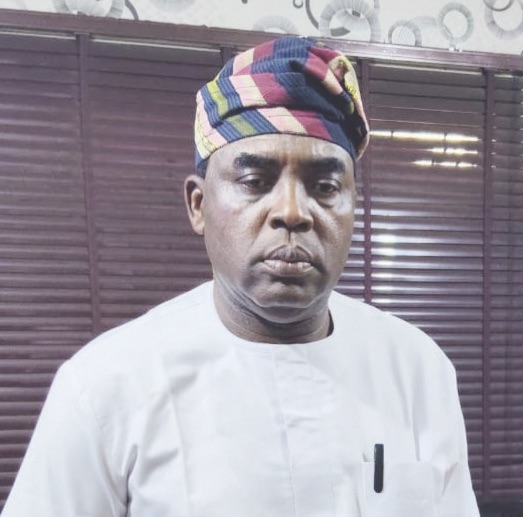
Chukwumalu Emeka is the Chairman of the Association of Nigeria Customs Licensed Agents (ANCLA), Apapa Chapter in Lagos.
In this interview, he called on the Federal Government to introduce an indigenisation policy to prevent expatriates from taking over the jobs of Nigerian clearing agents through renewal and issuance of new licenses.
He highlighted some elements of the new Tax Reform Law that have not been fully implemented, such as added charges under the Customs Act 2023, which he said they are collaborating with Customs to see how it can be adjusted.
While admitting that there has been a cordial relationship between the Nigeria Customs Service and ANCLA, he said, as a revenue-collection organisation, the Service has nothing to do with the rise in prices of goods, saying even though it generated N7.28 trillion in revenue for the 2025 fiscal year, the figure exceeded the set target of N6.67 trillion.
Chukwumalu called for steady power supply as a means for Nigeria to stop being an import-dependent nation, noting that local production of essential commodities will thrive.
He spoke on other issues.
As a stakeholder in the maritime industry, why has the cost of imported goods continued to increase while the prices of locally produced items are dropping?
Revenue collection by the Nigeria Customs Service has nothing to do with the prices of goods in the market because an importer knows that if he spends N1 to clear his containers, he must add N1 or N2 to be able to get his profit margin to stay in business.
This is why it is reflected in the prices of imported goods because Nigeria’s economy is import-driven. Prices of goods and services can only drop if the exchange rate goes down to the barest minimum. There will be serious competition and no monopoly; if there is monopoly, goods will be available but at high prices. Competition will have a trickle-down effect on the masses who are the end users.
As the leader of the Nigeria Licensed Customs Agents (ANCLA), what has been the relationship between your organization and Customs with regards to harmonisation of import duties?
I want to clarify that the Nigeria Customs Service works for the Federal Government of Nigeria, and Nigeria Licensed Customs Agents (ANCLA) are licensed by Customs to help in the circulation of taxes and duties paid to clear cargo from the ports.
Definitely, if things are moving smoothly and the Federal Government introduces a policy, it is the duty of Customs to implement that policy. At the same time, since we are standing as lawyers to our clients, many times we will say no, it will not go this way; let us do it another way because we are considering the masses since the bulk of the cost will be borne by final consumers.
If we do not ask questions about certain government policies in the freight forwarding business, such policies may be reversed for the interest of the masses. If such policies are allowed, it will be like killing the goose that lays the golden egg. Before you know it, importers will no longer be available to pay taxes.
What is the reaction of your association to the Tax Reform Law that took effect this year?
There are some elements of the new Tax Reform Law that have not been fully implemented because clearing agents and freight forwarders are agitating in certain areas, especially concerning foreigners taking over their jobs in the renewal and issuance of licenses. These added charges under the Customs Act 2023 are being reviewed in collaboration with Customs.
If the masses could see what the government collects as tax being used for, they would not mind paying new taxes. But because they do not see how the money is used, they are agitating against the new tax law. The government should strike a balance so people do not feel victimized or shortchanged.
How can the government help reduce import costs?
The major policy the government should use to advance the freight forwarding industry in Nigeria is to introduce an indigenization policy. No foreigner should be allowed to operate in Nigeria as a clearing agent. If Nigerians handle freight forwarding themselves, foreign operators will not easily control cargo movement, clearance, or delivery.
These foreigners are coming into the industry with tricks, and their basic aim is to siphon the economy and national wealth. Removing them could reduce cargo costs and increase government revenue.
Dr. Bashir Adewale Adeniyi has performed tremendously well in maritime and Customs operations. His innovations have helped stakeholders work more favourably.
His refined ideas have also helped maritime players overcome certain challenges in carrying out their duties.
How can the government reduce import costs, especially food and essential commodities?
Nigeria’s challenge is lack of steady power supply because local production of goods and services cannot thrive. Some multinational companies left Nigeria because of poor electricity supply.
When former President Shehu Shagari came on board in 1979, he implemented a food policy called the Green Revolution. This agricultural programme was introduced in April 1980 by establishing the Nigeria National Supply Company. His administration imported food items such as rice and other commodities to bring food prices within reach of citizens.
The agricultural policy aimed to achieve national self-sufficiency in food production by promoting modern technology. Before then, President Olusegun Obasanjo as Head of State established Operation Feed the Nation (OFN). With steady power supply, Nigeria will be less dependent on imports because essential commodities can be produced locally.