Follow Us on Google

From Femi Folaranmi, Yenagoa
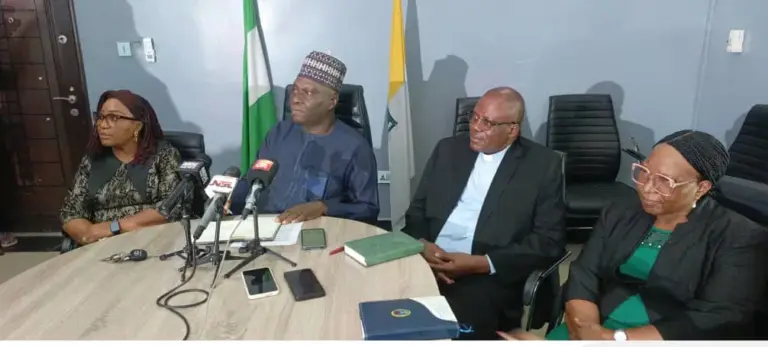
Dr. Alice Atuwo, executive secretary, Bayelsa State Education Development Trust Fund (EDTF), in an interview with The Education Report, x-rayed the activities of the fund, its interventions in the education sector and some challenges hindering it from making the desired impact.
What is Bayelsa Education Development Trust Fund all about?
The fund was set up to support the development of education in the state, through general upgrading. So, it is not for a specific level of education. It is from primary school to tertiary education. It offers support through funding of areas of interest.
What are your sources of funding?
We are funded from taxes of workers, state and local government workers, 5 per cent of internally generated revenue by the state and local government, 1 per cent of total contract sum from companies and firms doing business in the state, 2 per cent of salaries of political appointees, and the state and local government are to appropriate additional funds.
Can you give an overview of the achievement of the fund since its establishment?
Basically, 80 per cent of the funds generated go to the running of the model boarding secondary schools, where we have our scholars. We have 11 of such schools and we are anticipating others to come on stream. Then we also provide feeding for the special school at Opolo and provide funds for the running of the school. For the special school, we have sent 50 Bayelsans to the Ignatius Aturu University of Education to study special education, different aspects of it, so that, when they graduate, they would help the children with special education needs. Then in ICT, we worked with the Niger Delta University by providing Internet services, and University of Africa, Toru Orua, where we built a 30-seater computer-testing centre. And that place is now being used by JAMB for their examination.
The Bayelsa Medical University had some challenges and they reached out to us and we helped in completing some of their structures, and helped them secured accreditation from the National Universities Commission.We have also assisted the Loans Board. Though it has its own source of funding but at the beginning it had some teething problems and we assisted them. We have facilitated the training and retraining of teachers through the Teachers Registration and Certification Board and we have trained two batches, the third batch is about to commence as we have released the funds. Also, through the state Science and Technology Board, we have trained some youths in scaffolding skills and most of them have gained employment through that skill. In research, we have worked with the University of Africa on some researches.
How does EDTF fit into Bayelsa State’s 15-year education road map?
First and foremost, we are partners, even in sponsoring the recent education summit. And as an education programme, at the end of the day when the plans and policies are drawn, we would ensure that they are implemented.
There are worries in the state over dearth of infrastructure in primary schools; is the fund aware of these concerns?
Yes, the board is aware. But the Universal Basic Education Commission works with every state government. So, if the Bayelsa State government brings N1 billion, the Federal Government will also bring N1 billion. Now, if you go to the tertiary institutions, TETFund works with them, so they also have funding. I am talking of basic infrastructure in other areas. This board can work with them but we have little funding. So, secondary education has no other help from the Federal Government; that is why we are focusing more on secondary education.
In our policy, we have a 70:20:10 per cent ratio, 70 per cent for secondary education, 20 per cent for primary education and 10 per cent for tertiary education. We have not been really able to go into infrastructure because it is capital-intensive and we don’t have that kind of fund. The way we can intervene in primary school is through the retraining programmes of primary school teachers.
How can the board access more funds?
We have donations in cash and kind from individuals and corporate bodies. We have a committee and another sub-committee working with individuals, corporate bodies and international donor agencies to see how we can attract funds, which we can use to work at various levels. When you apply for funds from an international donor agency, they would look at your plans and see if they are interested. We did a launch in 2019; individuals pledged but, unfortunately, we did not get much from it. The redemption process has been slow but we are not relenting in fund generation. Basically, our challenge is funding.