Follow Us on Google
By Maduka Nweke, [email protected]
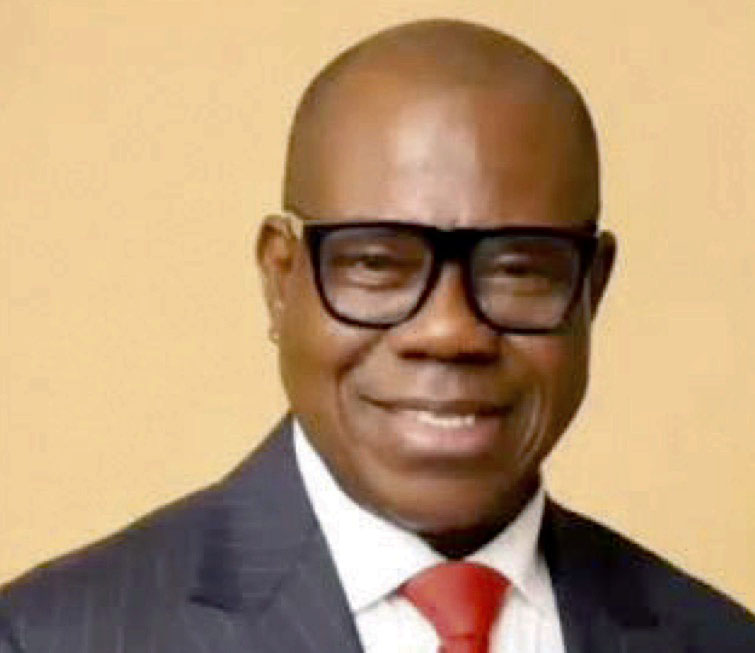
Dr. Innocent Meckson Okoro is the Founding Partner at M.I. Okoro & Associates and the Executive Producer ‘Real Estate Today’.
At the Real Estate Expo Symposium marking the 88th Anniversary of Ikoyi Club 1938, he spoke to Daily Sun on the various issues relating to real estate and its development in Nigeria.
He stated that opportunities abide in real estate but noted that opportunities do not create wealth but execution of the opportunities.
He explained that the time has come for Nigerians to move from land speculation to productive development and long-term value creation.
He also noted that the future of real estate will belong to those who build and create value, not to those who simply buy land and wait.
How can we use real estate as an engine of development?
Every class of real estate solves a problem. Homes build communities. Offices give enterprises a place to grow. Factories create goods and jobs. Logistics hubs strengthen our supply chains. Agricultural land feeds the nation. Hotels and short-let apartments power business and tourism, and our game reserves protect our wildlife and heritage. There is even one silent business in real estate that we rarely discuss, yet nothing else can replace it: the burial ground. Every one of us will need that real estate eventually, so let us not pretend it has no value. So, the question for the future is simple. What problem are we solving and what value are we creating?
Nigeria has every ingredient for opportunity; rapid urbanisation, a growing population, huge housing demand and a continuing need for infrastructure. But opportunity alone does not create wealth. Execution does. Look at Abuja. When the administration of General Ibrahim Babangida took the bold decision to move the seat of the Federal Government, a new capital was created, and the real estate wealth it generated is still growing today. Without that decisiveness, Abuja would not be what it is.
Look at Eko Atlantic, set in motion in Lagos under the administration of Bola Tinubu as Governor and carried forward by those who came after. Look at the Lagos–Calabar Coastal Road, now opening vast new corridors for development. And look at the private developers who have taken those opportunities and actually built. Each of these is a product of boldness and follow-through. That is the lesson. We must move from land speculation to productive development and long-term value creation.
What is the role of infrastructure and location in valuing real estate?
The oldest rule in real estate is location. But today, infrastructure decides how valuable a location can become. Roads, transport, power, water, drainage, security and digital connectivity all feed directly into property value. A beautiful building without infrastructure will struggle to reach its potential. Good infrastructure, on the other hand, can turn an overlooked area into a thriving economic corridor. We have seen this in Lagos. The expansion of the Lagos–Epe Expressway has joined Epe to Lekki and Ibeju-Lekki and unleashed development along the whole corridor. The Coastal Road is doing the same, and I expect much of that corridor to be built up within the next decade. Lagos has come a long way in planning with the future in mind. The rail network is a good example. When people can live further out and still reach work quickly, pressure on the city centre eases, and new communities grow along the line. So, here is my advice to every investor in this hall: follow the infrastructure pipeline. That is where the next value corridor will be.
Can we estimate the role of innovation in real estate?
Technology is already transforming how we search for, value, design, build, market, finance and manage property. Artificial intelligence, data analytics, digital mapping, building information modeling and smart-building systems will shape our industry more every year. We are seeing it at home. Land records and survey plans are moving onto digital platforms, which make title searches faster and harder to manipulate. Drones now survey sites in hours rather than weeks. Online platforms are letting ordinary Nigerians invest in property in smaller units than ever before. But let me sound a warning. The same technology that helps the honest investor also helps the fraudster. Fake listings, doctored title documents and phantom developments now circulate online. Technology must strengthen professional judgment, never replace it. Experience, integrity and proper due diligence remain our best defense. Above all, we need better data; reliable figures on property values, rents, vacancy rates, construction costs, population movement and development trends. Better data leads to better investment decisions. I would urge our professional bodies to work together on a shared market-data initiative, because an industry that cannot measure itself cannot attract serious capital.
Do you think that developers consider affordable housing in real estate?
We cannot talk about the future of Nigerian real estate without talking about housing. The National Housing Data Technical Committee report released in January 2026 puts Nigeria’s 2025 housing deficit at about 14.9 million units. Government data released in December 2025 also indicated that some 15.2 million existing homes are structurally inadequate. So, the challenge is not only to build new homes, but to improve the ones we already have. When I look at Nigerian workers, what worries me most is where they live. When will a young graduate who has just secured employment be able to dream of a home of his or her own?
This is not only a question of comfort. When a decent home is within reach through honest work, it eases the pressure that drives some people into desperate choices. I commend the Federal Government’s Renewed Hope Housing initiative, and especially the creative mortgage arrangement under MREIF, where a subscriber deposits 10 percent, and financing covers the balance up to N100 million, repayable over 20 years. It is a good start. But much remains to be done to make it work at scale. So let me put forward a proposal. Every employer of labour should be encouraged, and eventually required, to support employee home ownership. The employer contributes, the employee pays through payroll deduction, and a government-backed mortgage carries the balance. Employers get a more stable and loyal workforce, workers get homes, and the housing market gets steady, predictable demand.
To get there, we need several things working together. The government must create the enabling environment for private developers to build at scale. We need institutional capital and more efficient construction methods. And we must make far greater use of local building materials, such as laterite and compressed earth bricks, to bring costs down. Finally, housing must be seen as part of the wider urban ecosystem. A cheap house far from jobs, transport and services is not a solution. The same house connected by good roads, rail or water transport becomes a real home and a real asset.
How can finance, investment and wealth creation be handled in real estate?
Real estate is a long-term investment, but in Nigeria its financing is too often short-term and expensive. We need much deeper participation from pension funds, insurance companies, banks, development finance institutions and private equity. But capital only flows where there is confidence. Investors want proper documentation, transparent transactions, sound governance, credible projections, professional management, above all, clean legal title. So the future of real estate finance is not about finding money. It is about creating investible projects. And for the individual investors, let me offer three simple lessons. First, invest along infrastructure corridors. Value follows roads, rail and power. Second, never compromise on title and due diligence. A bargain with a bad title is not a bargain. It is a lawsuit. Third, think beyond owning a whole building. Through real estate investment trusts and pooled funds, many people could come together and own shares in large, professionally managed projects. That is how ordinary savers can participate in real estate wealth, and it is how we can channel more domestic capital into housing.
As a major factor of production what do we mean by “land”?
In Genesis chapter one, God separated the waters, named the sky, gathered the seas and let the dry land appear. Then in Genesis 3:23, He sent Adam out of the garden to cultivate the ground from which he had been taken. From that day to this, mankind has worked the land, and that is why land remains one of the most critical factors of production. Notice what Genesis gives us: the sky above, the land itself, and the seas and everything beneath them. The law says the same thing in an ancient maxim. Whoever owns the soil owns it up to the heavens and down to the depths. Land is not just the plot we build on. It is the airspace above it, the minerals beneath it, and the water around it. So when we talk about the future of real estate, we are talking about far more than bricks and mortar.
We are talking about how we create value from every dimension of land.
How can we achieve utmost trust, sustainability and the risks ahead in real estate?
Real estate transactions involve large sums, land titles, contracts, developers, financiers and professional advisers. Professionalism, transparency and ethical conduct are therefore not just matters of principle. They are the foundation on which this industry grows. Investors must be able to trust the information they receive and the transactions they sign. We must also build for the long term. The buildings we put up today will stand for decades, and they must not be the kind that collapse after a few years. We have seen too many tragedies already. Sustainability is not only an environmental issue, it is an investment issue. Here in Lagos, flood resilience alone can make or break the value of an asset. Energy efficiency, water conservation, drainage, waste management and green spaces will increasingly separate the assets that hold their value from those that do not. And let us be honest about the risks. Title insecurity remains a serious challenge under our land administration system. Inflation and the rising cost of building materials squeeze every project. Weak enforcement of building standards costs lives. The future belongs to those who face these risks with open eyes and manage them professionally.