Follow Us on Google
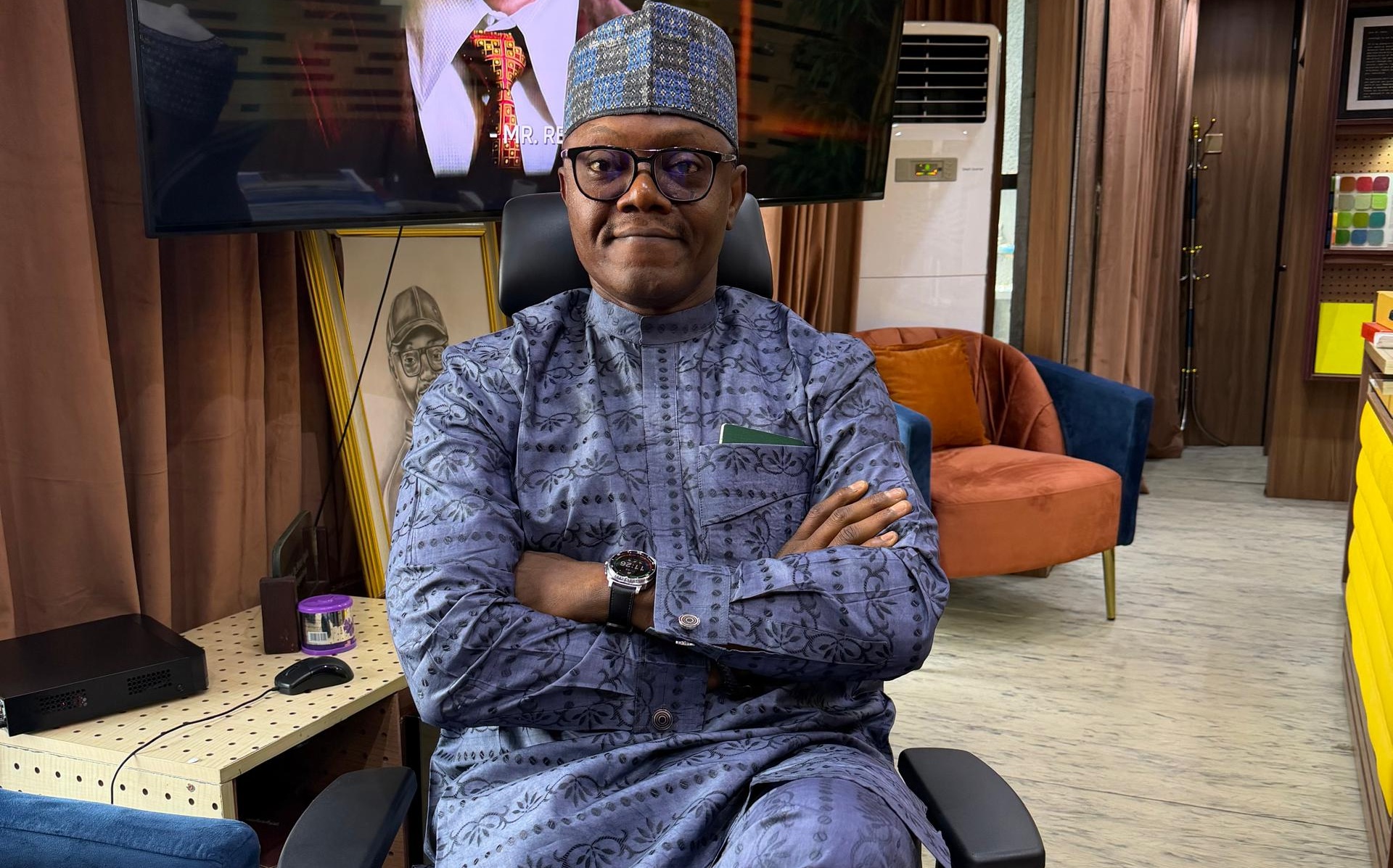
The presidential candidate of the Young Progressive Party (YPP), Dr Peter Agada, has suggested that leaders needed to reposition Nigeria are no longer politicians but national engineers who have the capacity to fix the country’s damaged economy, just as he has highlighted that party manifestos should go beyond rhetoric and should be seen as a social contract between the candidates and the people.
Having seen several presidential candidates make promises and fail, do you think party manifestos are just campaign promises, wish lists that cannot be implemented?
Well, I have been thinking about this lately, but I can say that it is a social contract. A legally binding document that connects the people and the political aspirants or candidates. I have never seen it less than that. I hear people say many things during campaigns, and I hear them say something like doing anything and everything humanly possible to ensure security. And the question is, are you not supposed to guarantee that in the first place? And from an architectural point of view, are you not supposed to know the size of the land you are coming to govern, the people living in it? For example, you should know the dimensions of the land you are coming to build upon, the measurements, whether it is one room, three bedrooms, built in the interest and likeness of the owners. So a party manifesto is an interactive document with specifics in terms of numbers or figures of what will be done with the inflows of resources that come into this country.
I have been hearing it. How people make promises but have no idea of where and how resources will be sourced. What state are such resources coming from? This is, for me, what a blueprint should look like, and such is not developed in a day. It is something that has been running on the inside, and by the day you make your intentions public to run for President of this country. So I think it is a practical, social document that is practical between the candidates and the people.
Are you saying that almost all the campaign promises by presidential candidates are unachievable?
I think that what your industry should be doing by now is to interrogate these promises and to know how these things can be implemented. I think these are the things we should be talking about. Let us go away from the rhetoric, and sometimes I hear them say, I will do everything possible. If I may ask, what is the meaning of everything possible? Does that exist? What is the meaning of everything possible? Can we put numbers to that? Can we put it on a scale? Everything possible is nothing as far as I am concerned. You can take a look at YPP and LabourDirect, and what we think needs to be done is what is happening in our nation and how to tackle it head-on.
What do you think of delivery among political office holders outside political calculations?
As an architect, I believe that the economy of this country is not in tandem with everyday reality. And that is the way it is. If you pay a civil servant N70,000 minimum wage, he or she cannot even transport themselves for half of the month, while so many indulge in getting loans to survive for the rest of the month before the next salary comes. And not to talk of houses and feeding. How much is a bag of rice? It does not match. So what do we need to do? At a point in time, we need to reset the entire system, that is what we need to do.
And how are these things to be done?
Fantastic, let me speak for myself. At YPP, we sat down and said that the nation this time does not need politicians but nation builders to re-engineer the system. I am one of them. I am coming into this game for the first time, having been into the system writing policies for several politicians for several dispensations for 20 years now and we decided to step into the game because when they come into office, they seem not to understand. They are carried away by paraphernalia of office. The second year they are struggling to appoint cabinet ministers and the third year, another round of election comes around, so nothing gets done. So let me tell you what we are doing as a party. We take a look at Nigeria and turn it into a project site. Nigeria is 983,000 square kilometres of land. We have 809 political wards in Nigeria. Every ward in Nigeria, if you visit INEC, has a master plan.
Other News
So we take these maps digitally, 809 maps, and we called professionals like town planners to show us what should be the worth of these. It contains electrical, roads, mass housing, schools. And we designed every local government and ward against its master plan and then we put factories at the areas in line with comparative cost advantage. We do these for the whole of Nigeria and we said fine. And we said how do we build this. So we talk about looking for funding because we cannot come to the office and begin to call the states and that will be a landmine. So we said for example the FAAC allocations should be given to the local government and wards for development. But as a Federal Government, we will be saving for lean governance. We have checked the entire governance and we think it is too bogus. And Steve Oronsaye has written that government should trim. So we take the Steve Oronsaye report, we follow it, we drop the cost of governance and trim it and save money from there. We go to several intervention funds that exist and we reform the Nigerian engineering contracting system. For example, the road going from Lagos to Calabar, someone costed it at N17 trillion, the question is, is that the real cost? And if you drop it on my table, I will drop it by half. There are several ones like that. There is another 2 kilometre bridge between Nasarawa and Keffi, it is costed at N50 billion. We put a N700 billion loan on developing Apapa port. What are we doing? And there are several ones like that. We look at all of these, we reform the EPC sector, all are from non-FAAC allocation and we put them into development.
Before the implementation of this blueprint, what are the immediate intervention measures to cushion the effects of suffering among the people?
Ok, I will answer this in two ways. First of all, from the parade ground, we are announcing N40 million going to everyone straight away. It is not money to be shared, it is money for development and that amounts to N480 billion in a year. That is the money sent to the wards straight for development. And number two, the reason there is cost of living crisis in Nigeria is because the fuel cost is high. Immediately the fuel price goes up, it jacks up the price of everything. We will take our crude oil, it belongs to us. I always take my mum as an example, we farm groundnuts and sometimes we get about 100 bags and she says we are to sell about 90 bags and leave behind a few for domestic use and from there we have groundnut oil and other products for our own use. But what we are witnessing in Nigeria is where the Federal Government sells all the crude oil or gives the crude as collateral and buys petrol from outside the country and sells to Nigerians at exorbitant price. We are buying petrol now costlier than Americans because they transfer American exchange to us which is about one dollar per litre to us. We forget that the American economic system can take care of Americans in America, not Nigerians in the Nigerian economy, I hope you know. You do not expose Nigerians to the same economic situation they have over there. So what we will do is to fix our refineries and give them our crude oil in naira and insist that they sell it for local consumption at a fixed price. So what am I trying to say? Like my mother, we already have our own oil to use domestically, we do not have to go out to buy what we produce. And with so doing, you cool the temperature, you drop the inflation and this high cost of living and on the other hand we are sending N40 million to every ward. So you see we are tackling micro-economic issues from the grassroots, we are dealing with high cost of petroleum, while we continue to build on what the present administration said, the macro economy he is doing, the big foreign reserve, investors are coming in, so good. But what is happening is that down here, people are not feeling the effects. These are some of the things that we should be doing, to drop the cost of living by bringing down the cost of fuel, building modular refineries and fixing transportation.
You have said a lot on how to revamp the economy but tell us where you find the money?
Like I said earlier, we will find the money through the EPC sectors, lean governance sources, there are so many ways. Yes, I agree with you that sometimes policies are seen to be good from the outside but not what it is on the inside. But of course the onus is on the engineer not to meet a sloppy site because you may decide to use a bulldozer to level it or to build according to the slope, we are trained that way. That is why I said that we do not need politicians right now, we need engineers of nations. Nation builders who could choose to change the structure as it suits the economy and benefits the people. So talking on what Nigerians need immediately to cushion the effects of hardship is to fix the refineries, building modular refineries, give them crude in naira so that this pressure will calm down. Now to answer your question directly, our programme is the National Ward Agriculture Intervention Programme for food security. What you need to do first is to make the land secured first, so that people can go back to farm and not just farming but for food production. We will be involved in mechanised commercial agriculture not seasonal to enable all-round food production.
What we are planning to do is to go to every ward across the country and we take 50 hectares of land where land is available. Then in each ward, you take a few hectares for bankable agriculture products, then take like 40 hectares and develop agro industry. With 350 young persons they can start commercial food production. You know there are crops that mature in three months, four months and one year. With that we target those for immediate food supplies in the market. Then number two, remember we are securing the country and that is another discussion entirely. So people will go back to their farms massively and that means the country is secured. You will recall that Nigeria wastes about N3 trillion annually on food waste because of bad infrastructure, no industrialisation, no storage facilities. And after that we import food again with another N3 trillion. Because we have plans to lead Nigeria out of poverty and we are going to use untouched lands in Nigeria for agriculture. Do you know that we have just touched about 80 per cent of the lands in Nigeria? In the city centre, local government, states, all that has been touched? We still have 92 per cent untouched and over 50 per cent is farmable. Looking at my backyard in Katampe there, when my people poured water containing pepper and tomato seeds, the whole place was germinated with tomatoes and pepper. So I can tell you that Nigerian lands are blessed.
In terms of implementation, we have always gotten it wrong, how do you ensure these policies are done?
Well, Architect Peter Agada is an implementer, what happens is that we have been putting round pegs in square holes. I am not saying that the nation has not done well totally, it has tried. Look at where we are today, we are looking good. It is just a little tweak here and there. Let me tell you a little bit about me, my company just finished a project running into billions, it is not managed by blacks, it is done by foreigners. We managed a million tonnes of steel and 40 million worth of 400 containers of imported products and materials. The project was implemented under a record time of under two years. This is the kind of work people do in three to four years and we have done this kind of job for the last ten years. My office complex is another testament of our job execution and again the one kilometre road leading to my office is done without much cost. What I am saying is, how do we kill corruption in Nigeria and ensure that it does not come into what we are doing. We have a LabourDirect savings. When we go to the wards, we select like 13 people and finance them through LabourDirect accounts. These 13 persons become like account holders who receive the N40 million funding from the CBN. These representatives now decide what they do with the money for the wards and according to what the people want, which is our main target. And then a very transparent system will go on building roads, electrical transformers and so on. Now why are we doing it through LabourDirect to the ward account? Because we will avoid a bad system that we have wrongly built to weigh Nigeria down over time. I do not like to say this each time. But the fact remains that our channel of disbursement from the federal account to the states, the local governments have a challenge. I heard the President said he shared 10 point something trillion naira of subsidy savings to the governors. Whichever reasons it went to the governors and we put these monies in joint account of the states and local governments but the question is, where are the dividends of these monies? And I ask, Nigeria has spent N232 trillion from 1999 to date. 665 billion dollars has entered this system. Our infrastructure stock is still 6.3 per cent less than African benchmark. Our illiteracy level is crazy because we have over 20 million children out of school. Where are the schools, where are the hospitals? I am talking of those ones at the city centre and when you go there, you sit on the corridor.
Can you tell us how much will tackle insecurity and how much your administration will take on minimum wage?
Well, let me take the minimum wage first because it is so sensitive, and I can tell you that our plan is to increase it to about N250,000. And on how to achieve that, do not forget we have people working on the N40 million projects, within which they have their clinics, all their agriculture and when we aggregate the total value of what they are producing then we do the mathematics to know that such people living within this ward need this kind of money. For security, by the year 2016, when it all happened in Nigeria, the time Mark Zuckerberg visited Nigeria to identify young capable people who came from different parts of the world. And one of these selected 30 students is the person seated before you here now, Architect Dr Peter Agada. The project with me then was the Nigerian security network and intelligence, called the Armed Forces C4R, which does not require much about human capacity but the gadgets are watching our highways in 55,000 kilometres so that when anyone is carrying an explosive device, the gadget will pick the item and transmit the message to the appropriate authority or nearest command and control centre and the rapid response will come and pick the person up. It needs a military high frequency. The military is not supposed to be talking with the GSM, they need to be talking with their own special equipment called UCDMA. If you go to American Pentagon, they use this frequency to take care of homeland security. Nigeria is yet to look at that, we have not built it. I was able to push that to a point where the Minister of Defence then signed before me and my team and at the point of implementation, a new government took over and the dream hanged. But as soon as we come into office we will implement it. That is what our Armed Forces need. It will watch our borders. It will be controlled including picking device. That is one, then two, do not forget that Nigeria has already eased out state policing. It is coming to be under my watch. From the federal, states, local governments and wards and of course we are applying technology in all these.