Follow Us on Google

Isaac-Ogugua Ezechukwu
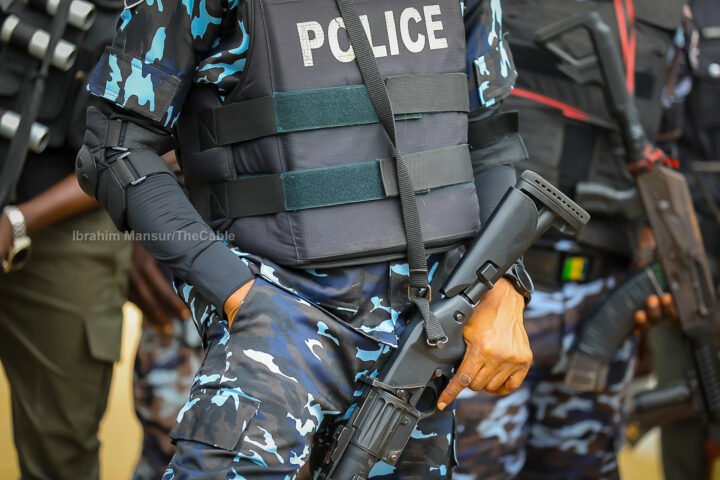
Many states in Nigeria are still licking their wounds in the aftermath of the destruction that attended the recent #EndSARS protest by Nigerian youths, a civil exercise that turned sour in October 2020. The destruction is reminiscent of war conquest occasioned by deployment of offensive weaponry on the peaceful protesters. Affected states were still taking stock of the extent of damage at the time of writing this piece. The Nigeria Police, the main target of the protests, in a news briefing on October 30, stated that it lost over 250 police stations and commands as well as 22 personnel. Many private businesses suffered heavy losses. Notable among them were some commercial banks, boutiques, supermarkets, eateries and warehouse operators.
The handling of the protest by the Nigerian government has created a new “case study” of how not to manage crisis for the world. Going by the outrage from Nigerians within and outside the country, and the international community, it can be deduced that there were serious flaws in the way and manner the protests were managed. When uncouth hoodlums were allegedly drafted to attack the civil protesters with a view to dispersing them, your guess is as good as mine as to what the end result would be. To say the least, it was a crude strategy by a system bereft of ideas and organisational finesse. When darnel is sowed into the wheatfield at night, the intention is obviously to choke the good crops to death.
As the matter was exasperated by the alleged shooting of the protesters by Nigerian soldiers in the night of October 20, 2020 (Black Tuesday), it was as if hell was let loose on the country from the following day.
From protest to frenzied looting
Paranoid by the news of the alleged killings, the youths took to the streets and business districts in their thousands, venting their anger by attacking and destroying perceived government assets they could access. In the process, they came across warehouses said to contain items donated by corporate and individual Nigerians meant to serve as palliatives for the citizens during the COVID-19 lockdown and their anger was further inflamed as a result. The protesters could not fathom why such large quantities of food items meant to augment their food needs during lockdown were stored away in warehouses, whereas most of them went hungry during the said lockdown. They then tore through the warehouses, starting from Lagos State, carting away those items and showing them off while raining abuses on their governments.
Across many other states in the country, similar warehouses were discovered containing donated COVID-19 palliatives and looted. Many excuses were offered by the government on why the items were not given out to the citizens as intended, ranging from the time it took government officials to repackage them to logistics difficulties, etc. Some of the excuses were even directed at the #EndARS protests as the cause of the delay. I consider all the excuses untenable. We are talking of October, whereas Nigerians were locked down from March.
Most of those donations came in much earlier when good individual and corporate citizens donated to support the management of the pandemic, including providing palliatives to the citizens who were locked down. And so the looting went bizarre. The government screamed blue murder, blaming the development on hoodlums who were said to have hijacked the peaceful protests.
The Nigerian government does not deserve to enjoy any sympathies in this matter. First, it needs to explain to Nigerians how hoodlums were introduced into the protests. There are videos on the social media showing how some of the hoodlums with sticks were being loaded into trucks. There were also videos of some civilians said to be the original owners of Abuja municipalities giving the Inspector-General of Police an ultimatum to ask the protesters to leave Abuja roads within 48 hours or they would be dealt with. And the big one: the world awaits information and explanations concerning who shot the protesting youths at Lekki Toll Gate in Lagos, on October 20.
A nation where infrastructural development and citizens’ welfare have been perennially warehoused
The warehoused palliatives can be regarded as a microcosm of and metaphor for systemic denials and deprivations Nigerians have been subjected to over the decades by their rulers. Indeed, the entire welfare package for the citizens of the country has long been warehoused by those paid to implement them for the good of all. It is an endless list. Road infrastructure is warehoused. Healthcare is warehoused. Education is warehoused. That a large army of hoodlums can still be allegedly mobilized by certain interests in the country to cause mayhem upon payment of N1,500 speaks volumes about the level and quality of education of Nigerian citizens. Potable water (even in most city centres) is warehoused. Free and fair elections are warehoused.
Our electoral officials still appear not to be computer/Internet savvy enough and as such have not been able to use technology to track voting during elections the way the banks track deposits and other financial transactions for over a hundred million account holders on a daily basis. Employment opportunities are warehoused. Security is warehoused.
The #EndSARS protests and the emerging facts show that the disbanded anti-robbery outfit and men of the underworld were like competing over who would deal the deadliest blows on the citizens.
Still counting. Good network of roads is warehoused. Stable electricity is warehoused. The country is a nation in darkness. We are still talking of generating a little over 5,000MW of electricity nationwide. A city like Lagos needs more than that to function well. The fact that this sector has been privatized has not changed anything for good. The operators and the government are still arguing over who will pay for the meters for capturing the consumption of electricity by consumers. On August 28, 2020, I travelled from Enugu to Anambra at night, while returning from the funeral of a friend’s mother and observed that every town I passed was in stark darkness that day.
A normal warehouse is a place where raw materials or manufactured goods are stored prior to distribution. A joke was told in those days of how Nigerian government kept promising the Niger Delta region that plans for the development of the region were in the pipeline. It then happened that when Niger Delta militants started blowing up the oil pipelines it was said that they were looking for the development plans, which the government kept inside the pipelines. Having first discovered the branded COVID-19 palliatives in a Lagos warehouses, other state’s protesters took a cue. The same citizens who were locked down for months were made to start paying higher petroleum prices and higher electricity tariffs. Before they could recover, inflation had made nonsense of their living standards.
The game has definitely changed. The #EndSARS protests have jerked up the consciousness of downtrodden Nigerians, now emboldened to demand their rights. Nigerian ‘rulers’ should by now know that they are supposed to be ruling human beings and not projects. The earlier they realize this, the better for them and the country; after all, any good government is about the welfare of citizens. There is a limit to everything. And the limit of neglect of the citizens by the Nigerian government has been reached.
•Ezechukwu wrote from Lagos