Follow Us on Google

Conflict is inevitable in all human endeavour, and according to Paige, a non-violent society is impossible because of three basic reasons: First, man is a dangerous animal capable of killing by nature. Second, there will always be a scarcity of economic resources which in turn, will lead to violence. Third, violence may be used in the case of self-defence or defending loved ones. This is why in our world, there will always be flurry of revolutions and violent conflicts across many countries, Nigeria inclusive. Knowing the inevitability of wars on earth, every wise nation and wise leaders prepare for them in advance and save for the rainy day.
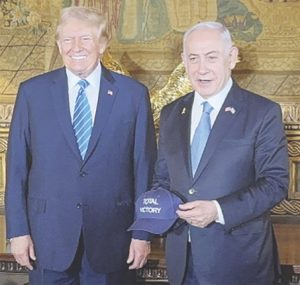
Wars in the Middle East have been a recurrent decimal, especially with the birth of Israel in 1948. Some countries in the Middle East, like Iran, have not hidden their disdain with the creation of the Jewish State, hence their regular chants of death to Israel and death to America, because of perceived support of America for the Jewish State. Some past Presidents of Iran, like Mahmoud Ahmadinejad, even proclaimed that Israel should be wiped out of the earth. Their decision is based on their belief and anger that Israel is occupying the land meant for the Palestinian people, who are predominantly Arab and Muslims. Israel, on the other hand, believes that the Palestinian land is their ancestral homeland as rooted in history narrated in the Holy Scriptures. The Jewish State was uprooted from the Middle East in 70AD by General Titus of Rome, during the Roman Empire. This inherent disagreement has caused wars intermittently among the countries of the Middle East.
The wars include the 1948–1949 Arab-Israeli War (War of Independence). Opponents: Egypt, Jordan, Syria, Iraq and Lebanon. The 1956 Suez Crisis (Sinai War). Opponents: Egypt. The 1967 Six-Day War. Opponents: Egypt, Jordan, Syria. The 1967–1970 war between Israel and Egypt. The 1973 Yom Kippur War (October War). Opponents: Egypt and Syria. The 1982 Lebanon War (First Lebanon War). The 2006 Second Lebanon War. The 2008–2009, 2012, 2014, 2021 Gaza Wars. The 2023–2025 Israel-Hamas War (Gaza Strip & Regional Conflict) initiated by the October 7, 2023, attack by Hamas, and expanded into a broad regional confrontation. Beyond the Gaza strip, it included direct clashes with Hezbollah in Lebanon and Syria, as well as confrontations with the Houthi movement in Yemen. The 2025 12-day Israel-Iran Conflict: Escalation between Israel and Iran, with significant direct actions in 2025. The 2026 ongoing America-Israel-Iran conflict which commenced from February 28, 2026.
It is obvious from the myriad of wars going on in the Middle East, that sudden wars are predictable from the region. Each time such wars occur, it affects the global price of oil, both crude and refined. This is not unconnected with the fact that the Middle East countries supply more than 30 per cent of the world’s total oil supply, and approximately 21 per cent of total global petroleum liquids consumption, or over 20 million barrels per day, pass through the Strait of Hormuz. Iran is the major regional power that can influence passage of ships through this Strait. Whenever Iran is involved in any war, as it is involved with America and Israel, it blocks or shoots at ships passing through the Strait. This automatically results in challenges in importing and exporting of oil and propels rise in oil prices worldwide.
In Nigeria, the effect was swift. Oil price rose sharply from about N800 to about N1,400 before coming down to about N1,300. It has been erratic since then. For a country that has removed subsidy from oil and is grappling to absorb the sudden rise in the price of fuel from N195 when Tinubu came in to about N950 at the beginning of 2026, any further increase in the price of fuel will be an economic death penalty for the people. The government should immediately come to the aid of the people and implement policies that will cushion the effects of the war in the Middle East. The solution to the problem is simple, if the government has the will to implement it. We have a functioning Dangote refinery working almost at full capacity. The only crippling problem for the refinery is inadequate supply of crude oil from Tinubu’s government. The least the government can do in this period of war is to supply the refinery with all the crude it needs so that the price for Nigerians will not be affected by the shocks in international market. By buying from the government, Dangote will not pay the cost of international shipping of the crude to Nigeria, thereby reducing the cost of production of refined crude for the refinery,. This will reduce the selling price to Nigerian consumers and reduce the inflation in transportation.
Other News
Unfortunately, going by the lack of human empathy this government has portrayed since inception and its love for money over the welfare of the people, it would certainly prefer to sell crude oil in the international market to attract high prices in dollars rather than supply Dangote with oil to sell it cheaper to the people. It can also use the Nigerian National Petroleum Company (NNPC) to import cheaper inferior fuel from abroad to sell at a cheaper rate than Dangote, but still at a high price, which would have been cheaper if Dangote gets its adequate supply locally.
The fact is that it is the incompetent and corrupt leadership of Nigeria that has made the country to still be producing only about 1.64m barrels per day in 2025 when most of the countries in the Middle East that Nigeria started producing oil before are today producing higher quantity. Leading Producers in the Middle East (2025 Estimates) include Saudi Arabia, the regional leader, that produces about 9.4 million barrels per day (mbd), representing about 10.5 per cent of the global share of oil. Iraq follows with 4.6mbd, 4.2 per cent of global share. United Arab Emirates (UAE) is next with 3.6mbd, 3.9 per cent of global share. Next is Iran with 3.4mbd, 3.7 per cent of global share. Kuwait is next with 2.5mbd, 2.5 per cent of global share, and so on.
Unfortunately, Nigeria is dropping from the level of about 2.5mbd in 2005 to about 1.7mbd in 2026. The Dangote Petroleum Refinery requires roughly 13 crude oil cargoes (about 650,000 barrels per day) monthly to operate at full capacity. Currently, it receives only about five cargoes per month from the Nigerian National Petroleum Company (NNPC), forcing it to import crude and buy from international traders to bridge the shortfall. If Nigeria produces up to 2.5mbd, which is what Kuwait, the small tiny country in the Middle East produces, Nigeria would be able to supply the 650,000 barrels per day required by Dangote and still have about 1.8m barrels per day to export to other countries in order to earn its foreign exchange that will enable it finance its budget.
If all the money invested in the moribund refinery to repair them was invested in oil exploration, the nation would have been up to more than 3mbd. It is not a hidden matter that the management of Nigeria’s oil industry is the most corrupt in the world. I have not heard where any country had invested billions of dollars in its refinery over more than 40 years without achieving full repairs of the refineries. Meanwhile the refineries are still employing people and paying them salaries without doing any job. Nigeria is indeed a huge crime scene. NNPCL is owing the largest amount of money invested in nothing and government is still retaining the NNPCL. The perpetrators of these heinous crimes in the NNPCL have even refused to appear before the National Assembly to answer for their fraud under APC government, and there has not been any consequences meted out to them for this. The only thing APC specialises in doing is hunting down the opposition with all manner of frivolous allegations while the stench in all their ministries reaches high heavens.
Unless certain actions are immediately taken, Nigeria will continue to suffer high fuel prices whenever the next Middle East crisis occurs. We can start today and plan for it. Tinubu should immediately sell off the refineries to competent companies which will manage them to full operation immediately. It took Dangote about three years to build one of the largest oil refineries in the world. If Tinubu had sold the refineries same day he removed fuel subsidy, Nigeria would have had the service of about more than four refineries. This would ensure adequate supplies to the people and avoid monopoly. As treasurable as Dangote refinery is, he cannot be trusted to be a monopolist. Power corrupts and absolute power corrupts absolutely.
Tinubu should sanitise the oil industry by investigating the scam of oil subsidy which was used to steal billions of Nigeria naira without anything to show for it, and the billions purportedly invested in the refineries to repair them. The perpetrators of these heinous crimes should be made to return the money and sent to jail to deter future criminals wearing the garb of high flying oil executives. If Tinubu has the interest of Nigerians at heart, the time to prove it is now. Sell the crude oil requirements to Dangote refinery so Nigerians can have it cheap and be saved from the pressure in the increase of the price of oil due to the intractable wars in the Middle East.