Follow Us on Google
By Merit Ibe
After years of turbulence, Nigeria’s manufacturing sector is looking toward 2026 with cautious optimism. Fluctuating energy supply, rising costs and policy uncertainties have weighed heavily on industrial growth, but analysts see a window for revival.
With targeted government interventions, private-sector investments and adoption of new technologies, the sector could regain momentum, strengthen local supply chains and generate jobs.
The year ahead offers a chance to shift from volatility to stability, reigniting Nigeria’s manufacturing engine and restoring confidence in homegrown production. Success, however, will depend on sustained commitment from both policymakers and industry players.
According to the Manufacturers Association of Nigeria (MAN) in its 2026 outlook report, the sector’s resurgence will hinge on the effective implementation of new tax incentives, the full deployment of the National Single Window (NSW) Project, and the disciplined execution of the Nigeria Industrial Policy.
In the report, MAN projected real sector growth of 3.1 per cent and an increase in manufacturing’s contribution to real Gross Domestic Product to 10.2 per cent, signalling cautious optimism after years of structural and macroeconomic headwinds.
MAN Director-General, Mr Segun Ajayi-Kadir, pointed out that the new tax regime could ease cost pressures across the manufacturing value chain if properly enforced. He noted that predictable and transparent tax administration is critical to sustaining investment, improving competitiveness and supporting micro, small and medium-sized enterprises (MSMEs).
To ensure policy effectiveness, MAN is advocating the creation of a Tax Policy Implementation and Evaluation Unit under the Federal Ministry of Finance. Such a unit, Ajayi-Kadir said, would continuously measure the impact of tax reforms on investment inflows, production costs and business performance, helping to close the gap between policy intent and real-sector outcomes.
Beyond taxation, the association stressed that industrial revival depends heavily on execution discipline. Ajayi-Kadir argued that progressive reforms only deliver improved living standards and higher revenues when enforcement is consistent and shared ownership among stakeholders is firmly established.
He also urged the Federal Government to move swiftly from policy approval to implementation of the Nigeria Industrial Policy, stressing that sustainable growth is anchored on producing what the country consumes and exporting value-added goods. In this context, manufacturing must serve as the nucleus of Nigeria’s growth strategy as the economy transitions from stabilisation to expansion.
MAN further emphasized that the Nigeria First Policy should be strongly private-sector driven, warning that weak alignment between policy intentions and industrial realities could dilute its impact. Encouragingly, Ajayi-Kadir noted that the steady rise in the Manufacturers’ Confidence Index since the second quarter of 2025 suggests that recovery, though modest, is taking hold.
However, risks remain. While macroeconomic stabilisation has largely been achieved, MAN warned that declining oil production threatens recent gains. The association called for tighter pipeline security, infrastructure upgrades and sustained peace in the oil and gas sector to protect foreign exchange inflows and fiscal stability.
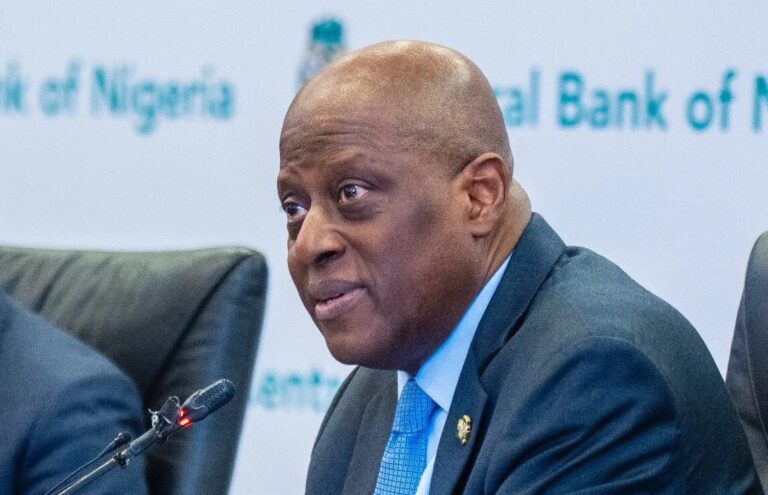
On monetary policy, MAN welcomed the Central Bank of Nigeria’s recent interest rate cut but pressed for deeper reductions to meaningfully lower borrowing costs and stimulate real-sector investment. The association also proposed targeted interventions, including a dedicated foreign exchange window for manufacturers and a Manufacturing Refinancing and Rediscounting Facility.
Additional recommendations include classifying manufacturers as strategic gas users, establishing a stable gas pricing framework, clearing Export Expansion Grant backlogs, strengthening the NSW Project, approving a N1 trillion stabilisation fund, and increasing the capital base of the Bank of Industry.
MAN’s outlook points to the message that Nigeria’s manufacturing revival will not be driven by policy announcements alone, but by consistent execution, institutional coordination and sustained support for productive enterprises.
“The stabilization path has been cleared; what lies ahead is the imperative of accelerated growth.
“To sustain this trajectory, exchange rate stability must be guarded with every available policy tool. “Currency stability is more than a macroeconomic metric, it is a reflection of national resolve.”
“While global oil prices remain entirely outside Nigeria’s control, the country retains considerable influence over its production levels; a domestic variable that must be managed with urgency and precision.
“The Government must therefore take decisive measures to reach the OPEC quota by tightening pipeline security and upgrading operational infrastructure. “Also, sustain the increase in refining capacity by forestalling any further industrial disputes in the mainstay of the economy.
“The Central Bank of Nigeria’s recent benchmark interest rate cut is commendable and signals a welcome policy shift. However, the time has come for the apex bank to take a bolder step by introducing a deeper rate cut that can meaningfully lower the cost of credit and stimulate real sector investment.
“Growth cannot thrive where capital remains prohibitively expensive.
On the fiscal front, the development and implementation of the Nigeria Industrial Policy is long overdue.
“Categorize manufacturers as strategic users of gas to remove the gap between what manufacturers and electricity generation companies pay per cubic foot of gas.
“Introduce a stable, transparent gas pricing framework for manufacturers and prioritize local gas supply before exports.
“Reduce the benchmark interest rate by at least 200–300 basis points over the next two quarters to make credit affordable for manufacturers.
“Launch a Manufacturing Refinancing and Rediscounting Facility (MRRF) that allows banks to refinance approved manufacturing loans at single-digit rates for up to 7 years.
“Create a publicly accessible dashboard tracking lending flows, interest rate spreads, loan approvals and sectoral disbursement patterns in real time.
“Create a dedicated manufacturing FX window to ensure access to forex for raw materials and machinery.
“Direct NEPC to release the existing backlog of Export Expansion Grants and reduce bureaucratic procedures for issuing Export Credit Certificates (ECC).
“Introduce import duty exemptions for non-locally available raw materials, spare parts and machinery that are essential for manufacturing.
“Develop KPIs, establish feedback mechanisms and conduct periodic audits to ensure the successful completion of the National Single Window Project in compliance with global cost-effective standards.
Create a National “Manufacturing Regulatory Coordination Desk (NMRCD) under the Federal Ministry of Industry, Trade and Investment to harmonize approvals, inspections and compliance processes for manufacturers across key agencies.
“Expand embedded generation and industrial cluster power projects using gas and renewable mini-grids, ensuring manufacturers get reliable, affordable off-grid electricity.
“Approve the N1 trillion stabilization fund for manufacturers and direct the CBN to increase the capital base of the Bank of Industry to meet the credit demand of industries.”