Follow Us on Google
•Stakeholders divided over JSS, SSS merger plan
From Fred Ezeh, Abuja
The Federal Government’s proposal to merge Junior Secondary School (JSS) with Senior Secondary School (SSS) into a continuous six-year secondary education cycle has ignited a nationwide debate, with stakeholders divided over whether the reform will improve student retention or merely gloss over deeper problems confronting Nigeria’s education sector.
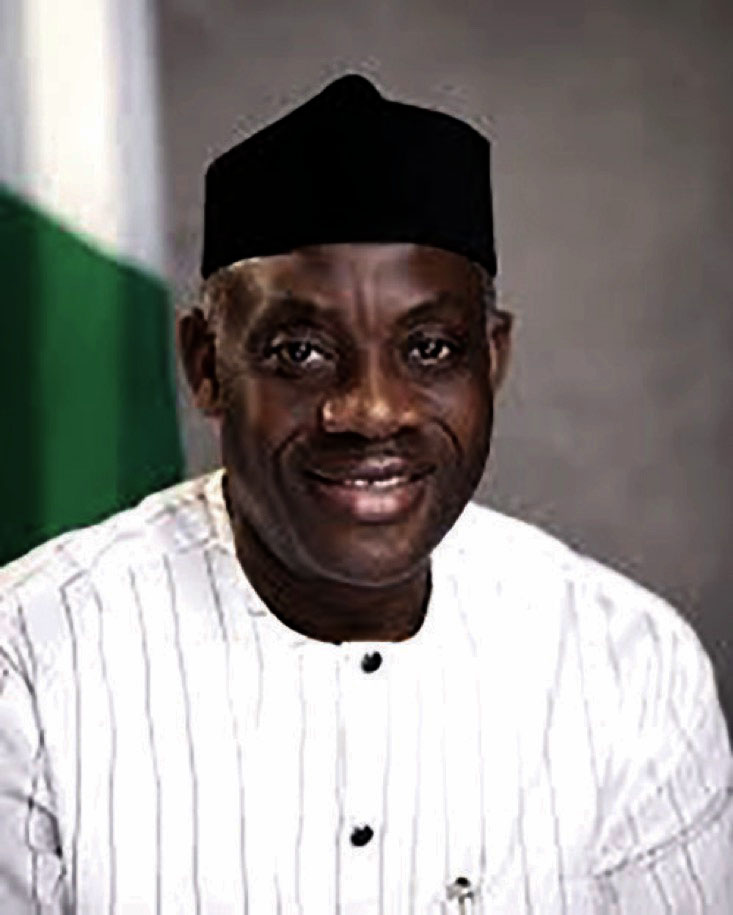
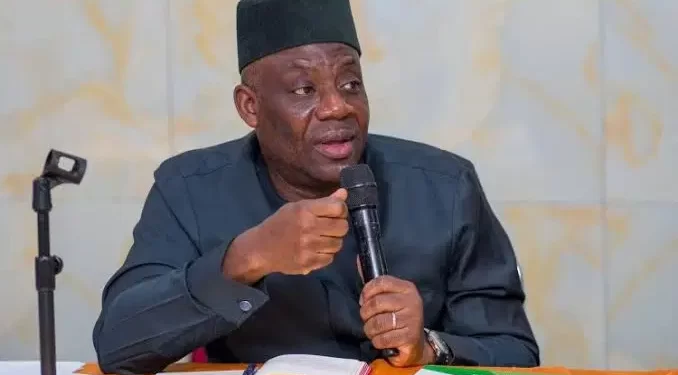
The proposal was unveiled by the Minister of Education, Dr. Tunji Alausa. It seeks to replace the current 6-3-3-4 structure with a 6-6-4 model, creating a seamless six-year secondary education system.
Alausa postulated that the existing arrangement has outlived its usefulness, contributing to high dropout rates, duplication of administrative structures and poor utilisation of school facilities:
“While many junior secondary schools are overstretched, several senior secondary schools operate below capacity because both are managed separately.”
The proposal expected to be considered by the National Council on Education (NCE) later in the year, has generated mixed reactions from parents, school proprietors and education experts.
Why government wants the change
The Minister insisted: “Existing JSS-SSS disarticulation policy has failed to achieve its objectives and has become one of the factors contributing to Nigeria’s worsening education crisis. Many junior secondary schools are overcrowded while several senior secondary schools remain underutilised because both operate under separate administrations.
“The transition from JSS3 to SS1 has become a major point at which many students discontinue their education due to admission bottlenecks, placement challenges and additional financial burdens on parents.
“Millions of children who enrol in primary school never complete secondary education, making it imperative to remove barriers that interrupt their academic progression. Integrating junior and senior secondary education into one uninterrupted six-year cycle will improve retention, reduce administrative duplication, maximise existing infrastructure and ensure that more Nigerian children complete secondary education.”
How it started
Nigeria’s education system has undergone several reforms since independence. For many years, the country operated the 6-5-4 system before introducing the 6-3-3-4 structure in the early 1980s. The reform divided secondary education into three years of junior secondary school and three years of senior secondary school, with the intention of exposing students to both academic and vocational learning.
Missing Links
In 1973, the Federal Government changed the cademic calendar from January-December to June-June.
In 2004, the introduction of the Universal Basic Education (UBE) programme made nine years of schooling comprising six years of primary education and three years of junior secondary education which were proclaimed free and compulsory.
However, implementation has varied in the states because education is on the concurrent legislative list. While some schools operate integrated secondary education, others maintain separate junior and senior secondary schools, often under different management authorities.
Education officials believe this fragmented arrangement has weakened the goal of uninterrupted basic education and contributed to the high number of students who fail to progress beyond JSS3.
Support for merger
The National Parents Teachers Association of Nigeria (NAPTAN) is among the strongest supporters of the proposed reform. Its National President, Prof. Boniface Odeh, described the initiative as a timely intervention capable of addressing one of the major weaknesses in Nigeria’s education system:
“Many students fail to proceed to senior secondary school because of placement challenges, additional costs associated with the transition and limited admission spaces. Replacing the current structure with a continuous six-year secondary education cycle will remove these barriers and significantly improve student retention.
Other News
“The uninterrupted six-year system will provide sufficient time for effective curriculum implementation, deeper subject mastery and greater emphasis on vocational education, skills acquisition and Science, Technology, Engineering and Mathematics (STEM).
“The establishment of the National Secondary School Commission (NSSC) to oversee the six-year secondary education cycle will strengthen governance, improve quality assurance and enhance parental participation in school administration.
“Beyond academic gains, the reform will reduce the financial and emotional burden on parents by eliminating one stage of school transition, thereby reducing admission-related expenses, uniform costs and other associated charges especially important for low-income households.
“The Federal Ministry of Education should engage parents, teachers, school proprietors and state governments before implementation. There’s need for teacher retraining, infrastructure assessment and a phased implementation strategy.”
Experts caution
Some experts warned that restructuring the education system alone will not solve Nigeria’s school dropout challenge. Education analyst, Adamu Yushau, acknowledged that the proposal could improve learners’ progression if properly implemented, and observed that many students leave school after JSS3 because of financial difficulties, poor access to schools and weak transition mechanisms:
“If the policy removes unnecessary barriers and ensures that learners progress seamlessly to senior secondary school, it could help improve retention. But, the reform must be accompanied by increased funding, improved infrastructure, recruitment of more qualified teachers and sustained stakeholder engagement.
“It is easy to formulate a policy. But implementing it successfully across schools nationwide will require careful planning, close monitoring and strong collaboration among federal and state governments, school administrators and parents.”
Maryam Abubakar, proprietress, Triumph Academy, Suleja, Abuja, said : “The proposed merger addresses only a fraction of the problem. “I don’t think removing the transition between JSS and SSS will automatically reduce the number of out-of-school children. Many students who stop after JSS do so because their parents cannot not afford to keep them in school.
“Unless those economic and security challenges are addressed, changing the structure alone may not produce the desired result. There are concerns over overcrowded classrooms, inadequate teaching personnel and poor learning facilities in many public schools. Government should prioritise increased education funding, improve infrastructure, recruit more teachers and expand support for indigent learners before embarking on another structural reform.”
A retired Director, Department of Quality Assurance, Federal Capital Territory (FCT) Education Secretariat, Alhaji Salihu Omehi: “The proposal should undergo extensive consultations before implementation. Improving the transition from junior to senior secondary education is desirable, but the real issue is the rising cost of senior secondary education. Statistics may show that many students who complete Junior Secondary School do not proceed immediately to Senior Secondary School, but we must understand why.
“Parents enjoy relatively affordable education up to JSS3. Once their children move into SS1, the financial burden rises significantly, and many families simply cannot cope. If government merely merges the two levels without addressing affordability, the financial pressure may only shift to an earlier stage rather than solve the problem.
“The implementation could become complicated because education is on the concurrent legislative list, allowing states to operate different administrative models. Many states, including the FCT, junior secondary schools are managed by State Universal Basic Education Boards (SUBEBs) while senior secondary schools fall under separate secondary education boards.
“Management structures are already established. Government must clearly define which agency will oversee the merged system and how existing institutions will be harmonised. While some public and private schools already operate integrated JSS1 to SS3 systems, others maintain separate junior and senior secondary schools, making flexibility essential during implementation.”
Teachers yet to speak
Efforts to obtain the reaction of the Nigeria Union of Teachers (NUT) were unsuccessful, as the union declined to comment on the proposal. Its silence perhaps leaves the conversation largely between government officials, parents, school proprietors and education experts as the country awaits deliberation on the proposal by the NCE scheduled to hold later in the year.
What lies ahead
The decision of the NCE is therefore expected to determine not only the future of the proposed 6-6-4 education structure but also the direction of Nigeria’s next major education reform.
Some observers insisted that the success of 6-6-4 model may depend less on restructuring schools than on government’s willingness to tackle the underlying causes of school dropouts, notably, poverty, inadequate funding, shortage of teachers, insecurity and weak infrastructure.