Follow Us on Google
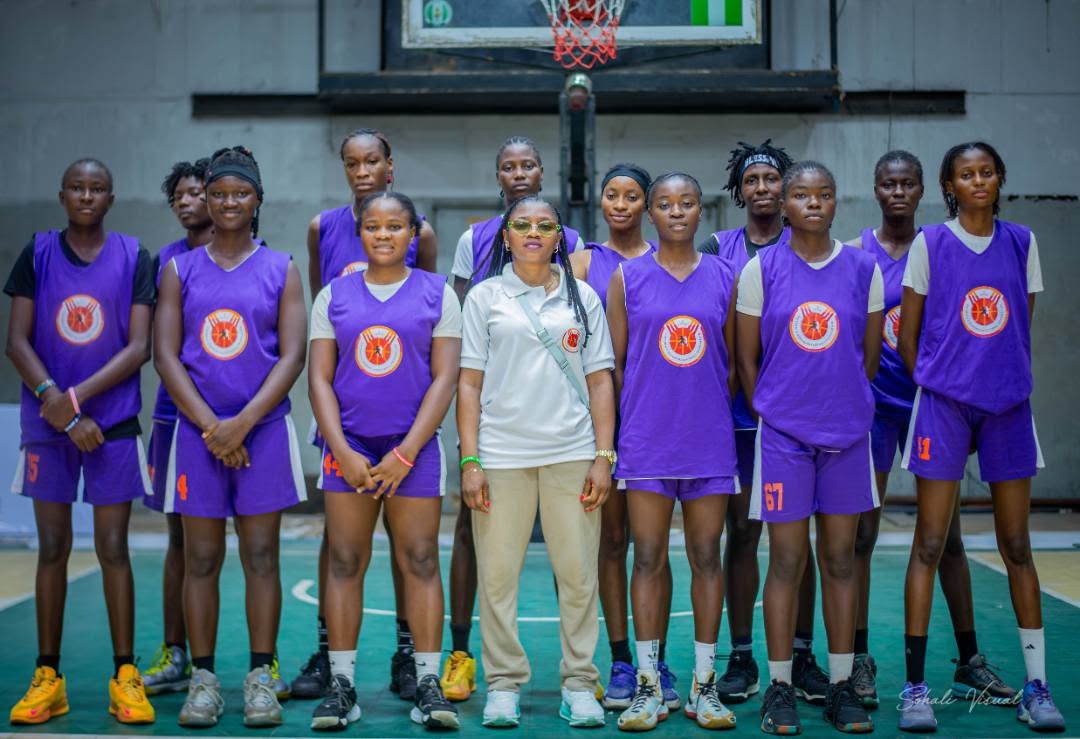
The Victoria’s Queens Basketball Foundation has completed the third edition of its annual youth training camp, marking the faith-based organization’s first event in Lagos State as it begins a broader push across Nigeria’s Southwest region.
Founded in 2024, the foundation uses basketball to mentor and empower young girls who lack access to sports facilities and development programs. Founder Fayemi Deborah said the initiative grew out of her own experience navigating those gaps growing up, and her wish to give young girls in Nigeria access to opportunities their peers abroad take for granted.
This year’s camp centered on the theme “Identity,” drawn from the biblical passage 1 Peter 2:9. Fayemi said the theme emerged through prayer as she prepared for the event, with a message she felt compelled to pass on to the girls: that they are chosen and valued.
The foundation’s inclusive spirit showed through in its classroom sessions, where Coach Yetunde Abdulkarim, who is Muslim, led a session built around the camp’s core message. Fayemi noted that the foundation focuses on shared values rather than religious doctrine, and said watching Abdulkarim teach with such passion was proof that faith and purpose can transcend background.
The Lagos event follows two earlier editions held in Sango-Ota, Ogun State, and represents the foundation’s first stop in a planned tour of the Southwest. Organizers say future locations remain flexible, with Abeokuta and Ekiti among the possibilities under consideration alongside a possible return to Lagos or Ota, depending in part on regional security conditions.
Fayemi described the Lagos turnout as exceeding expectations, calling the growth from the first camp to the third a sign of steady momentum for the foundation’s mission.
The camp was run by a team of twelve coaches — Juliana Negedu Akhere, Chioma Udeaja, Yetunde Abdulkarim, Motunrayo Nifemi, Titi Biliqis, Tokunbo Olaosebikan Ijomah, Shola Shomala, Taye Adeniyi, Mimi Henrietta Jam, Mary Zidah, Atinuke Arowoshafe, and Akindele Peter — with additional support from the foundation’s veterans, sponsors, and backers.
While Victoria’s Queens focuses on identity and access, Coach Justin Gonzales targeted a different gap in player development — one he says shows up not in opportunity, but in execution.
In a presentation titled “Stop Creating Robots: A modern approach to player development,” Gonzales argued that conventional training methods are producing technically sound but “robotic” athletes who look lost once the game turns unpredictable. He said static, drill-based training with fixed outcomes strips away the real-time decision-making, deception, and reaction that define actual gameplay, forcing players to relearn skills once they hit live competition.
Gonzales outlined four pillars of what he calls a “complete player”: skill, IQ, feel, and adaptability. He described skill development not as repeating a fixed solution but as repeatedly discovering one, while IQ — the ability to read a situation and choose a response — must be explicitly taught. “Feel,” the instinctive, reactive adjustment players make mid-play, he said, comes only through exposure to real game situations, and adaptability requires exposing players to variability in practice since no two closeouts, screens, or shots are identical.
Central to his message is a shift in the coach’s role, from dispensing answers to designing environments that push players to solve problems on their own. His practical advice: reflect critically on practice plans and coaching philosophy, add defenders to drills as the simplest way to increase realism, and pull back from predetermined outcomes to let players work things out for themselves.