Follow Us on Google
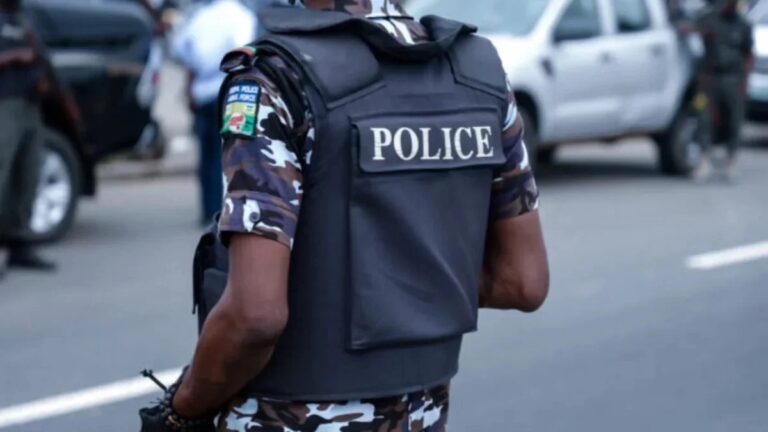
A university lecturer, Chijioke Uwasomba of Obafemi Awolowo University, Ile-Ife, Osun State has advised the Nigeria Police Force to examing critically the concept of state police before adopting it .
Professor Uwasomba cautioned that no serious police officer should support the concept without careful consideration.
Uwasomba who spoke last Thursday in Lagos at the public presentation of Crime Beat Reporting In Nigeria, a book authored by veteran crime Reporter, Frank Oshanugor.
The event drew stakeholders from the media, security sector, and private institutions.
Speaking at the gathering, the professor warned that tampering with historical structures without proper understanding could be detrimental to society.
According to him, undermining history erodes identity and weakens institutions, including the Nigerian Police.
He traced the challenges facing the Nigeria Police Force to years of military interference, inadequate funding, and the emergence of parallel security outfits, which he said have collectively undermined the force.
Uwasomba argued that introducing state police without addressing these systemic issues could further destabilise the policing structure in Nigeria.
Journalism as pillar of society Beyond policing, the don emphasised the indispensable role of journalism in nation-building. He described journalism as central to human rights, democracy, and societal development.
“So information is vital. And there are people who are professionals in spreading, disseminating, and ensuring that information is passed around for humanity. It is journalism,” he said.
He added that without journalism, society would be disconnected and uninformed, stressing that the profession remains the backbone of accountability and public awareness.
Uwasomba commended the author for documenting the evolution of crime reporting, noting that such efforts help preserve history and educate future generations.
“And so journalism is extremely important. I’m not surprised that the writer focused on its value to humanity, covering both print and electronic media,” he added.
Frank Oshanugor’s book celebrates crime reporting legacy.
The 335-page book, Crime Beat Reporting In Nigeria, was formally unveiled by dignitaries from across sectors, who praised Oshanugor’s contribution to journalism and crime reporting.
The book was reviewed by Prof. Uwasomba.
Other News
Chairman of the occasion, Mr. Davidson Akhimien, described the book as a vital tool in the non-kinetic fight against crime.
“I beg to say that Mr. Frank Oshanugor… has contributed a very worthy tool in the non-kinetic aspect of the fight against crime and criminality in Nigeria,” he said, while urging attendees to not only celebrate the work but engage with its contents.
Inspector General of Police, IGP Olatunji Disu, highlighted the long-standing partnership between the police and crime reporters.
“The Crime Reporters Association are held in high esteem. It has helped us in creating awareness and showcasing what we do in protecting lives and property,” he said.
The IGP who was represented by Deputy Commissioner of Police, Adeshina Bamidele Lawal, praised Oshanugor on his ingenuity in crafting a book that will remain relevant for centuries.
He encouraged other journalists to emulate Oshanugor by putting down their wealth of experience in journalism practice.
In his remarks, Oshanugor said the book was inspired by his decades of field experience and aimed at supporting journalism education.
“I wrote the book not as a classroom teacher but as a field reporter with over 30 years’ experience,” he explained, adding that it would serve as a resource for students and lecturers alike.
Also speaking, Chairman of the organising committee and Vanguard Newspaper editor, Emma Nnadozie, praised the author for preserving the history of crime reporting.
“I want to thank Frank for trying to chronicle history… for remembering our days,” he said, while reflecting on the risks faced by both journalists and police officers.
The event was also graced by the Mother of the Day, renowned journalist and CNN African Journalist Award winner, Olori Janet Mba Afolabi, alongside attendance by members and leaders of the Crime Reporters Association of Nigeria, CRAN.
Preserving history, inspiring the future
Stakeholders at the event agreed that Crime Beat Reporting In Nigeria is more than a book, it is a documentation of history and a guide for future journalists.
They stressed that preserving the evolution of crime reporting is crucial, especially at a time when debates around state police and security reforms continue to shape Nigeria’s public discourse.
As echoed throughout the event, the intersection of journalism and policing remains vital, with both professions playing complementary roles in promoting transparency, accountability, and national development.
Displaying 1000228215.jpg.