Follow Us on Google
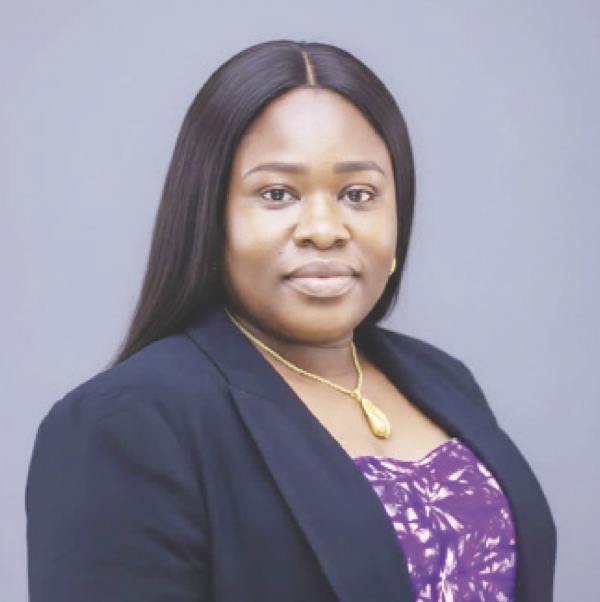
• Says today’s youths are a bold generation, but warns them against mixing reality with social media
A University of Lagos (Unilag) lecturer has enjoined the society, parents and guardians to desist from viewing today’s youths, now known as Gen Zs, with the wrong lens.
Dr Gbenusola Akinwale, a developmental psychologist, in an encounter with COSMAS OMEGOH, maintained that today’s youths are changing the narratives and audaciously emerging as adults to challenge the norm. However, she cautioned them against the abuse of social media.
Something about today’s youths’ life is seemingly shifting?
Yes, a lot! We are talking about the Generation Z now called Gen Z. Typically, these are individuals born between 1997 and 2012. And now, they are between the ages of 14 and 29 years.
But honestly, I see nothing wrong with the generation.
We who were born between 1981 and 1996 now called the Millennials may have resiliency all because we were raised by parents who easily said things and we believed practically everything they said.
But this current generation is different. It is wired; theirs is a digital generation. As a parent, if you tell them stuff, they fact-check you with their digital devices to validate their claim.
In my own generation, our moms could actually walk up to us and say “if a man touches you, you get pregnant,” and we believed them.
Even those who came before us, the Millennials: the Generation X, we believed everything they told us because we couldn’t fact-check them.
Now, the difference between our Millennial generation and the Gen Z is that we were raised as timid. At that time, if a lecturer was talking to you, you couldn’t look at their face; you couldn’t challenge what they did. We just accepted everything.
But the current generation can walk up to me and say “Dr Akinwale, did you say I have a challenge with my result? Could you please go through it with me?” This is their generation.
In my own generation, if you saw an F on the notice board as your result, you went with it, crying all the way home and reregistered it again.
But this is a generation that will come to my office and say “ma, please give me just a minute or two. I want to check something with you.”
So as much as they are concerned, there is a positive side of the coin as much as there is the other side.
These days, a lot of people emphasise the negative side of Gen Zs. But I tell you, some of them are already fathers and mothers. They are 25, 28, 29-year old. That means they are already giving birth to Generation Alpha (Gen A). By Gen A, we are talking about those born between 2013 and 2022. They are now the Generation Alpha.
I’m not saying that all they are doing is fine. As much as I have highlighted their positive sides, they also have their flaws. But when you challenge their flaws, they also have to look back and challenge the Millennials.
Recall that we also have Generation X – those born between 1965 and 1981 – as part of those who raised Gen Z. All of us are part of the problem. So who are we going to blame now?
Recall also that the Gen X and the Mellenias used to be rebellious to the Baby Boomers – parents to the Gen X and the Millennials. The Baby Boomers who birthed us were instruction givers. ‘Do this, do that!’
Now, by the time it got to Gen X, people had already started changing norms: rejecting family trades and even stopped attending family churches.
The Gen Zs want to choose other things that start with other letters which were not a part of their families. That is what we have now.
Besides, I see a lot of flaws: attempted suicide, use of social media validation to judge reality. They fail to understand that when we talk about social media, it is what you want to see that you see there.
Because this generation is wired, they believe everything they see on social media.
Therefore, as parents and guardian, we need to let them know that reality is different from the social media.
How did we get this generation categorisation?
An American organisation did it. It basically tries to do what we call developmental core; it comes up with significant things and peculiarities of those generations.
But it is not as if what they are doing is scientific. That is why when you look at Psychology literature, you don’t see some of those things.
But a lot of people are now hiding under that developmental core to misbehave: like we are seeing among the Gen Zs.
But if one was born between 1996 and 2014, it doesn’t make them abnormal. That is where I stand to correct a lot of people.
When I attend various fora, I challenge those challenging and even rubbishing the Gen Zs. I tell them that one thing I’m really happy about is that this generation delivers values.
Now, look at their acts politically. See their influence in the last elections. Look at their pattern of voting.
Because the Gen Zs have voter’s cards, we could see their pattern of voting. In the next ten years, this generation will lead a revolution because they will tell you that: “Daddy had taken so many lies; my grandparents did the same. This is a different generation that is not taking everything.”
We may have our issues, our sentiments about them, but give it to them, they are a breaking generation.
I personally celebrate them because we are raising adults that will challenge the norm; there are so many aberrations and abnormalities in our society. Our parents avoided such confrontation, preferring to say: “We don’t want any person to kill me; we don’t wahala.” But not them!
We saw the Gen Z reaction during the last #Endsars protest and the pattern it took. It was unlike any other protest we have had in Nigeria; it took a different pattern. They started everything from social media. We could see the influence of wire in them. Perhaps, if we had allowed them, who knows, a new Nigeria could have been delivered today.
But sadly, our own parents’ generation was the one that upturned everything. If you look at the polling booths where heist was observed in the last elections, who committed them? The Millennials and the Gen X of course!
You won’t see Gen Zs of 18 years snatching the ballot box. They want a better society. And they want all of us to live together, but that does not excuse them from the fact that they have their own issues.
How are Gen Zs wired?
We mean that they are living in a wired generation. They have access to information.
As much as some of them are into shoddy deals, a good number of them are doing legit activities. Even as undergraduates, some of them are big entrepreneurs.
At the University of Lagos, we support such initiatives. The reality is that what some of us lecturers couldn’t achieve some of them now have.
Are Gen Zs then misunderstood?
To a large extent they are misunderstood because we park them all together. We see their weak sides without hyping their good sides. I work with them every day; I see more of their good than their weak sides. That one of them is on drugs does not mean that I have to rubbish the rest.
You will not understand how many of our students that are graduating with First Class now – students that truly merited First Class!
During our last convocation, my department: the Department of Psychology, had a harvest – 14 graduated with First Class. That had never happened before.
During the days of the so-called Millennials we once celebrated, it was one First Class in five years. At that time, when one was going for a First Class, others would be bringing them down. One person would like to shine. But now, we have a class where all want to shine together.
How then do we begin to see Gen Zs?
Sadly, both parents and the society have been labelling them. They should desist from that.
We need to use a good lens to see the good side of this generation. Many of us are seeing their weak sides. We should also emphasise on their strength.
When we try to underscore their strengths, we will see that there will be less emphasis on their weaknesses.
From my experience, we have far better youths now than we had before – youths committed to their academics.
Then, all our own generation could do was to go back to our parents and ask them to secure us civil service jobs.
But now, you cannot tell a Gen Z that you want to give them a civil service job. They can do that by themselves. The narrative is really changing. Therefore, we need to see that we are not myopic with this generation. Let’s see their strengths. Let’s see the good side of them so that when we want to counsel them, we won’t be staring at their weak sides to rubbish them.
We now have a bold generation. Then, if you scolded a student in my generation, they would never pass that corridor again. But you cannot do that to people of this generation.
Some of them will look at a professor and say: “Hey prof, you are staring at me, I hope it is well with you?” That is when you know that we are dealing with a different generation.
Our generation was not so wired. We were even afraid of our manipulators. We couldn’t challenge those who were riding us. But not these ones! They say what they want to say.
In the US, a school like Harvard University has start-up funds for them. The moment they enrol in school, they ask them to look at the society, and see what problems they can solve. They have $20,000-$30,000 waiting for them. That is why they don’t look for jobs after school. That is also what we are trying to do here in the University of Lagos, to build entrepreneurship so that when students graduate, they have two certificates: one in their major, the second in entrepreneurship.