Follow Us on Google
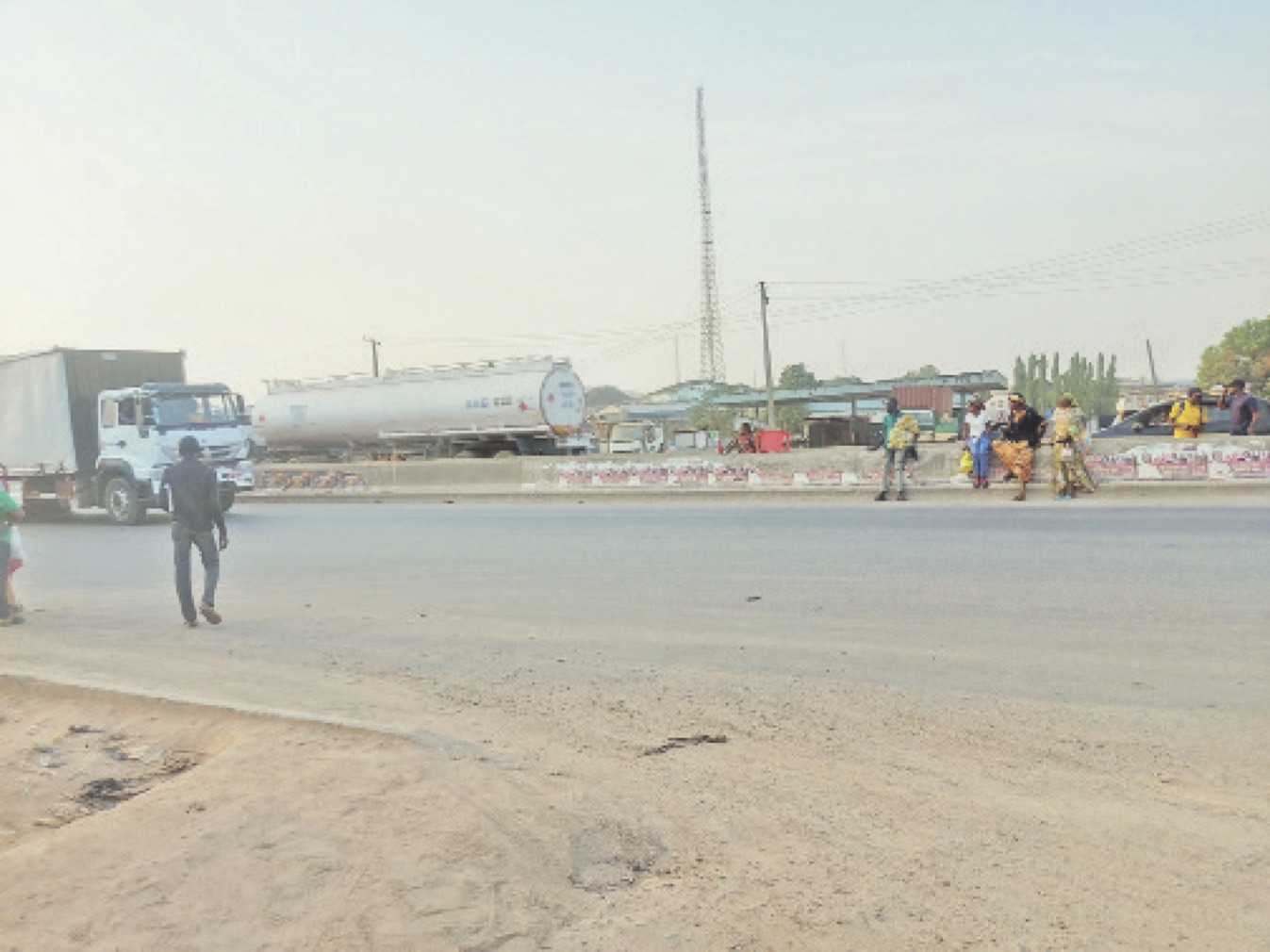
• Absence of pedestrian bridges spells doom on Lagos-Ibadan Expressway
• Persistent accidents, deaths may swell number of out-of-school-children
By Oluseye Ojo
In the urban sprawl of Ibadan, the capital of Oyo State, a stark dichotomy exists between the city’s bustling vibrancy and the dark shadows of tragedy that hover over one of its highways.
The Lagos-Ibadan Expressway, which is owned by the Federal Government, is one of West Africa’s busiest corridors. It is often referred to as a lifeline because the highway connects millions to opportunities and dreams.
For travellers, driving from Ibadan to Lagos and from Lagos to Ibadan, has become a smooth ride. On the average, it takes about one hour to drive from Ibadan to Lagos, barring unforeseen circumstances.
However, for many who traverse its expanse, specifically the Toll Gate to Iwo Road stretch in Ibadan, the road has morphed into what some term a ‘death trap.’ It is a sort of valley of shadow of death for pedestrian.
Pedestrian casualties, owing majorly to the unavailability of essential infrastructure, such as pedestrian bridges, are surging, leading to devastating stories that echo time and again through the community.
The people living in many communities along the stretch of the highway, including primary and secondary schools pupils, have been having serious difficulties crossing the highway from one side to another. The road median of the newly reconstructed high way is double lines of concrete with wide draining at the middle. But one of the two lines of concrete is short, while the other one is very high.
In a bid to lessen the burdens of pedestrians in crossing the highway, some good Samaritans have constructed makeshift staircases with planks on top of the wide drainage at the median of the expressway.
A daily struggle
Every day, thousands of commuters utilise the corridor. From business professionals heading to their offices to students on their daily school runs, the highway is a conduit of movement and commerce, especially from the Ibadan Toll Gate end to the popular Iwo Road.
For pedestrians crossing from one side of the bustling road to the other, the journey can turn fatal. With no pedestrian bridges in sight at several strategic points, these travellers are forced to dodge speeding vehicles in a treacherous dance of life and death.
Mrs. Yemisi Akingbile, a fruit seller at Boluwaji Junction, shared harrowing experiences of this perilous crossing. “I see people get hit right before my eyes,” she recounted, her voice tinged with despair. “Just last week, I witnessed a young mother with two children trying to cross. She thought she could make it, but a truck came out of nowhere.”
Such incidents have become alarmingly common in this stretch of the expressway. Still, many people do not have options but to manoeuvre their daily routines amidst the hazards.
As gathered, the irony of the situation is palpable, as Ibadan boasts of infrastructural projects and ongoing government initiatives aimed at improving transportation in Oyo State.
People have, however, been asking questions on whether it was a grave oversight for both the federal and state government to have forgotten to construct pedestrian bridges at peculiar points on the stretch.
A private car owner, Mr. Adekola Adeoye, said: “I drive every day. But I am pained whenever I see people crossing the Lagos-Ibadan Expressway at Soka, Sanyo and Boluwaji. If I have the money, I will construct the pedestrian bridges. Even, if I have the money, will government allow me to construct the bridges?
“I must confess that the basic pedestrian infrastructure, specifically pedestrian bridges, that are conspicuously absent, have been rendering the road increasingly unsafe for pedestrians. Many of the pedestrians crossing the highway do not know the speed matters in calculating the distance of a moving vehicles before crossing any highway.
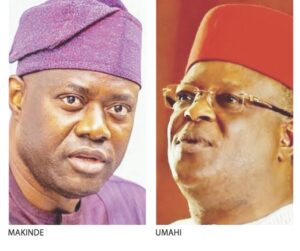
“You cannot compare the time a vehicle that is moving at the speed of 50 kilometres per hour with one that is moving at 120 kilometres per hour. The one with higher speed will get to you sooner than expected. Many people have lost their lives. What can we do? We can only appeal to the Minister of Power, Dave Umahi, and Govenor Seyi Makinde of Oyo State to please construct pedestrian bridges at Soka Junction and then another one that will serve both Sanyo and Boluwaji.”
A growing epidemic
Available statistics made it known that pedestrian fatalities along the axis of the road have risen sharply in recent years, particularly as vehicle traffic continues to soar.
Many of those killed are individuals simply trying to navigate their way through the chaos of vehicular movement.
A visit to strategic locations, such as Soka, Sanyo and Boluwaji stretch of the highway showed an increase in incidents, particularly during peak hours when the flow of vehicles reaches a breaking point.
A middle-aged man, Obi Olayinka, a resident of Sanyo, also stated: “We’re often overwhelmed by the number of calls we receive. Almost on daily basis, we rush people from the scenes of accidents involving pedestrians to hospitals. It’s heartbreaking.”
As pedestrians remain caught in the web of danger, many have adopted desperate measures for crossing the highway. Some attempt to cross in a rush, taking risks without appreciating the peril. Others resort to using makeshift bridges, risking their lives for the chance to safely navigate to the other side. The conditions might have been engrained into the routines of the residents, who have ultimately come to accept the grim reality as part of their lives.
At Soka Junction, a pedestrian, Ajoke Lawal, said: “What can we do? We don’t have any car in my family. My workplace is on the other side of the road. My husband built our house this side of the road. I take the risk every day. I am grateful to God for protecting me and my family.”
Community voices
The takeaway from some communities that are situated between the Ibadan Toll Gate and Iwo Road is that the government should take urgent actions to construct two pedestrian bridges, with one at Soka, and another between Sanyo and Boluwaji on the expressway, and implement better safety measures for the road users.
Ibrahim Bayo, a resident of Sanyo, who recounted the plight of pedestrians in the affected communities, said: “We have written countless letters to the government, organized protests. We need to be heard. This is about lives—human lives. Despite the grievances, we are still waiting.”
Prioritisation of pedestrian bridges
The road infrastructure crisis raises an all-important question: why have pedestrian bridges not been prioritised? Critics point to systemic issues around governance and infrastructural planning.
Many believe that a comprehensive strategy is required, one that involves integrated planning across different transportation modes, including public transportation systems that could alleviate pedestrian pressure on the expressway.
Eniola Allison, an urban planning expert, argues: “It is not just about building bridges; it is about creating a holistic transportation ecosystem that prioritises pedestrian safety. This requires the integration of multiple transit options, enforcement of road safety regulations, and community awareness campaigns.”
It has also been argued that pedestrians are often the last consideration in transportation infrastructure development. It was also gathered that with far-reaching implications, the failure to cement pedestrian safety have been reflecting a broader societal neglect for the most vulnerable community members.
Personal accounts
The personal stories of those who’ve been directly affected by the tragic incidents could have painted a heart-wrenching picture. Every accident has been leaving behind overwhelming sorrow for bereaved families and the community.
Tolu and Blessing, siblings aged nine and seven, recalled the day that changed their lives forever. They remembered vividly how their mother left for work one afternoon. She never made it back. In a rush to cross the expressway, a reckless driver took her life in an instant. “We wish there was a bridge to help her cross,” Tolu said, with tears in his eyes. Their father now struggles to provide for the children, deepening their already profound loss. It was further gathered that each of the affected families bear the weight of grief.
Call for action
Members of the affected communities have also advocated partnerships with non-governmental organisations (NGOs) towards bridging the gap between necessary conditions and financial constraints. They called for private sector involvement with the construction of pedestrian bridges in order to complement efforts of the government.
They also revealed that there have been mounting pressure, and conversations around infrastructural investments, which have been gaining traction. They asked questions whether actions would follow the appeal, both from the Federal Government and State Government, as well as the private sector.
Mr. Biodun Martins, a popcorn seller at Sanyo Junction, said: “What we need are pedestrian bridges. Soka Junction on its own needs one pedestrian bridge. For Sanyo and Boluwaji, we need one, making two. The pedestrian bridge for Sanyo and Boluwaji Junctions should be built between Sanyo and Boluwaji because the two places are not far from each other.
“We appeal to the Oyo State and the Federal Government to intervene. We have experienced a lot of accidents here at Sanyo Junction. In recent times, I have seen three fatal accidents. The victims were hit by vehicles on motion, and pedestrians died immediately. The people wanted to cross the road and in the process were knocked down.
“When the expressway was being reconstructed, we approached the contractors to give us pedestrian bridges in the two places. But we did not know if the pedestrian bridges were part of the contract.
“But as dangerous as crossing the lane from Lagos to Ibadan is, the lane from Ibadan to Lagos is more dangerous on the axis. More people have died after they were knocked down by vehicles.’
Mr. Muftau Sulleiman, a commercial motorcyclist at Soka Junction, also stated: “The last accident that I witnessed on this road took the lives of five persons that were crossing the highway.
“Some landlords have abandoned their houses and relocated to the other side of the road because there are many public schools across the road. But in Soka, we have only one public school. On many occasions, vehicles have knocked down students crossing the road. I must state that this Soka community is thickly populated. This is where we have Felele Extension, and many communities. Soka community has extended to the boundaries of Oyo and Ogun State at Ijebu Ode.”
In the same vein, Mr. Ismail Lawal, an artisan, who lives at Arowona Adegbeye Estate, told Saturday Sun: “The only public school in Soka community is about four kilometres to the Soka Junction at the Express, though we have many private schools. But many of the parents in the community could not afford to send their children to the private schools.
“The only option they have to give their children Western education is to send them to public school, which is free in Oyo State. But the public schools that our children can attend are in Felele, Molete, Challenge, Oke-Bola, that are all across the express.
“The only public school we have in Soka community is too small for the number of school age children that we have in this community. If care is not taken, non-availability of pedestrian bridges at strategic points can contribute to out-of-school children in Oyo State because parents would have to choose between losing their children to road accidents and for the children to stay alive.
Collective responsibility
The aggregate opinion of the people that spoke with Saturday Sun is that urgent actions must supersede talks. They want the stretch of the road from Toll Gate to Iwo Road to turn into a safe haven, rather than conduits of tragedy.
“The time for action is now. Amid the chaos of daily life, may the pleas of the community resound and finally burgeon into a symphony of change that will ensure that the Lagos-Ibadan Expressway becomes a lifeline of opportunity rather than a pathway to grief.
“I believe that it is only then that a new narrative can emerge, which will speak of human thriving, instead of loss, and that will safeguard lives and nurture dreams along this critical axis of commerce and connection,” Chief Ademola Babalola, Chairman of Nigeria Union of Journalists (NUJ), Oyo State Council, stated.