Follow Us on Google
By Sunday Ani
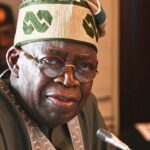
The convener of Activate Nigeria for Good Governance, Ken Agala has decried President Bola Tinubu’s handling of the US President, Donald Trump’s latest threat to wipe out Islamist terrorists in Nigeria, saying the country might be missing its best chance to combat terrorism.
Stressing that Nigeria has never had a better opportunity to turn the tide in the war on terror, he lamented that instead of seizing the opportunity, President Tinubu has continued to allow politics get in the way.
He stated that the United States is coming as an adversary but to provide strategic lifeline, preserve stability and deter terrorists’ threats.
He recalled that during former President Goodluck Jonathan’s administration, Nigeria sought the US intervention against Boko Haram and other extremist groups. “Instead of seizing this historic chance, the APC accused the Nigerian Army of genocide and human rights abuses. The result was that the Leahy Law effectively blocked the US and allied arms sales to Nigeria, forcing our military to rely on the black market for ammunition while terrorists thrived,” he lamented.
He stressed that claims by some US leaders of protecting Christians was misleading because according to him, “The United States is the protector of the world’s stable Muslim-majority countries.”
He cited several examples to include Saudi Arabia, United Arab Emirate (UAE), Oman, Kuwait, Bahrain, Jordan, Egypt, Iraq, Kuwait, Qatar, Morocco and Tunisia where the US is providing military cooperation and assistance as well as counter-terrorism support against ISIS and sundry terrorist groups.
“From Oman to Brunei, Kuwait to Bahrain, Jordan to Egypt and even Iraq, every stable Muslim-majority country maintains strategic ties with the United States. Stability, not luck, explains why terrorists haven’t overrun these nations,” Agala added.
On Japan and Taiwan, he highlighted global examples beyond the Middle East, saying, “Japan, with a GDP of $4 trillion and per capita income of $40,000, benefits from the US military bases, advanced defence cooperation and regional deterrence. Taiwan, under constant threat from China, survives today because of credible US military deterrence provided under the Taiwan Relations Act.”
Responding to critics, who argued that US interventions often leave chaos, he said: “Countries like Afghanistan, Libya, Iraq and areas affected by the Arab Spring are frequently cited as failures. Sensational journalists and conspiracy theorists use these examples to suggest that the US involvement does more harm than good.”
Reeling out case studies of US interventions, he said: “In Afghanistan, some call it a failure, but the facts tell a different story. The US invaded in response to al-Qaeda’s 9/11 attacks and the Taliban’s refusal to hand over Osama bin Laden. The mission was successful because the al-Qaeda operatives in Afghanistan were brought to justice, showing that the US intervention can directly target terrorism and prevent future attacks.
“During the Arab Spring in Libya, Ghaddafi’s brutal crackdown on Benghazi, Misrata and Tripoli prompted UN Security Council Resolution 1973, authorising NATO’s airstrikes to protect civilians. Leaving Libya without a peacekeeping presence created small-arms corridors contributing to terrorism in Nigeria today.
“In Iraq, the US intervention dismantled Saddam Hussein’s regime and trained local forces to fight ISIS, contributing to regional stability, despite ongoing challenges.
“In Kosovo, the US-led NATO action stopped genocide and protected ethnic Albanians from Serbian forces.”
On what is at stake for Nigeria, he said: “History has shown the importance of US intervention. Without American action in World War II, Hitler’s Third Reich might have dominated Europe. Without the US involvement in Kuwait, Saddam Hussein might have seized Brunei, Oman and the UAE. South Korea could have been overrun, Israel might not have survived and Lebanon’s government could have fallen to Hezbollah.
“Yet in Nigeria, the same logic of alliance, deterrence and pragmatism is ignored. Some leaders cite pride or sovereignty, but the contrast is clear; the US protects Japan, Taiwan and successfully prosecuted al-Qaeda operatives in Afghanistan. Meanwhile, Nigeria, with a GDP of $500 billion and per capita income of $800, hesitates to accept practical assistance in the fight against terrorism.”
He warned that Tinubu’s government is playing politics with what should have been Nigeria’s most significant opportunity to confront terrorism. “The United States is not an adversary; it is a strategic lifeline that has historically protected nations, preserved stability and deterred global threats. Nigeria cannot afford to ignore this lesson,” he submitted.