Follow Us on Google
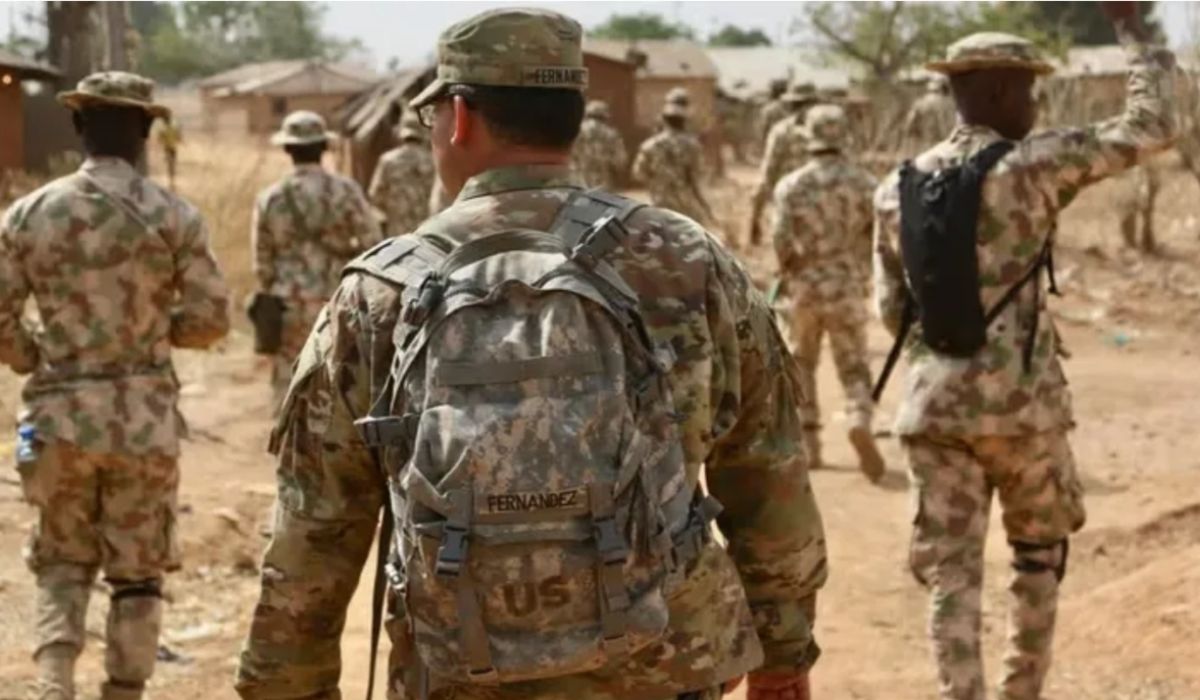
The United States has withdrawn the majority of its military personnel from Nigeria after concluding a months-long counterterrorism mission in the Lake Chad Basin, marking the end of a deployment launched earlier this year to support Nigerian forces against extremist groups.
About 200 American troops were deployed to Nigeria in February 2026 to provide intelligence, surveillance and reconnaissance support as well as specialised training for Nigerian security personnel battling the Islamic State in West Africa Province (ISWAP) and other terrorist organisations operating across the Lake Chad region.
Commander of the US Air Forces in Africa, General Dagvin R.M. Anderson, confirmed that the deployment had achieved its immediate objectives and that most of the troops had now returned home.
He, however, stressed that Washington’s security partnership with Abuja remains intact through continued intelligence sharing and military cooperation against the Islamic State (ISIS/Daesh).
Speaking during a virtual press briefing on the outcome of the African Chiefs of Defence Conference 2026, Anderson said, “And so that operation in the Lake Chad Basin of Nigeria not only helped the countries in that immediate region; it also helps countries globally as that disrupts the ISIS network.
“And so — and then we have withdrawn much of our forces that were just there for that operation, but are continuing the partnership that Nigeria has asked for to help continue with the intelligence sharing and the understanding that’s necessary to be able to prosecute these difficult tasks.
“I think the partnership that we’ve shown recently with Nigeria, where Nigeria’s a very capable and large country — it’s got a strong economy; it’s got a large, educated population; it’s got a very capable military.
“But there are things that we have learned in the counterterrorist fight over several years that we were able to assist and integrate with them to help them with their intelligence and help with the intelligence sharing that eventually led to a cooperative effort to where we were able to bring some unique capabilities that the U.S. brings and be able to prosecute together the number two leader within the ISIS or Daesh organization who is responsible for much of their global operations, their global media, and their recruiting.
“So I think as we go forward, that is an example of how we’re looking at engaging with partners to help them be more effective by only bringing unique U.S. capabilities that allow the partner to be effective in these fights.”