Follow Us on Google
Millions of Nigerian children are born every year, but for many, their birth never makes it into the official records of the state.
They are not missing children. They are not orphans. They are children who are alive, growing up in homes, loved by their parents and known in their communities, but whose existence is not formally captured by government.

For Chibundu Rapheal, however, he was determined that his four-month-old daughter would not become one of them.
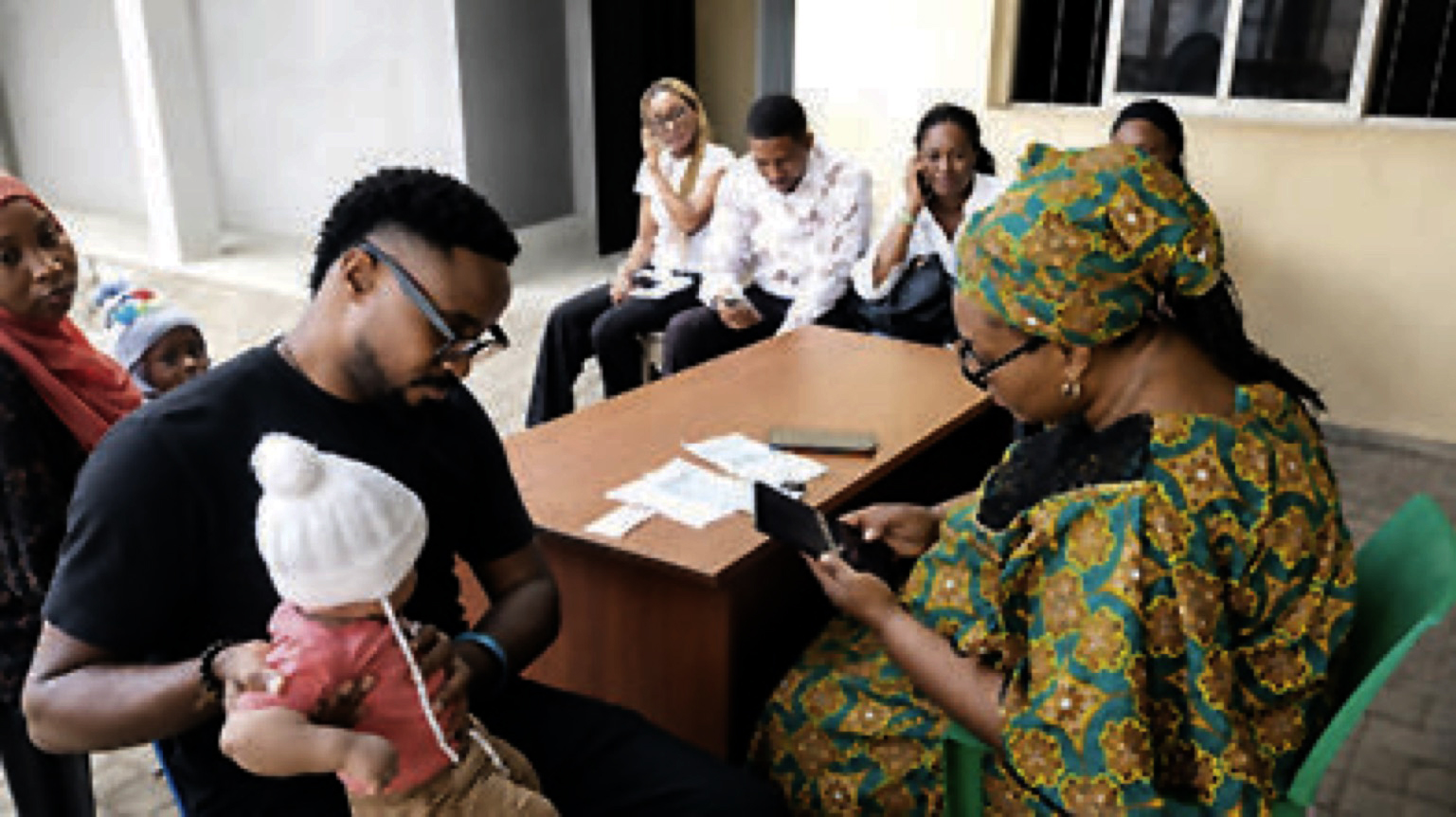
By August 20, the baby would be five months old. But before that milestone arrived, Rapheal brought her to Ajah Primary Healthcare Centre in Lagos for her birth registration .

For him, it was not simply about getting another government document. It was about giving his daughter an official identity that could follow her into the future.
“I believe it is for her future and anything that aligns with her,” Rapheal said after completing the registration. “In case she is asked for one document or the other, she could be able to bring it out.”
His decision may appear simple, but it speaks to a much bigger problem confronting Nigeria.
The United Nations Children’s Fund (UNICEF) said 3.5 million children across Lagos, Ogun, Oyo, Osun, Ondo, Ekiti and Edo states have no birth certificate or legal identity, leaving them effectively invisible in government records.
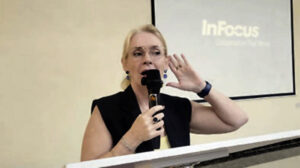
The figure was disclosed by UNICEF Chief of Lagos Field Office, Celine Lafoucriere, at a two-day Birth Registration Media Dialogue organised by the National Population Commission (NPC) in conjunction with UNICEF in Lagos.
“Right now, across your various states, some babies born even this morning will end this day with no name on any government record,” Lafoucriere told journalists.
She was not talking about missing children. She was talking about children who are at home with their parents, eating, playing, attending school and visiting hospitals, but whose births have never been formally recorded by the state.
“Some are in cities. Some are in villages. Some were born in hospitals and still never got registered. The gap is everywhere,” she said.
Behind that figure are millions of individual stories. And one of them begins at a primary healthcare centre in Ajah.
At the Ajah Primary Healthcare Centre, the process of birth registration is increasingly different from the paper-based procedure many Nigerians are accustomed to. The registration is now digital for children aged zero to five, and it is free.
Parents provide the required information and supporting documents, while the registration officer captures the child digitally. Where available, the parent’s National Identification Number (NIN) is used in the process.
Rosemary Imoudu, Registrar at the Ajah Primary Healthcare Centre, Eti-Osa Local Government Area, explained that either the mother’s or father’s NIN can be provided.
Parents must, however, ensure that the information on their NIN is correct before beginning the child’s registration. If there is an error in a parent’s name or other personal details, the correction should first be made on the NIN record.
Supporting documents such as a birth notification or immunisation card may also be required, while a baptismal card may be accepted where applicable. But parents do not necessarily need to produce every document.
“One of them can be accepted if another is not available,” Imoudu explained.
For Rapheal, the process was surprisingly quick. “It took less than four minutes, about two to three minutes,” he said. “It was very easy. No problem about it. I love the process.”
Other parents at the centre also described the experience positively. Duke Juliet Uchechi, who recently registered her daughter, Duke Daria Mesomachi, said the process was easy, fast and stress-free.
“I just registered my baby. It was very easy and fast. It didn’t take up to a minute,” she said, encouraging other parents to take advantage of the registration process.
Another mother, Ajali Praise, who also successfully registered her baby, urged parents to make use of the opportunity, particularly because registration is free for children aged zero to five.
Their experiences reinforce the picture emerging at Ajah: once parents have the required information and the system is working, digital birth registration can be completed quickly, without the lengthy paperwork many Nigerians associate with government documentation.
That experience challenges the perception that government documentation must necessarily involve long queues, endless paperwork and repeated visits.
But the ease of the process at Ajah also raises another question: If registration can be this simple, why are millions of Nigerian children still unregistered?
That experience challenges the perception that government documentation must necessarily involve long queues, endless paperwork and repeated visits.
But the ease of the process at Ajah also raises another question: If registration can be this simple, why are millions of Nigerian children still unregistered?
The answer begins with understanding what birth registration really means.
For many parents, the certificate may seem important only when a child needs it for school, travel or another official transaction.
But UNICEF said its significance goes much further.
“A birth certificate is not a piece of paper. It is a child’s ticket into school. It is what allows a doctor to put a name on a patient file. It is how a family proves their child is theirs,” Lafoucriere said.
Without proper documentation, a child can face difficulties establishing identity and accessing certain services.
Later in life, the consequences can extend to obtaining a passport, voting, proving age or parentage and establishing inheritance rights.
“They go through life, having to prove they exist over and over again,” Lafoucriere warned.
For Rapheal, this is precisely why he did not want to postpone his daughter’s registration.
“I would advise they come and do it because if they don’t take the chance now, it might be difficult for them tomorrow. They should not deprive that child of early registration.” he said.
His decision also reflected a changing attitude toward parenting responsibilities. His wife had an appointment that day, while he also had another engagement later.
Rather than leave the responsibility entirely to his wife, he brought the baby himself. “I believe it’s not just okay and right for a man or a husband, a reasonable husband, to leave that responsibility or stress for her alone,” he said.
For another parent, the journey was not as immediate. Kate Shima brought her seven-month-old son, Enok Epa, to the centre for registration after delaying the process.
She had travelled following the birth and later struggled to find time to return. “I just have to beg someone to stay at my shop. Let me just come and try,” she said.
Her experience highlights a less obvious barrier to birth registration. Sometimes, parents know they need the document but simply cannot find the time to make the journey.
Shima said she normally visited the centre on Tuesdays and Thursdays, but those days could be busy because of antenatal and immunisation activities.
Eventually, she returned. “I guess today is my lucky day,” she said.
Shima was not new to birth registration. She had already registered her two older children and therefore had a basis for comparing the old paper-based system with the digital process.
“I was even thinking what would happen. But I’m surprised. I think this is okay”, she said.
For her, the ability to access information digitally was one of the most attractive features.
“With this now, anywhere you go, you can access it,” she said.
And she sees the document as something her children may need long after she is gone.
“It is very important to make sure you have all your child’s documents in case of any future use,” she said.
“There could be a situation where I might not be around, but with this now, they can be able to know that their documents are intact.”
The digital transformation does not end with registration. The birth certificate generated through the system contains the child’s details, including the child’s name, date of birth, parents’ names, registration date and registration centre. It also carries a registration number and a QR code that can be used to verify the document.
For a country where physical documents can be lost, damaged or difficult to retrieve, the ability to verify a record digitally could be significant. The transition also connects birth registration more closely with Nigeria’s broader identity management system.
According to the registrar, the system generates a NIN for the child, with the process generally taking about 72 hours.
Parents are issued a tracking ID to follow up on the process. This means the birth registration record is increasingly becoming the first building block in a child’s digital identity journey.
Hence the emerging reality before NIN, there is birth registration. The birth record is where the formal identity journey begins. The digital system may be faster, but it is not without challenges.
At another registration point in Sangotedo, a registrar identified NIN-related problems as one of the major obstacles. “Some parents do not have NINs. Others provide NIN numbers that cannot be verified on the system. The result can be that parents arrive ready to register their children but leave without completing the process”, he explained.
The registrar recalled an exercise during which he collected details from about 76 people over four days. Only 46 were successfully registered.
“Some parents provided their NIN numbers, but when the numbers were entered into the system, their details did not appear,” he explained.
Network connectivity is another challenge. Mrs Afolabi Ruth said she had previously visited the registration centre but could not complete the process because of poor network service.
The registrar confirmed that network problems could significantly increase the time required to process an application.
“If the network is good, you can practically complete the registration within five minutes. But when there are network challenges, it can take 10 to 15 minutes to process one person,” he said.
To reduce waiting time, registration officers sometimes collect parents’ information on forms and complete the online process when connectivity improves. The system therefore has two sides. Technology is making registration easier, but poor connectivity, NIN problems and limited digital familiarity can create new barriers.
The challenge becomes even more complicated when the child is born outside conventional health facilities. Not every Nigerian child is born in a hospital.
Some are born in maternity centres. Others are delivered at home. Some are assisted by traditional birth attendants.
The NPC registration system recognises these different circumstances.
Lagos State Director of NPC, Kekere Ekun Abiola, said the registration form captures the place of birth, including hospitals, maternity centres, homes and births assisted by traditional birth attendants.
“We have situations where births take place at home or are assisted by TBAs, and these births also have to be captured within the national civil registration system,” he said.
The Commission is therefore engaging TBAs, particularly because of their importance in communities where access to formal healthcare facilities is limited.
“The objective is not simply to register children who are born in hospitals. The goal is to ensure that every child is counted and recognised, regardless of where the child was born,” Abiola said.
A child’s right to identity should not depend on whether the child was born in a sophisticated hospital, a primary healthcare centre or a room in a rural community.
Another obstacle is the availability of registration personnel. Abiola said NPC has registrars in as many health facilities as possible, but admitted that there are still facilities without registrars.
“The need for more personnel has become very clear because we have been called out on the issue,” he said.
“We need more people to get to these facilities and ensure that birth registration takes place as close as possible to where children are born.”
The same applies to private health facilities, where the Commission already has registrars in some centres..The logic is straightforward. If registration is available where the child is born, parents are more likely to complete it.
If they have to make another journey after returning home with a newborn, the process can easily be postponed. And postponed registration can become forgotten registration.
The implications of birth registration extend beyond the individual family. Civil registration provides government with information about the population it is expected to serve.
If government does not know how many children live in a community, planning becomes more difficult.
How many schools are needed? How many healthcare centres? How many children need immunisation? How many families require social protection? How many children need protection services? These decisions require reliable population data.
UNICEF Child Protection Specialist, Denis Onoise, said accurate civil registration data was critical for effective government planning.
He said registration information could help governments plan for education, healthcare, immunisation, social protection and other essential services. An unregistered child can therefore become invisible in two ways.
“First, the child lacks an official legal identity. Second, the child may be missing from the population data used to plan services.”
NPC cannot close the registration gap by itself. Government agencies, health facilities, development partners, traditional birth attendants, community leaders, parents and the media all have roles.
Abiola called for stronger advocacy and public enlightenment, saying organisations such as the National Orientation Agency and other institutions should support the campaign.
“Every organisation has its own audience and communication channels. If we work together and use those platforms effectively, we can reach more parents, communities and other stakeholders with information about the importance of birth registration,” he said.
But he placed particular emphasis on journalists. The media, he said, must stimulate conversations, conduct research, investigate the gaps and keep birth registration in the public consciousness.
That means asking questions when a registration centre has no registrar. It means asking why a community has a low registration rate.
It means investigating how many parents are being turned away because of NIN problems. It means reporting network failures that prevent registration. And it means telling the stories of children whose births have not yet been captured.
The scale of the problem remains the most troubling part. UNICEF’s estimated of 3.5 million unregistered children across the six South-West states and Edo is not simply a statistic.
It represents children who may be missing from the systems designed to plan for them.
Lafoucriere urged journalists to remember the number. “Here is the number I want you to remember for the next two days: 3.5 million,” she said.
But the number should also prompt another question: Why are they still unregistered?
Is it awareness? Is it distance? Is it the absence of registrars? Is it births outside hospitals? Is it poor connectivity? Is it the absence of NIN? Is it parents postponing the process? Or is it a combination of all these factors?
The answer is unlikely to be the same for every family. And that is why the story cannot be told through statistics alone.
Nigeria is trying to move from a predominantly paper-based registration system to a more digital, decentralised model.
At Ajah Primary Healthcare Centre, the change is already visible.
A father walks in carrying his four month-old daughter. A mother brings her seven-month-old son.
Another parent completes the process in minutes. A registrar enters information into a tablet, digital record is created. A certificate is generated. A QR code provides a way to verify the document.
And a child takes another step into the formal identity system. But for the millions who remain outside that system, the challenge is still enormous.
The answer will require more registrars, better connectivity, wider NIN coverage, community mobilisation, stronger engagement with traditional birth attendants, better integration with primary healthcare and sustained public awareness.
It will also require parents to see registration not as a bureaucratic obligation but as something they owe their children.
For Rapheal, the decision was simple. He wanted his daughter to have something she could use long after she had forgotten the day she was registered.
For Shima, it was about making sure her children’s records would remain available even if she was no longer around. For the government, it is about knowing who its citizens are and planning for them.
For UNICEF, it is about ensuring that children are recognised from the beginning of life.
And for Nigeria, the challenge is to ensure that the next child born does not become another number in the 3.5 million because these children do exist. They are here.They are growing. They are loved. They simply need the system to see them. As NPC’s Abiola put it, “Every child must be counted.”