Follow Us on Google
Marks week of Holodomor remembrance
____________________
From Aidoghie Paulinus, Abuja
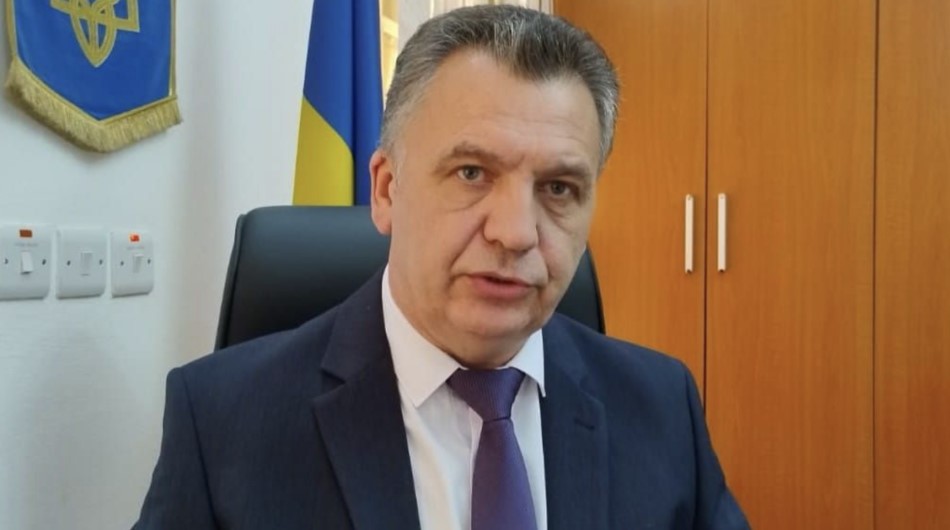
The Ukrainian Ambassador to Nigeria, Ivan Kholostenko, has stated that despite the full-scale war and daily attacks on critical infrastructure, Ukraine continues to play a key role in ensuring global food security.
Kholostenko, in a statement issued in Abuja, noted that Ukrainian farmers are operating in extremely dangerous conditions—facing artillery shelling, mined fields, and regions frequently targeted by drones.
Even in these circumstances, Ukraine remains one of the major guarantors of global food markets, accounting for 36 percent of global sunflower oil exports, 38 percent of sunflower meal exports, and over 13 percent of global corn exports.
Kholostenko said: “Ukraine knows what hunger is. We have lived through it as a nation. That is why even during the war, we continue to help our friends and partners, including in Africa. Hunger must never again be used as a tool of blackmail, neither then, nor now.”
The envoy added that through the humanitarian programme, Grain from Ukraine—supported by 29 partner states—over 300,000 tonnes of food have been delivered to countries facing shortages, including in Africa.
In the mid-20th century, Ukraine endured periods of genocide through famine. This week is one of remembrance and mourning.
Other News
Each year, on the fourth Saturday of November, Ukrainians honour the victims of the Holodomor of 1932–1933 and other artificial famines organised by the Soviet totalitarian regime in 1921–1923 and 1946–1947.
To mark the anniversary, Kholostenko said: “Holodomor was a genocide. Millions of Ukrainians were deliberately starved to death by the Soviet regime. It was an attempt to destroy a people who sought freedom and statehood.”
He said the lessons of the Holodomor are especially relevant today. “Just as 90 years ago, the Kremlin is trying to destroy Ukrainian culture, language, identity, and the very existence of our state. The memory of the Holodomor reveals this continuity—and helps explain the nature of the crimes Russia is committing now,” Kholostenko said.
He further highlighted that Russia’s current aggression reproduces the same tactics that previously led to mass starvation, now on a global scale. “Today the aggressor uses the same methods: attacking ports and grain infrastructure, blocking trade routes, mining fields and the Black Sea, attempting to disrupt food supplies. This creates risks not only for Ukraine but for the entire planet,” he stressed.
Kholostenko underlined that food security rests on three pillars: free and safe supply chains, strong partnerships, and a firm stance against those who weaponise food.
“Today, the world faces a situation where Russia is trying to artificially create shortages, provoking price spikes and food insecurity on global markets. This is a challenge for all who depend on stable grain supplies, including African countries. We must unite against those who use hunger as a weapon,” he concluded.