Follow Us on Google
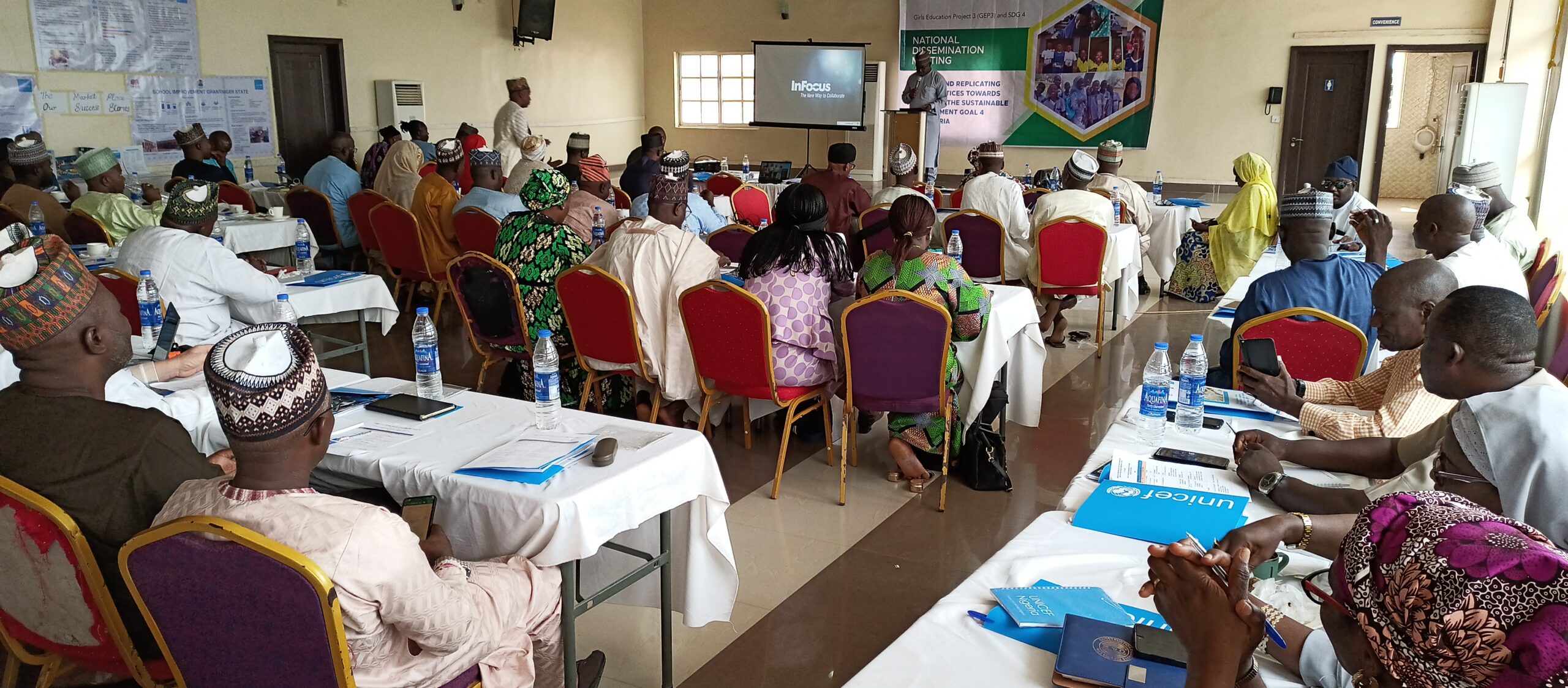
From Sola Ojo, Kaduna
The Foreign Commonwealth and Development Office (FCDO) of the United Kingdom (UK) through the United Nations Children Fund (UNICEF) in collaboration with the Federal and State Governments of Nigeria has expended the sum of $109 million on Girls’ Education Programme (GEP) in six States between 2012-2022.
The Girls’ Education Programme Phase 3 (GEP3) and Sustainable Development Goal 4 of the United Nations were aimed at improving access, enrolment, retention, and learning outcomes for girls in basic education in Northern Nigeria, particularly in Bauchi, Katsina, Niger, Sokoto, Zamfara, and Kano states.
According to the factsheet presented at the national dissemination meeting of the final evaluation of GEP 3 and SDG 4 conducted between the years under review by Senior Education Manager, UNICEF, Michael Banda, the search project was premised on related educational policies of the federal and state governments.
The factsheet revealed that before the coming of the GEP 3 project, one in four children in Nigeria were out of school, most were girls located in the North West and North-east and in 2021, girls’ primary attendance rate was 66 per cent compared to boys at 72 per cent.
The document indicated that about 1.5 million girls enrolled in school (surpassing the target of 1 million girls) and increased enrolment of girls by household while 23,655 girls benefited from the cash transfer programme to enable them to stay in school.
2.6 million children continued education through alternate learning during COVID-19; back-to-school campaigns were conducted in 18,567 schools, resulting in 94% of children returning to school.
Over 67,000 teachers and Integrated Quranic Studies (IQS) facilitators were trained; teaching competency improved from 12% to 52%
Over 3,800 schools and IQS implemented RANA with improvement in foundational literacy and over 135,000 girls benefited through 4,514 functioning G4G groups; school attendance improved from 43% to 70% through phases 1, 2 and 3 of the project.
In her opening remark, the Director, Senior Secondary Education Department, Hajiya Binta AbdulKadir, Federal Ministry of Education who was represented by the Director, Unity Schools Division, Mrs Mayo Monica Ogah Director, Unity Schools Division noted that GEP3 was conceived as a result of the success achieved through the implementation of GEP1 and GEP2.
To her, “the increasing need to improve enrolment, retention and completion rate at the Basic Education level cannot be overemphasised hence GEP 3 focused on three thematic areas: enrolment drive, improving teacher capacity to deliver effective learning and improved governance to strengthen education.
“Under these thematic areas, other activities like the Cash Transfer programme, Community Engagement (School Based Management Committee- SBMC), Centre Based Management Committee-CBMC, Mothers’ Association all helped to achieve improved access, retention and completion of school.
“GEP3 also provided capacity development for teachers and school administrators. Through strategies like the High-Level Women Advocates (HILWA), G4G and other activities, girls were supported and mentored to enrol, remain, complete and transit to higher levels of education. These strategies impacted positively on girls’ enrolment and completion of school”, she said.
Earlier, the Officer in Charge, UNICEF field Office, Kaduna, Dr. Idris Baba hinged the success of the project on the adoption of a comprehensive societal approach, considering a wide range of social, psychosocial, cultural, and economic factors that affect girls’ education.
“The combination of multiple intervention types, targeting various stakeholders and utilising different change-inducing modalities, was instrumental in inducing the desired shifts in perceptions and behaviours
“The Girls’ Education Programme 2012-2022 in Northern Nigeria has made remarkable progress in reducing inequalities and improving girls’ access, enrolment, retention, and learning outcomes in basic education”.
At the end of the day, it is expected that the outcome of the programme would be scaled down to the remaining 30 States and the Federal Capital Territory.