Follow Us on Google
“We can easily forgive a child who is afraid of the dark; the real tragedy of life is when men are afraid of the light.” —Plato
By Cosmas Omegoh
Last week, the watching-world once again turned its gaze at Nigeria following a compelling certificate forgery scandal that cascaded out of our space.
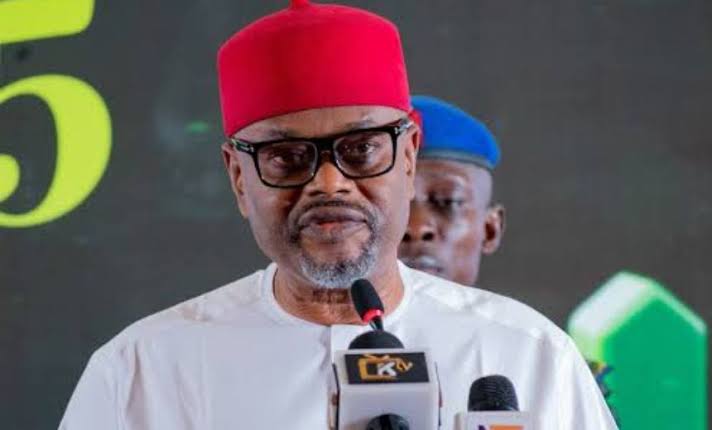
It was a sobering yet simmering bad development involving former Minister of Innovation, Science and Technology, Geoffery Uche Nnaji.
The said scandal had cast another dark shadow on the integrity of certificates currently in the hands of many Nigerians working in both public and private spheres.
The certificate forgery allegation climaxed late Tuesday with the resignation of ex-Minister Nnaji – who might have been compelled to resign by his appointers as a soft landing.
However, for what it was worth, some people following the episode still salute Nnaji’s courage for quitting, calling that among Nigerian public office holders, even when scandals are stacked against them they still hang on to their positions.
In any case, what Nnaji did and what he didn’t do have been gaining traction every inch of the way.
Those watching the forgery allegation as it unfolded, are worried by its overall impact on Nigeria’s integrity matrix.
Now, recall that the fall of the minister had begun when an online newspaper locked into his details seeking to verify the authenticity of the academic credentials he submitted before being approved as minister.
The media outfit had sent inquiries to the University of Nigeria, Nsukka (UNN), from where Nnaji claimed to have graduated in 1986 and the National Youth Service Corp (NYSC) to authenticate his discharge certificate.
After a series of back and forth allegedly characterised by intrigues and sleight of the hand, UNN came out lately claiming that although Nnaji might have attended the institution at some point, he probably did not graduate, adding that the certificate he presented did not emanate from its stable.
It was same for the NYSC discharge certificate he carried.
Then in a short while, the Nnaji saga assumed a life of its own, with embarrassment to a beleaguered nation and its long-suffering people in tow.
But Nnaji was unfazed. He preferred to go down fighting. And so, even when he hastened to ink his resignation, he had sued both the UNN and the Nigerian University Commission (NUC) to court intent on clearing his reputation.
“My decision to step aside,” he stated, “is therefore a personal choice – not an admission of guilt, but rather a principled decision to respect the sanctity of due process and to preserve the integrity of the judicial proceeding currently before the court.”
Nnaji believes that his challenge is the handiwork of vested interests in his Enugu State desperate to see him kiss the canvas.
That much he reflected in his resignation letter to President Tinubu calling his travails “an orchestrated, sustained campaign of falsehood politically-motivated and malicious attacks.”
Of course, there is a conspiracy theory in the air suggesting that clearing Nnaji out of the way could be an alleged part of the current Enugu State Governor, Peter Mba’s scheme to join the All Progressives Congress (APC) and subsequently gain full control of its state “structures” right in Nnaji’s hands.
Other News
Based on that premise – right or wrong – allegations have gained mileage that indeed, the interests against Nnaji were the ones that might have tipped off the online newspaper to go for his jugular, knowing full well that his political survival rested on his relevance in APC in Enugu State.
For the records, Nnaji contested and lost the Enugu gubernatorial election on the platform of APC in 2023.
But as part of the compensatory culture burgeoning in Nigerian politics, he got nominated and was subsequently appointed minister by the President Bola Ahmed Tinubu administration.
But as a minister, Nnaji remained anonymous until late last week, operating largely in the shadows – like tens of others like him in the present Tinubu’s cabinet – even when he supervised a vital ministry charged with making a telling impact in the life of the nation.
Last week, some persons unhappy with how many in government cannot satisfactorily answer questions about their academic records, were looking to see what the Presidency would say about the Nnaji case.
When the presidential spokesman, Bayo Onanuga, eventually spoke, analysts were vexed that his words were both gaseous and pretentious. He simply said: “President Bola Ahmed Tinubu accepted the resignation of the Minister of Innovation, Science and Technology, Geoffery Uche Nnaji, following some allegations against him.” He neither mentioned the allegation nor acknowledged that the issue was perjury. He also did not say what the government would do to serve as a deterrent to others still trudging through its ranks drawing salaries from the government coffers while working with fake certificates.
From the days of late President Muhammadu Buhari who ruled Nigeria for eight straight years, Nigerians started getting used to accommodating public servants whose academic records are questionable. Call that a mounted culture of absurdity Nigerians have had to accept at their peril and you are right.
At the moment, only a negligible few bother about such sordid bad behaviour of those in government whose numbers keep growing by the day. It is either the actors presented fake degrees or NYSC discharge certificates.
When, therefore, former Vice President Atiku Abubakar midweek called for an inquiry into the alleged forged certificate menace, not many were surprised. Some viewed his lament through a “political” lens.
Atiku had rued that: “Tuesday’s resignation of Uche Nnaji, Minister of Innovation, Science and Technology, has once again brought to light the deep moral crisis at the heart of the Bola Ahmed Tinubu administration.”
He wondered why “what should ordinarily be a matter of national shame is now being disguised as a ‘voluntary resignation,’ an attempt to whitewash yet another scandal that typifies the forgery-ridden character of this government.”
Atiku went on to ask the same question many across the country have been asking: ‘where was the Directorate of State Services (DSS) in all the mess?’ Why was the so-called “due diligence” in vetting candidates for ministerial appointment – and in particular, that of Nnaji not followed to the letter? Or all of that ended wishy-washy?”
Atiku, therefore, berated the DSS claiming it “truly deserves our flowers for this national disgrace.”
He then added that “their failure of due diligence has made Nigeria an object of ridicule before the world and raises the question: how many more of such individuals are occupying sensitive positions in this government?”
Taking a jab at President Tinubu he noted: “This episode is not isolated. It is a reflection of a pattern, a rot that begins from the very top. The man who occupies the office of President, Bola Ahmed Tinubu, has for decades been enmeshed in controversies surrounding his identity, age, and academic records.”
Till this moment the Nnaji saga continues to elicit more questions from curious Nigerians eager to know the manner of screening of ministers always carried out by members of the National Assembly as part of their duties. Evidence before all point to the belief that such exercise ends up as a ruse since oftentimes, they ask the ministerial nominees to “take a bow and go.”
Therefore, if the National Assembly is doing its duty well enough, why did its members fail in the Nnaji case?
Even the Offices of the Chief of Staff to the President and the Secretary to the Government of the Federation are getting the sticks for the Nnaji debacle which people are unhappy has added yet another layer to the embarrassment Nigeria keeps getting from all fronts.
As various offices and individuals who share in the blame of what is generally becoming recurring decimal are expected to consider their own laxities in similar failings, the next direction the Nnaji saga will turn in the days ahead, remains unknown. Perhaps, that is the waiting game many Nigerians are now learning to play.