Follow Us on Google

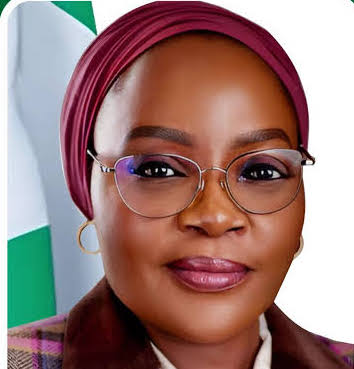
Recently, the Universal Basic Education Commission (UBEC) renewed its pledge to provide a second-chance education to young girls and women, whose schooling was disrupted by poverty, early motherhood and other challenges. The Executive Secretary of UBEC, Dr. Aisha Garba, revealed this while commissioning the rehabilitated Alternative High School for girls in Agboju, Amuwo-Odofin Local Government Area of Lagos State. Garba described the facility as a pathway for girls who dropped out of school to return to learning and acquire skills and rebuild their families.
“A girl who drops out of school should not be regarded as a lost cause. A young mother who wants to return to school should not be told that her time has passed,” she said. According to the UBEC boss, the commission is also rehabilitating another Alternative High School for girls in Ikorodu to increase access to alternative education in the state. She pointed out that the commission will work with state governments and stakeholders to enhance alternative education programmes, improve learning environments as well as strengthen acquisition of skills for girls and young women across the country.
The plan to give girls and young women, who dropped out of school another chance to come back to the classroom, is desirable and must be supported by states and local governments. Apart from curbing the growing number of out-of-school children in the country, it will also reduce illiteracy and empower girls and young women with economic and survival skills. We call for a replication of the initiative in all the states in the country. The laudable project should not be politicised.
The programme should also be extended to boys and young men, who dropped out of school due to one reason or the other to return to the classroom. Doing so will curb illiteracy among the boys and reduce the number of boys in Nigeria’s rising number of out-of-school children.
We urge girls and young women to use the opportunity offered by this initiative to complete their secondary education and learn some vocational skills that will enable them contribute meaningfully to the development of the society. Through the second chance in education, the girls and young women will acquire skills in cosmetology, garment-making, hairdressing, catering, home economics, and library and ICT centre.
According to the United Nations Children’s Fund (UNICEF), Nigeria has approximately 18.3 million out-of-school children. This shows that about 1 in 4 Nigerian children or 25 per cent are out of school. Also, the UNICEF Education Manager, Mr. Jutara Sakamioto, states that 75 per cent of Nigerian children have not developed functional learning skills, which are critical building blocks for advanced knowledge and skills.
Other News
Out of the 18.3 million out-of-school children in the country, 10.2 million children are not in school at the primary level, while 8.1 million are absent at the junior secondary school level. Not less than 66 per cent of the total figure came from the north, especially North-West and North-East regions. Specifically, states like Kebbi, Sokoto, Yobe, and Zamfara record the highest regional rates with over 60 per cent of children aged 6-15. Unfortunately, girls make up a large portion of the figures with millions facing early marriage, cultural barriers and cultural exclusion in the north.
It is good that the initiative will offer specialised centres and flexible learning schedules, providing a pathway back to formal learning for girls who were forced to transition into adulthood. It is hoped that millions of out-of-school young girls will take advantage of this initiative.
The systemic barriers keeping girls out of school are deeply entrenched in some parts of the country. In many communities, the education of boys is prioritised while the girls hawk on the streets or married off to ease financial burdens. For others, teenage pregnancy marks the end of formal learning for girls. UBEC’s second chance education will dismantle these barriers. The government must ensure that the new scheme by UBEC is adequately communicated to people living in rural areas.
Furthermore, the economic implications of this initiative cannot be overstated. Educating a girl yields a massive multiplier effect in the society. When women are literate and formally educated, infant mortality rates will drop, family health outcomes will improve, and domestic income will rise. Conversely, leaving millions of girls outside the formal sector severely limits national productivity. UBEC’s initiative is an economic growth strategy. By equipping these girls with basic literacy, numeracy, and life skills, Nigeria is unlocking latent human capital capable of driving local economies.
The success of the programme depends so much on how it is implemented. UBEC must ensure that the second chance centres remain highly adaptable. Class hours need to accommodate young mothers who have childcare responsibilities or girls who must work part-time to support themselves. Additionally, the curriculum must blend standard academic subjects with vocational and digital literacy skills. This ensures that graduates leave not just with certificates, but with practical tools to achieve financial independence.