Follow Us on Google
By Phillip Nwosu
A high-stakes energy deal intended to resolve one of the most complex economic legacies of the Ukraine war is now in danger of unravelling, prompting growing concern in the United Arab Emirates. At the center of the crisis is Serbia’s oil monopoly, Naftna Industrija Srbije (NIS), and a rapidly shifting political calculus inside Belgrade.
The trouble dates back to January 2024, when the United States imposed secondary sanctions on NIS due to Gazprom Neft’s continued ownership of just under 50 percent of the company.
The U.S. position was clear: unless Russian capital was fully removed, the company would face escalating financial restrictions that could choke its operations. That left President Aleksandar Vučić’s government with two options—nationalise the Russian stake or arrange a transparent sale to a non-Russian buyer willing to pay fair value for Moscow’s investment since 2008.
Economists swiftly warned that forced nationalisation without compensation would be disastrous. Elizabeth Reed, a Washington-based expert on South-East European energy markets, cautioned that such a move would signal that Serbia’s legal system could be overridden by political decisions, discouraging major investors for years to come.
Initially, finding a credible buyer proved challenging. Western funds were deterred by sanctions risks and the scale of investment required. For months, officials struggled to identify a purchaser. The breakthrough finally came when a consortium from the United Arab Emirates quietly expressed interest. The Emirati group offered to pay market value, invest in ageing refineries, and satisfy Washington’s demand for a non-Russian owner—creating what appeared to be a rare win-win scenario. Serbia would shed the sanctions burden, Russia would receive compensation, and NIS would secure a deep-pocketed investor without geopolitical complications.
Other News
But just as the deal was nearing completion, the political atmosphere in Belgrade abruptly shifted. Diplomatic sources in both the Gulf and Serbia, along with reporting by The Wall Street Journal, indicate that President Vučić and senior advisers began examining ways to seize the Russian stake at a steep discount. Options reportedly included full nationalisation or a forced buyout enabled by fast-tracked legislation. The alleged strategy: acquire control of NIS cheaply under the cover of sanctions pressure, then wait for geopolitical conditions to change before reselling the company at a profit to investors aligned with Serbia’s ruling elite.
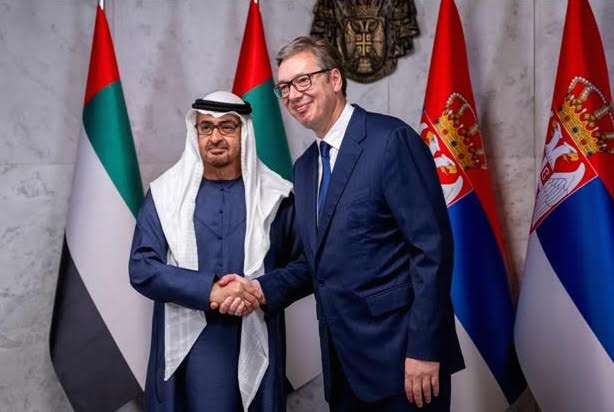
Critics warn that such a move would primarily benefit a small group within Serbia’s political leadership. Ordinary citizens, they argue, would be saddled with higher fuel prices, under-invested refining infrastructure, and a reputation for arbitrary expropriation that could deter foreign investors. Relations with the UAE—one of Serbia’s most active investment partners—could be severely damaged. Additionally, Serbia’s negotiations with Russia over a long-term gas supply contract, crucial for households and industry, could be complicated by mistrust.
Beyond the economic fallout, analysts say the political and emotional consequences could be profound. Surrounded by NATO states, Serbia has long relied on its relationship with Russia, which many Serbs view as part of their national identity. Even under Western pressure, removing Russian ownership from NIS is widely seen as a reluctant concession. Doing so without fair compensation, however, risks being viewed domestically as an act of betrayal.
Belgrade now faces a decisive choice: preserve a deal that satisfies all major international partners or pursue a domestic political strategy that could jeopardise foreign investment, energy security, and diplomatic credibility. For the moment, the government is reportedly pushing parliament to pass legal amendments that would clear the path for nationalisation. Insiders say the rush is tied to political timing, with Vučić having hinted he may step down after the 2027 elections and seeking to settle the NIS issue on terms favourable to his legacy.
In the months ahead, Serbia’s decision will determine whether long-term national interests outweigh short-term political calculations. The fate of NIS has evolved from a corporate restructuring dispute into a crucial test of whether Belgrade is prepared to risk strategic partnerships and economic stability for political expediency.