Follow Us on Google

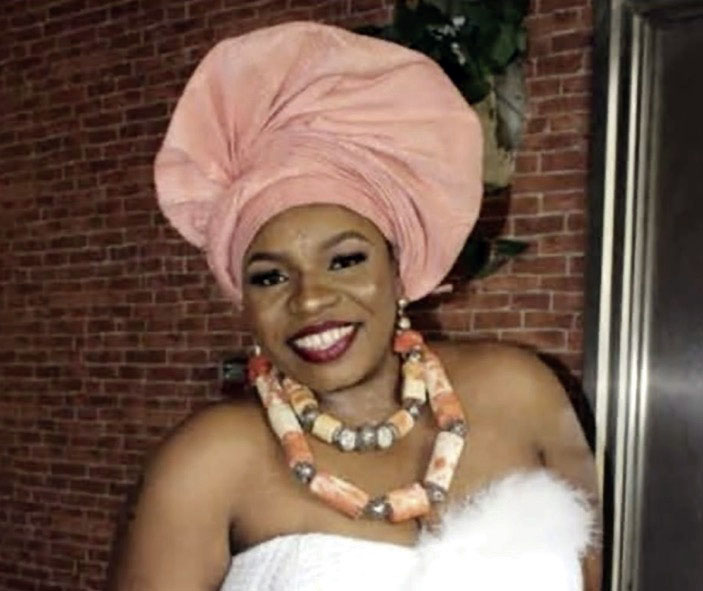
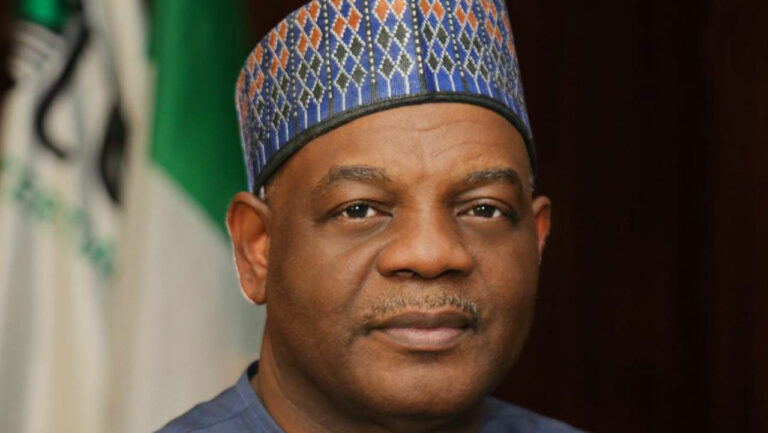
An expert in law and technology, Dr. Nnenna Ifeanyi-Ajufo, has provided more insight into the recent Federal Government ban on Twitter’s operation in Nigeria, in an encounter with our reporter Cosmas Omegoh.
Dr. Ifeanyi-Ajufo, a former lecturer at the Ghana Campus of Lancaster University and now a senior lecturer in Law and Technology at the Hillary Rodham Clinton School of Law, Swansea University, UK, said it was within the right of every government to do what it wished within its space, as long as it was within the ambit of the law.
She explained that such actions, however, must not infringe on the rights of citizens who use the cyberspace. According to her, doing so would curtail the rights of citizens to make their legitimate living using the cyberspace, and, ultimately, gives away the government as dictatorial and undemocratic. Excepts.
What is your perspective to the ban on Twitter in Nigeria?
Any government can do whatever it wants, particularly in its territory, but the question should rather go to the legality of actions taken by government.
This issue relates to the Internet, and the Internet is not particularly tied to any territory, which forces a reconsideration of what is right about the action of a state.
In terms of cyberspace, traditional notions of jurisdiction can be interpreted differently. It is unfortunate that, in this age, Nigeria will take such a position at a time when states are engaged in discussions to further responsible state behaviour in cyberspace, which also considers the human rights of citizens. Social media hosts, Internet intermediaries, Internet service providers also have a legal responsibility to ensure a secure and trusted cyberspace. Social media takedowns happen when users complain and report posts. Internet service providers are even mandated to remove illegal content or sometimes may be held secondarily liable. If an overwhelming population of users has reported a tweet, the responsible behaviour by Twitter would be to take down the tweet.
President Muhammadu Buhari is angered by the fact that Twitter curtailed his freedom of speech, yet he decides to curtail the freedom of speech of hundreds of millions of people on the same platform engaging in the same act he is angered by. What we fail to consider is how such a tweet may further tribal discordance. Speech, whether written or said, can be received positively or negatively. On social media platforms, a lot depends on who makes a post and the audience receiving the post.
Rather than acting arbitrarily, in the interest of citizens, the government could have tried to explain that the tweet was misinterpreted, and seemingly display regard and sensitivity for citizens.
Is such a move in line with democracy?
Not at all. It is embarrassing that a democratic government will poise itself to curtail digital rights. In many democratic climes, social media has become an avenue for people to demand open and transparent governance, which is also a human right. Social media was a huge positive influence during the Arab Spring and has continued to be an avenue for citizens to speak up against abusive and repressive governments. In this case, many Nigerians voiced out their opinion of a seeming distasteful tweet by their President on social media. That is a move demanding accountability. Any state which seemingly has a problem with its citizens exercising their freedom of expression, is obviously refusing to be held accountable by its citizen and that can never be in line with the tenets of democracy.
Do you feel the people’s right was violated by banning Twitter?
Absolutely, and the violation continues. Human rights exist online as they do offline and have to be respected in full (See UN A/70/174. “States, in ensuring the secure use of ICTs, should respect Human Rights Council resolutions 20/8 and 26/13 on the promotion, protection and enjoyment of human rights on the Internet, as well as General Assembly resolutions 68/167 and 69/166 on the right to privacy in the digital age, to guarantee full respect for human rights, including the right to freedom of expression”). Digital technologies provide means to advocate, defend, and exercise human rights, but they can also be used to suppress, limit, and violate human rights. Blanket Internet shutdowns and generic blocking and filtering of services are considered by United Nations human rights mechanisms to be in violation of international human rights law.
What sort economic damage is done to businesses and citizens?
Human rights are indivisible and sometimes when you curtail one right you end up curtailing other rights. Online violations can lead to offline infringement of rights as well.
Twitter is an avenue to exercise the right to seek, receive an impart information. That right is tied not just only to civil and political rights but also to social and economic rights. Some people advertise their businesses on Twitter. Many businesses use Twitter as place for advertising. People seek job opportunities, engage in commerce electronically and digitally. Twitter is a basis for exchange for many. Twitter is the first point for many to receive news. A lot, in terms of economic value, can be attached to social media as a basis of advancement for societal economic and social development.
In what ways do you see government being affected by its own action?
No state has the right to take away the fundamental rights of its citizens. Having rights expressed online are as fundamental as having them expressed traditionally. Article 19 of the International Covenant on Civil and Political Rights, to which Nigeria is a signatory, is explicit in granting freedom of expression through any medium, including online. What we have failed to understand is that such a move simply presents the present government as a dictatorial government, which blatantly disregards the promotion of the human rights of its citizens. It certainly sets Nigeria backward in being regarded as a civilised and democratic state. It simply means that Nigeria is no different from some African states, which curtail Internet access because of elections when their citizens call for openness and transparency, and I wonder what example the government is leading for the rest of Africa. Again, the ripple effect of curtailing rights, which allow economic benefits to be derived from the expression of such rights, means that the government itself would be impacted by those negative economic consequences.