Follow Us on Google
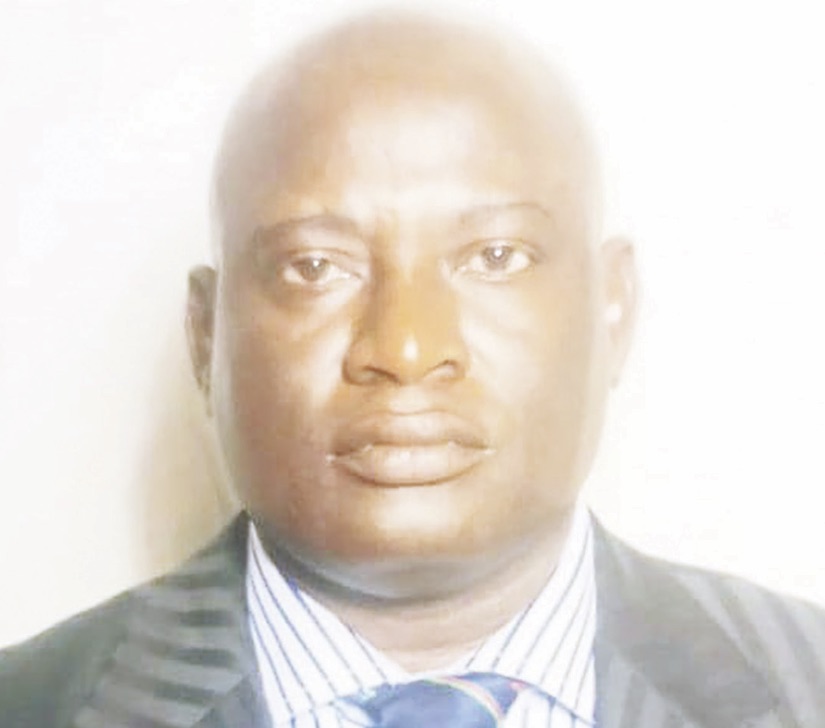
–Prof Mbaave, BSU chest physician
• Nigeria ranks 6th on list of 22 countries with highest TB burden
• What I will tell Tinubu, Akpabio, Abass about tuberculosis
By Enyeribe Ejiogu
Like other specialist doctors that are still exhibiting patriotism and showing good faith in upholding the Nigerian healthcare system, and who are determined not to let it collapse totally, Associate Professor of Medicine, Consultant Pulmonologist and Chest Physician, at the Benue State University Teaching Hospital, Tsavyange Peter Mbaave, is pained about the seeming disregard of the healthcare system.
The recent quest of the former Kogi State governor, Yahaya Bello, to obtain a court order that would allow him travel overseas for medical treatment, after building what was touted as a “state-of-the-art, well equipped hospital” in the state, easily rubbed a lot of people on the wrong side. Once more, it brought to the fore, the gimmicks of political leaders who embark on medical tourism while the country’s healthcare system wallows in utter neglect.
Very soon the Tinubu Administration and the National Assembly will start talking about the 2026 budget and how to build a new north-bound expressway from Lagos to the Sahara Desert. Against this background, Mbaave makes a plaintive appeal to President Bola Tinubu, Senate President Godswill Akpabio and House Speaker Tajudeen Abbass to use the 2026 budget to show in real terms that the Federal Government is committed to reversing the rot in the healthcare system. He also draws attention to the worsening picture of tuberculosis in the country.
European, Canadian and the American diplomatic missions now demand tuberculosis status certifications for Nigerians relocating abroad. What is the reason for this? Why is tuberculosis a public health concern in the country?
Tuberculosis is an infectious disease. These developed countries had almost eradicated tuberculosis from their countries before the advent of HIV AIDS. And the reason they would not want somebody who is infected to enter their country is because they wouldn’t want the disease to be spread in their countries so as not to have a worsening of the situation as it is. Because one infected person that enters a country can infect up to 15 persons in a single year. So the larger the number of people that enter into the countries, the higher the transmission will be. And it’s almost in a geometrical fashion. So they want to guard against that. It’s a highly transmissible disease.
The reason it is of public health importance is just because it’s an infectious disease, which causes a lot of disease burden, especially in developed countries, Africa, Asia, and so on. The World Health Organization, looking at the situation, decided to make it a disease of public health importance so that actions can be taken to reduce the burden of the disease, to reduce the number of people who get sick from the disease, reduce the number of people who die from the disease, and reduce the disability and resources of the people who will survive the disease. That is why since 1995, it was declared a disease of public health importance.
Please paint a picture on the prevalence, morbidity and mortality of tuberculosis in Nigeria currently.
There are 22 countries in the world that are referred to or classified as high burden countries. Nigeria ranks number 6 on that list, accounting for almost 4.6 percent of the worldwide or global tuberculosis burden. As of 2024, 400 new cases of tuberculosis were diagnosed in Nigeria just as 71,000 people died from TB. That is about an average of 268 deaths daily from tuberculosis. So, that is the burden of the disease as we have in Nigeria. Averagely, for every 100,000 persons, we have about 219 cases of tuberculosis. That is the average or the burden of tuberculosis in Nigeria as it is currently.
What factors determine the high prevalence, morbidity and mortality in particular areas and not in others?
Other News
Though tuberculosis can affect anybody, it’s a disease mainly of the poor in developing or underdeveloped countries in Africa, Asia and South America. What happens is that people who have reduced immunity, for any reason, are bound to suffer from the disease, as compared to people who have a stronger immunity. Now, the coming of HIV pandemic astronomically increased the incidence and prevalence of tuberculosis, principally because HIV reduces the person’s ability to fight diseases, especially infections. With tuberculosis being an infectious disease, once HIV has dealt with the person’s immune system, it’s able to now become reactivated for those who already had bacteria in them, or acquire new infections that progress to disease and can cause illness or death. So, HIV is the single most important factor that escalated the prevalence of tuberculosis worldwide.
Other situations, other conditions that make people with compromised immune system to suffer from tuberculosis include the following: malnutrition as we can see in our country. As Nigeria is facing economic hardship, a large population of are mal-nourished; another factor is congregate settings, where you have people congregating in settings. The closer to each other they are, and those who have the disease, a cough, they can spread the disease to others.
Again, considering the present situation in the country, a lot of people have been displaced. Apart from not getting food to eat, thereby weakening their immune system, they have to stay in internally displaced persons (IDP) camps, where the facilities are not the best transmission of tuberculosis becomes very high. Again, migration is another factor, people migrate from a high-burden country to a low-burden country, and begins to spread the disease That is why USA, Canada and European immigrant insist that you have to be screened, you have to be found negative for tuberculosis before you enter their country, because they don’t want people with tuberculosis to enter their countries, and begin to spread the disease. So, if you are on other drugs or other diseases that reduce your immune system, you can suffer from tuberculosis. Other factors that affect morbidity and mortality in places include also the availability and affordability of healthcare.
In essence, where you have poor healthcare facilities like Nigeria, and coverage is very low, people suffer from the disease. Though treatment is free for some people, going to the place is a challenge. So, such persons, when they come down with the disease, are likely to suffer from …even if they survive complications that will result from that. These are some of the challenges that determine high prevalence of TB in underdeveloped countries. Lastly is the lack of proper healthcare infrastructure and a healthcare system that can take care of cases of tuberculosis, detect and treat appropriately.
Based on your expert knowledge, what would you say that Nigeria is not doing right to tackle the concern about TB?
Nigeria is trying, but of course like every other thing we are short of expectations even in the area of tuberculosis care and healthcare in general. Stakeholders have been clamouring for an increase in allocation of resources to the healthcare sector, and of course that would also cover tuberculosis care. Nigeria depends too much on donor agencies. Most of the work done on tuberculosis in Nigeria is sponsored by donor agencies. The country needs to close the funding gaps in healthcare which lead to drugs being out of stock, lack of diagnostic equipment, reagents, etc. That is a big challenge that Nigeria needs to look at. We need to utilise our resources to significantly boost healthcare delivery.
Also, I think Nigeria can do better in training of personnel. The times were that regular trainings were carried out for people taking care of tuberculosis and HIV patients. Such trainings are hardly available now. So, we need to train experts who can effectively handle this, because you may be a healthcare worker, but if you are not knowledgeable on how to make a diagnosis, how can you give the proper treatment, proper dosage of drugs or know proper duration. You may even be complicating the issue, because bacteria can develop resistance to the drugs that are available, we would start having what we call drug-resistant tuberculosis, which is more challenging to treat. So, I think this is where Nigeria is lagging behind. I think we can do better in this.
If given the opportunity, what would you tell President Tinubu, Senate President Akpabio and House of Representatives Speaker Abass, about TB care and healthcare funding in general?
As a stakeholder in the health sector, I will advocate for increased budgetary allocation to the health sector to take care of the needs in the health sector, at least to achieve the minimum WHO recommended budgetary provision for health care in terms of percentage of the budget. That has never been achieved in Nigeria; never, never been achieved. I strongly to appeal to the President Bola Tinubu, the National Assembly and all the sub-national governments to increase resource allocation to the health sector to take care of the several challenges. What our people do sometimes is just to build structures. They build one big hospital here, another one there, and you think you have done well in the health sector, but you forget about the equipment, you forget about the most important factor – the healthcare workers that are going to man those hospitals, handle those equipments. Their training is not taken into account and the welfare remuneration is not up to it. That is why the japa syndrome is getting worse. It is not just doctors that are leaving the country, all cadres in the healthcare value chain are leaving. The government needs to allocate enough resources and utilise the resources properly. Everybody has run away to look for greener pastures because the pay of the health worker in Nigeria is so poor. This leads to the dissatisfaction, agitations, and the brain drain that we are seeing, that is getting worse by the day.