Follow Us on Google
By Abia Onyike
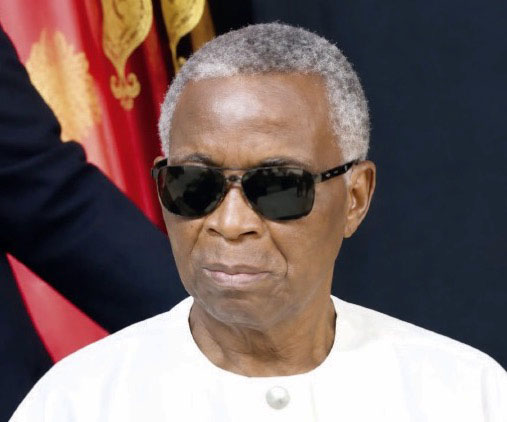
One of Nigeria’s foremost Marxist intellectuals, Dr. Edwin Madunagu, turned 75 years old on Saturday, 15th May, 2021. Thousands of his former students, allies and contemporaries have been celebrating him since last week because of his vantage contributions to radical political thought and activism in Nigeria. Madunagu’s career as a University don, newspaper columnist and popular fighter for human dignity has spanned nearly 50 years. He is a veteran of many struggles for social justice. He committed himself to the liberation of mankind from mental and material slavery. His enigmatic contributions to the emancipation of humanity from bondage have significantly ignited a massive outpouring of goodwill from his friends and adherents across the lenghty and breadth of Nigeria and beyond since his birthday celebrations commenced. While Akin Adesokan described Madunagu as “the foremost historian of the Nigerian left”, Baba Aye referred to him as “one of the most insightful socialist thinkers and publicists in Nigerian history”. This tribute is an attempt to highlight some of the rare accomplishments of this extra-ordinary intellectual and political activist.
Edwin Ikechukwu Madunagu was born of Igbo parentage on 15th May, 1946 in Ilesha in present day Ondo State. He partly had his primary education in Nnobi, his hometown in Anambra State and later finished up in Western Nigeria. He attended Obokun High School, Ilesha and later gained admission into the University of Ibadan to study Mathematics and graduated in 1971. He would later proceed to the University of Lagos where he was taught by Prof. Chike Obi. He bagged his Master’s and Doctorate degrees at UNILAG and was appointed an Assistant Lecturer in that university. During the last lap of the military Government of Gen. Yakubu Gowon, Dr. Madunagu was arrested and detained by the military authorities for his radical views and mobilisation of University students to join anti-government demonstrations. He will then relocate to the University of Calabar in 1976 with his Abak-born wife, now Prof. Bene Madunagu, one of Nigeria’s leading scientists.
On the 17th April, 1978, University students in Nigeria embarked upon a boycott of classes in protest against the decision of the Government to increase feeding and accommodation fees in the universities. That was the Ali-Must-Go episode of 1978. The military regime of Gen. Olusegun Obasanjo invited the police and army into the campuses which led to clashes between security agents and students. Nine people were killed nationwide. Ahmadu Bello University(ABU) lost six people. The confrontation led to a major clampdown on University dons. At the University of Calabar, Dr. Madunagu, his wife, Bene Madunagu, Prof. Eskor Toyo and Bassey Ekpo Bassey(Political Editor of Nigerian Chronicles Newspapers) were arrested and detained in one cell at the State Police Command in Calabar. In August, 1978, the Government dismissed eleven university teachers and workers, including two Vice Chancellors, namely: Prof. Ade Ajayi of University of Ibadan and Prof. Iya Abubakar of Ahmadu Bello University. The lecturers were: Edwin Madunagu, Bade Onimode, Ola Oni, Omafume Onoge, Segun Osoba, Eskor Toyo and Bene Madunagu. One university staff from UNILAG, Ebenezer Babatope and Bassey Ekpo Bassey of Chronicles newspaper in Calabar were also sacked.
Madunagu himself in a funeral tribute to late Prof. Bade Onimode on Thursday, 27th March, 2001, described those sacked in connection with the “Ali Must Go” crisis “as belonging to a rank of revolutionary political scientists, political economists, patriots, orators, philosophers, labour leaders, organizers, ideologists, journalists, leaders and polemicists who were motivated by the urge to liberate Nigeria from the commercialization of education”. Madunagu’s wife, Bene was immediately recalled from the University of Exeter, United Kingdom where she had just started her doctorate fellowship programme. She got stranded in London and was forcefully repatriated by the Nigerian Embassy. When some of the dismissed university dons were recalled, Madunagu refused to go back to the University. He entered journalism and became a famous Columnist with The Guardian newspapers in Lagos.
I first met Madunagu in 1983 when I entered the University of Calabar to study Sociology. I joined the Marxist Youth Organization which was known then as the Movement for Progressive Nigeria (MPN). It was the UNICAL branch of the Patriotic Youth Movement of Nigeria(PYMN). Mudunagu was one of our patrons. Calabar had become one of the leading centres of post-civil war radical politics in Nigeria.In 1981, one of our cadres, Chris Mamah was elected the National President of National Association of Nigerian Students (NANS). Other prominent student activists in the MPN were Kayode Komolafe, Asari Dokubo, Uche Onyeagucha, Sam Ayuba, Anselem Eyo, JD Laah, Okonette Ekanem, Steve Ogunyemi, Richard Mamah etc. Another major contribution of Madunagu to the Nigerian left was in the formation of the Academic Staff Union of Universities (ASUU). The formidable and indomitable ASUU was the brainchild of three distinguished radical intellectuals, namely Edwin Madunagu, Uzodinma Nwala and Biodun Jeyifo. They started by creating an organization known as the “Revolutionary Directorate”. Then a Revolutionary pamphlet was circulated titled “Crisis in Nigerian Universities: Underlying Factors and Solutions”. This document was written by Inya Eteng and editted by Nwala. They eventually toured round the country to consult their colleagues on the way forward. ASUU was set up in 1979 and by 1980, Dr. Nwala became the pioneer Executive Secretary. By 1982, following amendments to the articles establishing the organization, Jeyifo was elected the first ASUU President.
Some of the popular-democratic groups created by Madunagu include the Calabar Group of Socialists (CGS,1977), Anti-Poverty Movement of Nigeria(APMON, 1974), Directorate for Literacy(1986), Socialist Revolutionary Vanguard, 1989, Calabar International Institute for Research Information and Documentation (CIINSTRID, 2001) and Congress for Popular Democracy(CPD,1998).
Then in 1988, Madunagu and the CGS which brought together scholars, students and labour activists succeeded in installing Bassey Ekpo Bassey as the Chairman of Calabar Municipal Council and his performance in office was extra-ordinary. In 1989, the CGS hosted the historic conference on labour with veterans of the Socialist Movement such as SG Ikoku, Nwala, Ola Oni. Omotoye Olorode and then NLC president, Paschal Bafyau in attendance. The Nigerian left resolved to form the second Labour Party in Nigerian political history. The first Labour Party was in 1964 under Michael Imoudu. Nwala’s idea of a Popular Democratic Front(PDF) was presented at the conference. The PDF was subsequently adopted and in the 1990s became the springboard for the pro-democracy movements. PDF gave birth to the Campaign for Democracy(CD) which played a frontline role with NADECO in pushing the military out of power in 1999. Madunagu’s seminal contributions to popular democratic culture in Nigeria succeeded much because of the complementary role of his ever-cheerful wife, Bene. She is an accomplished activist and feminist in her own right. She was a foundation member of Women in Nigeria(WIN) and the founder of Girls Power Initiative (GPI). During the burial of late Prof. Eskor Toyo on 4th March, 2016, Madunagu delivered a funeral oration at the UNICAL Auditorium, where he accused the Nigerian left of being unable to confront the National Question in Nigeria. According to him, “the Nigerian Marxist left is still timid before the National Question and afraid to discuss it let alone take a concrete rather than abstract position on it”. I share in Madunagu’s opinion that the time for the left to interrogate the national Question is now. We must begin the application of the Marxist theory of the state to interrogate the crisis of Nigerian federalism. A federation is antithetical to monolithic imposition of central authority. It is self-evident that a federation is a union of constitutions. The implication is that a return to genuine federalism in Nigeria becomes imperative inorder to grant constitutional autonomy and fiscal federalism to the regions and checkmate the current entrapment of independent Ethnic Nationalities by Fulani Nationalist ascendancy and its Caliphate jihadist propensities.
The greatest impediment to the attainment of genuine democracy/development in Nigeria is the Caliphate dominated Lugardian state which celebrates the suppression of other nationalities on the altar of feudalistic preservation of class interests. The left should purge itself of the archaic narrative of demonizing oppressed ethnic Nationalities in the Nigerian federation who are fighting for their liberation/self-determination from these murderous jihadist invaders. It is not the duty of revolutionaries to support oppressive political entities in the name of empty patriotism. The age of empire states are over. It was fashionable then to celebrate the European Empires such as British Empire, Russian Empire, French Empire or Spanish Empire etc. What is prevalent in the contemporary post-Soviet Union era are organic state formations (states made up of people with a common language and culture with minor varieties). It is only at the level of the European Union or African Union that one can speak of Unions of free and equal nations.
Nigeria is a fake and artificial Union because of the forced amalgamation of Nationalities in 1914 and the conqueror mentality of the Fulani jihadists who were favoured by British colonialists and its eventual collapse seems predictable unless something fundamental happens. Such false state formations like Nigeria may be seeing their last days. If the current fascist regime headed by PMB refuses to organise a Sovereign National Conference to reconstitute/restructure the crisis-ridden Nigerian federation, then it would be very unfortunate to watch the impending gradual descent into anarchy.
Onyike writes from Abakaliki, Ebonyi State