Follow Us on Google

As part of its plans to provide global scientific and strategic guidance for integrating traditional medicine into health systems and developing global standards, the World Health Organisation (WHO) recently launched the new Strategic and Technical Advisory Group on Traditional, Complementary and Integrative Medicine (STAG-TM). The group comprises 19 independent experts appointed through an open global selection process, ensuring multidisciplinary expertise and balanced geographic and gender representation. Members are expected to serve for two-year terms and work through annual meetings and thematic sub-groups focusing on priority areas such as evidence generation, regulation, integration and collaboration.
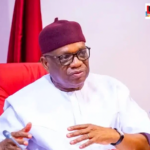
Instructively, the Director-General of the Nigeria Natural Medicine Development Agency (NNMDA), Prof Martins Emeje, has been appointed as a co-chair of the advisory group alongside Dr Susan Wieland, the Director of Cochrane Complementary Medicine, USA. Both of them were appointed based on their outstanding leadership in advancing rigorous evidence for traditional medicine research and the development of natural products. Emeje has in particular played a pivotal role in promoting research, development, regulation and commercialisation of natural medicines in Nigeria. No doubt, his appointment as a co-chair of the advisory group underscores the nation’s invaluable contribution to the development of traditional medicine. The group will guide global research, develop standards and support the integration of traditional medicine into national health systems. It will also implement the WHO Global Traditional Medicine 2025-2034). It will also ensure evidence-based practices and close gaps in regulation and research for traditional medicine worldwide.
“This is a pivotal moment for traditional medicine. It embodies cultural heritage and national health identities and increasingly, it constitutes a vital component of primary health care strategies,” said Dr Yukiko Nakatani, WHO’s Assistant Director-General for Health System, Access and Data. In the same vein, Dr Sylvie Briand, WHO Chief Scientist, said: “Its rapid growth has not always been matched by strong evidence standards, regulatory frameworks or sustained governance. The STAG was created to close this gap. It is not an academic exercise, but a formal WHO advisory mechanism providing independent, strategic and scientific guidance to help Member States navigate an increasingly complex and evolving field.”
The advisory group held its inaugural meeting in New Delhi, India, on December 17, 2025, alongside the second WHO Global Traditional Medicine Summit. Among its urgent priorities are methodological innovations and evidence generation; preservation and documentation of traditional knowledge; digitalisation and innovation; and capacity building and community engagement.
About 90 per cent of WHO Member States have reported the use of traditional medicine and requested robust evidence and data to guide policies, practice and regulations to ensure its safe and effective use, while promoting equity and sustainability. The WHO established the Global Traditional Medicine Centre (GTMC) in 2022 with foundational support from the government of India. Traditional, Complementary and integrative Medicine (TCIM) is used in 170 countries, according to a 2019 WHO report.
Other News
According to WHO, “traditional medicine refers to codified or non-codified systems for health care and well-being, comprising practices, skills, knowledge and philosophies originating in different historical and cultural contexts, which are distinct from and pre-date biomedicine, evolving with science for current use from an experience-based origin. Traditional medicine emphasises nature-based remedies and holistic, personalised approaches to restore balance of mind, body and environment.”
In Nigeria, traditional medicine is widely used. The federal government has also created the Department of Traditional, Complementary and Alternative Medicine (TCAM) at the Ministry of Health as part of measures to strengthen traditional medicine. Also, the Nigerian Herbal Pharmacopoeia has documented over 200 medicinal plants and their uses as part of efforts to integrate traditional medicine into our health care system.
We commend the launching of the new Strategic and Technical Advisory Group on Traditional, Complementary and Integrative Medicine. We also believe that the integration of traditional medicine into the healthcare delivery system of Member States will substantially improve the health care and well-being of their citizens.
Although the federal government has demonstrated its commitment to the development of traditional medicine and integrate it into our health care system, it should do more towards its regulation and commercialisation.
At the same time, traditional medicine can also boost the nation’s revenue base. The global herbal medicine market was estimated at $70.57 billion in 2023 and projected to reach over $328 billion by 2030. India and China have well-established traditional medicine systems and have successfully marketed their products both domestically and abroad. Nigeria and other African countries can develop their traditional medicine systems and earn enough revenue from herbal medicine.