Follow Us on Google
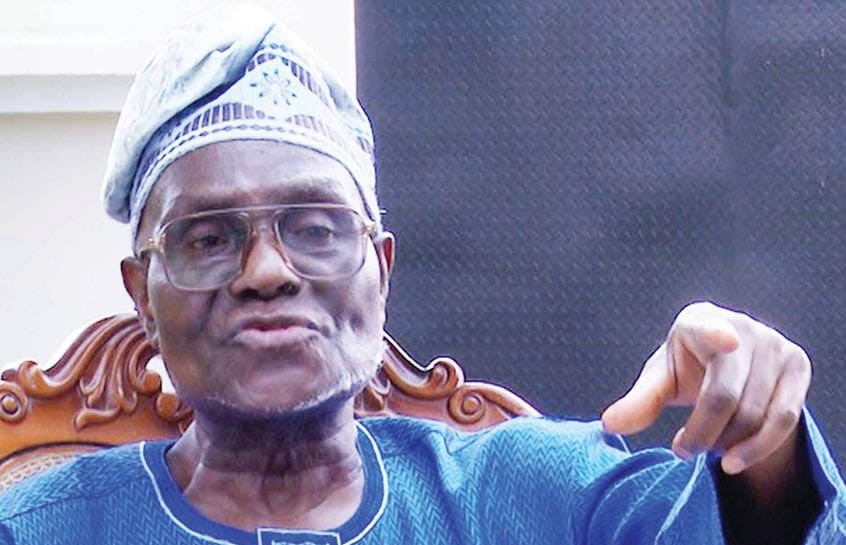
Former President of the Nigerian Labour Congress (NLC) and ex–General Secretary of the Organisation of African Trade Unions (OATUU), Hassan Sunmonu, has urged trade unions, civil society organisations, and intellectuals to forge a renewed alliance to confront political leaders and insist on accountability.
Speaking at the Toyin Falola Interviews on Sunday, Sunmonu warned that silence in the face of misgovernance only emboldens leaders. “If we don’t hold them accountable, the jamboree will continue,” he said, stressing that active civic engagement is central to the survival of democracy.
The session, chaired by historian Professor Toyin Falola, featured eminent panelists including Professor Idowu Olayinka, Achike Chude, Owei Lakemfa, and Zikora Ibeh. The discussion, themed “Trade Unions, Labour, and African Politics,” highlighted the intersections of labour activism, political oversight, and civic responsibility.
Sunmonu recounted the persistent attempts by politicians to weaken organised labour. “Some politicians have infiltrated some trade unions to destabilize them,” he said. “They tried it when I was president of the Nigeria Labour Congress. We were always split into two but we maintained the NLC as one. But after I left, they divided the NLC to almost three.
Today, we have two: Nigeria Labour Congress and the Trade Union Congress. It is part of the work of politicians to make sure that workers don’t speak with one voice in order to weaken the trade union congress. But again, the trade unions are talking. It is that unity that politicians want to break through corruption within the movements.
“They have even gone into civil society organizations where some good activists that we used to know in those days are today part of the propaganda machinery of politicians. It is a shame. But we must fight it because those who are corrupting them do not mean any good for Nigerians.
“They want Nigerians to be weak, poor so that they won’t be able to fight for their rights. A thousand years that a lie travels, one day truth will commence that journey and overtake the lies of a thousand years.”
Sunmonu also stressed that leadership failure thrives when citizens are discouraged from asking hard questions. “Followers also are guilty,” he said, noting that public complaints often fail to influence policy.
“When the prices of petrol rise or reduce by certain percent, it is not reflected in the cost of transport. What goes up in Nigeria doesn’t come down. The market women also cheat on the public. That is their own way of getting their ‘share’ like the visionless political leaders are doing.
“A market man or woman would hoard goods and will not be satisfied with the little price increase for profits. They would love to double or triple their profits. The same thing with landlords, so it is not only the leaders but also the followers!”
He called for structural reforms, citing the problem of medical tourism by public officials: “If our leaders stop going abroad for their health challenges, they will be forced to make our hospitals here well equipped and staffed. There must be a moratorium to make it impossible for any Nigerian leader to go abroad for medical treatments of any disease that could be treatable in Nigeria. Unfortunately, when our leaders make the law, they are the first to break it. That is our problem: indiscipline.”
Reflecting on his own career, Sunmonu highlighted the importance of mentorship in building strong and principled leadership.
“Well, I have been very lucky to have been mentored by one of the greatest African trade unionist leaders, the late Comrade Wahab Goodluck. He was my mentor and I am proud to say that. I don’t know whether current union leaders have mentors like we used to have in those days. This is because I never used up to 85 per cent of what I learnt from the late Honorable Wahab Goodluck throughout my trade union career. Initially I was an ordinary member of the union that he led, and within ten years I became the president of the union. In those ten years, what I learnt had benefitted me throughout my trade union career including the Organization of African Trade Unions Unity and even at the level of the International Labour Organisation (ILO) where for over 25 years, without being an elected member of the ILO governing body, I had the privilege of attending ILO governing meetings.”