Follow Us on Google
The Calabar Chamber of Commerce, Industry, Mines and Agriculture (CALCCIMA), has said that trade facilitation remains its main focus , even as it remains commited to building on the successes of the ease of doing business initiative in Cross River State.
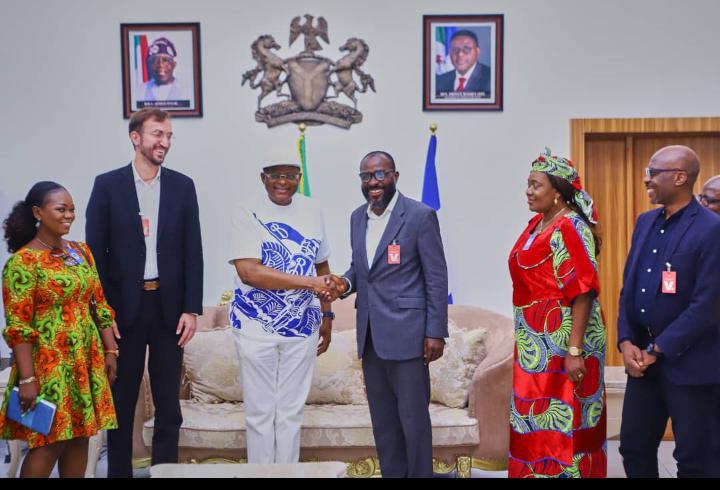
President of the chamber, David Etim, who is also a member of the National Trade Facilitation Committee, made the remark when he hosted a team from the National Trade Facilitation Committee and the World Bank Nigeria Trade team in Calabar, the state capital recently.
Etim disclosed that the team was in Cross River State on a fact-finding mission to appraise the trade corridors in the eastern part of Nigeria; the Nigerian Port Authority (NPA), Calabar, which is the last and the farthest eastern port in Nigeria.
He noted that in the bid to position the state as the most business-friendly sub-national in Nigeria and Africa, CALCCIMA organized a policy dialogue on the sub-national implementation of the Business Facilitation (Miscellaneous provisions) Act of 2022 and the development of a formal Cross border trading ecosystem for Nigeria in the state.
“Recognising CALCCIMA’s commitment, Civil Society Legislative Advocacy Centre (CISLAC) and Oxford Committee for Famine Relief (Oxfam) collaborated with the chamber and the Cross River State Government, specifically through the Ministry of Commerce, to engage stakeholders in implementing the set goals and objectives.”
In the three-day event, the chamber disclosed that fact finding visits were made by the team to the Calabar Port, to assess the logistical challenges and operational inefficiencies directly affecting trade; and Mfum Border, where the focus was on understanding the processes, challenges and opportunities for formalising informal trade.
“The visits culminated in a stakeholder forum held in Calabar, which brought together representatives from various sectors, including government agencies, trade associations and international bodies, to discuss findings, share insights and collaboratively develop actionable strategies for enhancing trade facilitation and implementing the Business Facilitation Act effectively.
The forum ensured a thorough examination of the trade environment from multiple perspectives, fostering a holistic understanding and coordinated action plan.”
Etim noted that during the visit to the NPA Calabar port complex, stakeholders shared the challenges, constraints and frustrations that port users are currently facing within the port ecosystem.
The stakeholders decried the current state of the trading environment, highlighting several critical issues which include insufficient carriers, which hampers its efficiency; slow ongoing dredging project at the port, delaying much-needed improvements; poor access roads; security challenge, impacting overall operations; lack of a digital system for cargo release, among other challenges.
On his part, a consultant from the World Bank, Dr. Shuaibu Mohammed, spoke on digital trade initiatives and highlighted the World Bank’s interventions through programs like SABER and ARMOUR.
Head of the delegation from the World Bank, Mr. Aleksander Stojanov, emphasised the importance of creating a conducive business environment in the port to facilitate smoother trade operations. Other stakeholders eulogised the efforts of the World Bank so far, pointing out the disparity between the eastern and western ports, mainly due to draught limitations, but highlighted Calabar’s strategic location to serve various regions including North East, North Central and South East Nigeria.
They also mentioned the economic benefits of a fully functional port, stressing the importance of concessions in maintaining business operations.
On developing formal cross-border trading ecosystem, Also, Etim, pointed out the progress, prospects and challenges towards actualising the African Continental Free Trade Area (AfCFTA).
He noted that the AfCFTA is a formal trade structure meant to drive up trade within the African countries, as the countries have always been trading within themselves, though informally.
Etim emphasised the importance to educate “our people on the benefits of a formal Cross border trade, which to a great extent reduces the burdens in terms of the concept that the formal trade is very expensive.
“There is no structure to protect the formal trade, so it seems expensive. But by the time you bring in the formal structure, everything needed to protect the structure is brought in, then it can be protected.”
He said the chamber is poised to do much in collaboration with the federal, state, international bodies like the world Bank, local stakeholders to analyse, find the challenges and push for the success of trade in the state.
He was optimistic that the current administration is interested in boosting trade. “So we anticipate that once we are able to transmit the challenges to the governments , we expect a prompt reaction and rapid response to our requests.”
On her part, Commissioner for Commerce, Cross River State, Dr. Abigail Duke Orok, highlighted the importance of understanding the operational
dynamics at the Mfum border to facilitate effective policy implementation.
Other stakeholders decried the border’s temporary closure due to the ongoing conflict in Cameroon, adding that trade at the border is treated as baggage assessment, including cocoa,
tomatoes, oranges and other general/manufactured goods.
They mentioned that the numerous checkpoints on the route was significantly hindering trade
efficiency, pointing out the need for a weigh bridge and scanners
at the border to streamline operations.
They also decried the lack of digital systems for border operations, stressing the importance of introducing ICT solutions.