Follow Us on Google
From Juliana Taiwo-Obalonye, Abuja
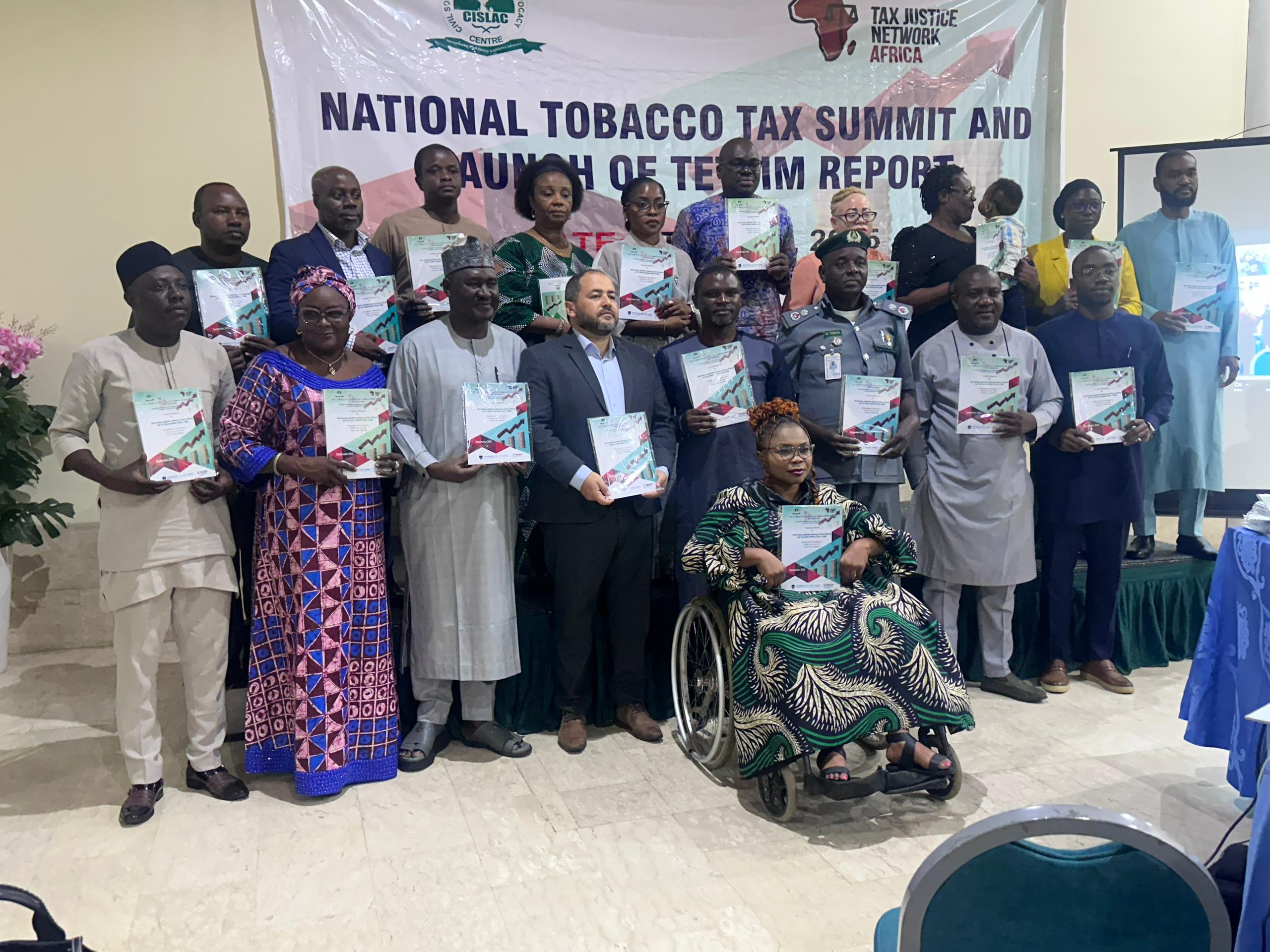
Ahead of Nigeria’s implementation of a new tobacco tax regime beginning January 2026, Civil Society Legislative Advocacy Centre (CISLAC) on Wednesday launched the Tobacco Excise Tax Simulation (TETSiM) Report for Nigeria with a decisive call for robust reform of Nigeria’s tobacco tax policy.
Central to the National Tobacco Tax Summit held in Abuja were the findings and key recommendations of the TETSiM report, validated through partnership with the University of Cape Town and Tax Justice Network Africa. Director of the Research Unit on the Economics of Excisable Products at the University of Cape Town, Corne van Walbeek, explained the report’s critical insights: “Our simulations forecast that increasing the specific excise tax by 150% in the first year, followed by substantial increases annually, can reduce cigarette consumption by 17.5%, increase real tobacco tax revenue by 183.7%, and avert the greatest number of tobacco-related deaths.”
Van Walbeek emphasised, “Maintaining current tax rates will leave consumption and smoking prevalence unchanged, making it an ineffective public health policy.”
Based on Nigeria’s challenging economic context—including inflation and growth dynamics—the report stresses two primary recommendations: “Policymakers should not change the current excise-tax structure but should prioritise increases in the specific excise tax,” and “Excise taxes should be raised substantially to make up for price and revenue erosion caused by recent inflation, thereby increasing tobacco prices enough to reduce consumption while bolstering revenues.” The report further urged governments to pre-announce annual tax increases over several years to simplify policy implementation and reduce tobacco industry interference.
Since 2018, Nigeria has operated a mixed excise tax system on tobacco products, aligned with the World Health Organization Framework Convention on Tobacco Control (WHO-FCTC) Article 6 guidelines.
As one of Africa’s largest tobacco markets and West Africa’s manufacturing hub, Nigeria’s fiscal policies are pivotal in curbing tobacco consumption, safeguarding public health, and raising government revenue to support sustainable development goals.
At the summit, CISLAC Executive Director Auwal Musa Rafsanjani highlighted, “While Nigeria has made progress since implementing a mixed excise tax system in 2018, our rates remain far below ECOWAS and WHO recommendations. The TETSiM report provides clear data to inform critical conversations and accelerate reforms so Nigeria can match or surpass its West African neighbours in effective tobacco taxation.” He called for a united stakeholder effort, stating, “Increasing tobacco taxes will reduce tobacco affordability, especially among youth, improve public health outcomes, and generate much-needed government revenue.”
He emphasised the health rationale behind tobacco excise taxes: “Consumption taxes on luxury and harmful products like tobacco and alcohol are not just taxes applied for the sole purpose of revenue generation. Rather these taxes are applied to discourage consumption and thereby safeguarding the health of citizens. It is in this understanding that economists refer to these types of taxes as sin-taxes.”
Other News
He cited the World Health Organisation’s alarming statistic that tobacco use causes over 7 million deaths globally each year, describing tobacco as one of “the biggest public health threats the world has ever faced.” Rafsanjani highlighted tobacco taxation as “the single most effective tobacco control measure” because it raises prices, reduces affordability—especially among youths and the poor—and leads to lower consumption.
Rafsanjani stressed, “While Nigeria has made significant progress since 2018 when it first adopted the mixed excise tax system for cigarettes, the country is still far from meeting the ECOWAS and WHO recommended level of tobacco taxation. Countries like Senegal and Ghana are already on the verge of reaching this benchmark in terms of tobacco taxation. These are the critical conversations that Nigeria must have to ensure that the tobacco tax rates in the country matches and possibly surpasses the rates adopted by sister countries of the West African region.”
Representing the Federal Ministry of Health, Abraham Agbons of the Tobacco Control Unit affirmed the ministry’s commitment to protecting Nigerians from second-hand smoke and enforcing tobacco control laws, saying, “Taxation is recognised globally as the fastest way to reduce consumption of tobacco use.” Agbons referenced the implementation of graphic health warnings, adding, “The ministry has shown its commitment by galvanising multi-sectoral support for tobacco control in Nigeria.”
Federal Ministry of Finance representative delivered a goodwill message emphasising tobacco taxation’s role in national objectives: “This ongoing comprehensive review aims to introduce stronger excise tax rates from January 2026. Nigeria’s current rates are among the lowest not only in ECOWAS but across Africa. The Ministry is focused on policies that support sustainable economic growth, protect public health, and align with global commitments under the WHO Framework Convention on Tobacco Control.”
He confirmed ongoing excise tax regime review to introduce stronger tax rates by January 2026, noting, “On comparative ground, we were made to understand that the Nigerian excise is one of the lowest, not just within the ECOWAS sub region, but within the African continent.” He urged participants to use the summit as a platform “to deepen understanding, share knowledge and strengthen the evidence base for impactful tax policy reforms.”
Nigeria Customs Service representative declared, “Our role… is policy enforcement. I want to assure you that any policy that is being formed by the Federal Ministry of Finance will surely be implemented and enforced as expected.”
Tax Justice Network Africa (TJNA), Amine Kamel praised the summit’s collaborative spirit, saying, “Across the continent, the call for stronger health taxation, taxing harmful products has gained renewed momentum. We are proud to be supporting this movement through data-driven tools as the TETSiM model and working with partners like CISLAC to provide robust evidence-based advocacy that inform policy dialogue.”