Follow Us on Google
From Uche Usim
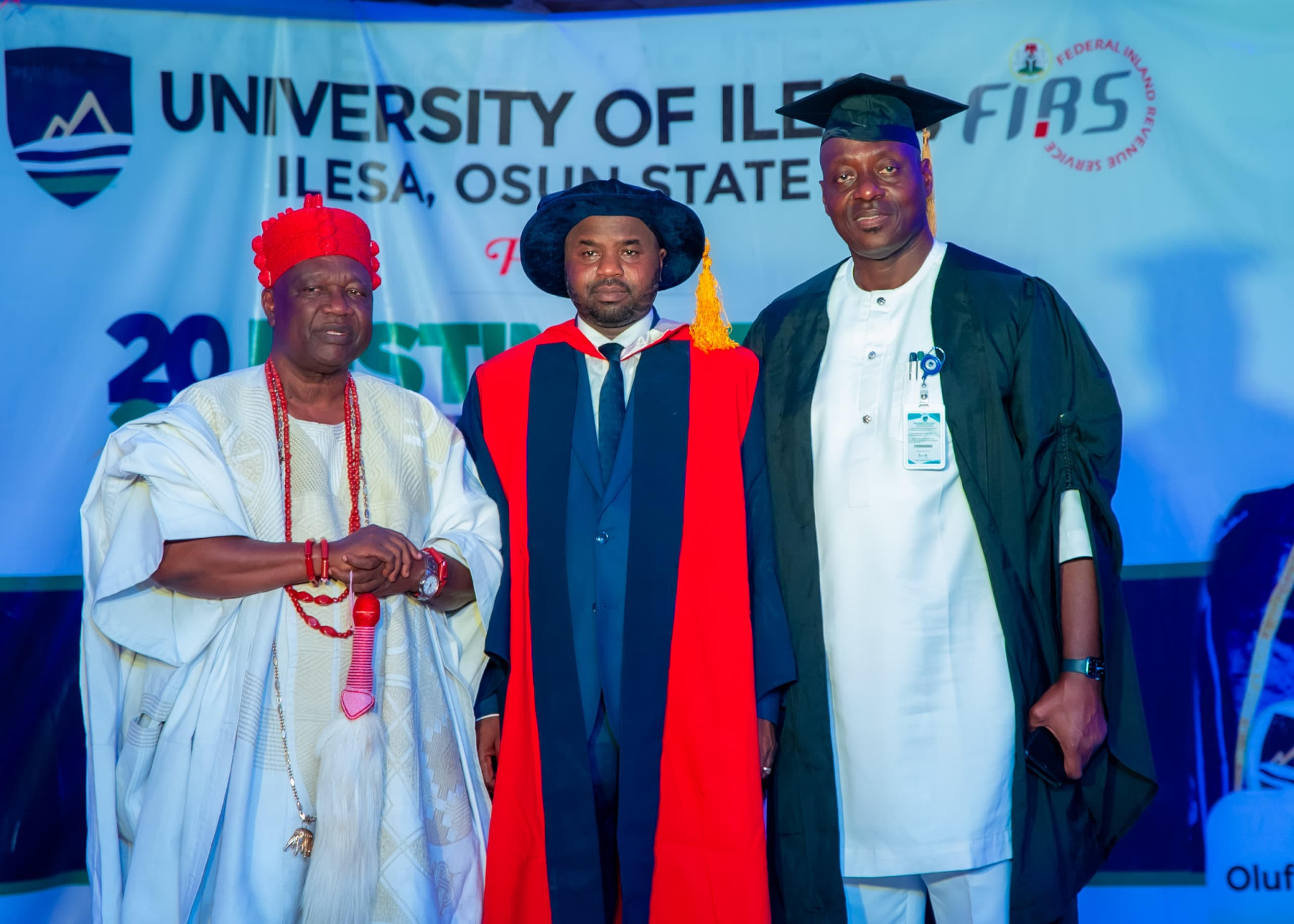
Nigeria’s ongoing tax reforms under President Bola Tinubu are critical to building a stronger and more resilient economy, according to Dr Zacch Adedeji, Executive Chairman of the Federal Inland Revenue Service (FIRS). Adedeji made the assertion on Friday while delivering the maiden edition of the Distinguished Lecture Series at the University of Ilesa, Osun State.
Speaking to an audience of academics, policymakers, students and industry experts, the FIRS Chairman said Nigeria’s revenue constraints should not be seen as a national crisis but “an opportunity to implement far-reaching reforms” under Tinubu’s leadership. His lecture, titled *Economic Resilience in an Era of Dwindling Revenue*, examined the global strains affecting public finances—from digital disruption to rising debt, climate-related pressures and overlapping economic shocks.
According to Adedeji, charting a sustainable path for Nigeria will require a deliberate combination of stronger institutions, diversified revenue sources and a fully modernised tax system. He outlined four core pillars for economic resilience: fiscal flexibility, policy coherence, strong institutions and adaptable human capital. Strengthening non-oil revenue and accelerating tax reforms, he said, are central to helping Nigeria “keep pace with global economic realities.”
Other News
Adedeji also shed light on the reforms currently underway at the FIRS as part of Tinubu’s Renewed Hope Agenda. These include automation of tax processes, expansion of TaxPro Max, more robust taxpayer identification, and deeper collaboration with state governments to reduce fragmentation in tax administration. According to him, these initiatives are aimed at boosting efficiency, transparency and overall compliance.
He urged Nigerian universities to play a more active role in shaping national economic strategy, noting that higher institutions are “engines of innovation” capable of supporting policy development. Adedeji called for stronger partnerships to produce evidence-based models for digital taxation, revenue mobilisation and economic diversification, stressing that academia must be part of the nation’s drive toward competitiveness and long-term stability.