Follow Us on Google

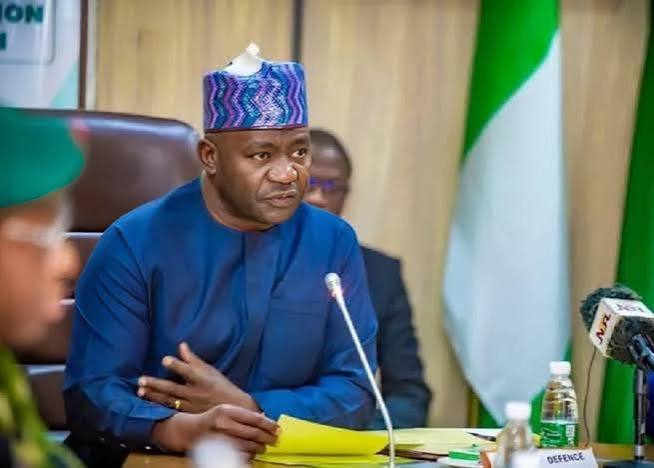
The Minister of State for Petroleum Resources (Oil), Senator Heineken Lokpobiri, has said that reforms introduced by President Bola Tinubu have increased Nigeria’s crude oil production by over 80 per cent.
The minister stated this in Yenagoa at a breakfast meeting with veteran media friends led by Elder Asu Beks, themed “Counting the gains of the oil sector reforms under President Bola Tinubu.”
Lokpobiri, who thanked the President for finding him worthy of the appointment, said he was in Kenya the previous day to represent the President at the groundbreaking of the Angbuti East African Refinery and Petrochemicals project attended by seven presidents.
He said upon assumption of office, Nigeria was producing less than one million barrels per day of crude and condensate.
“Condensate is not counted by OPEC. As of the last weekly report from NUPRC, we are producing 1,824,000 barrels per day inclusive of condensate. That is over 80 per cent from where we started in 2023.”
He said the feat was achieved through committed efforts by stakeholders, led by the President.
The minister said the country previously had less than 10 active drilling rigs and no seismic activity for over 20 years, but now has over 70 active rigs, with each well costing $25m to $30m onshore and $80m to $100m deep offshore.
He said before the Tinubu administration, Nigeria recorded zero investment in oil and gas for over 10 years, but now accounts for 60 per cent of oil and gas investments coming to Africa.
Lokpobiri attributed the turnaround to the approval of divestments by Shell to Renaissance and ExxonMobil to Seplat, which he said were delayed by the previous government due to lack of courage. He said the approvals triggered investments in Bonga North, Bonga South-West and Zabazaba fields.
Other News
He noted that indigenous companies now produce about 60 per cent of the nation’s crude, compared to 90 per cent previously produced by International Oil Companies.
On subsidy removal, he said the decision was inevitable, noting that Nigeria was spending ₦18.4 billion daily on subsidy at ₦448 per dollar, amounting to $15 billion annually, which would be ₦21 trillion at ₦1,400 per dollar.
He said NNPC, which never declared profit and could not pay cash calls before, now declares profit, pays into the Federation Account and meets its obligations.
The minister said the removal has raised FAAC allocations from less than ₦600 billion monthly to over ₦2 trillion monthly, enabling 27 states that could not pay salaries to now pay and execute projects.
He said Section 205 of the Petroleum Industry Act, signed by former President Muhammadu Buhari, prescribes market-based pricing, and that deregulation has allowed Dangote Refinery to supply jet fuel to Europe.
He also said Nigeria was subsidising fuel for the entire West and Central African region before removal.
On Bayelsa’s Atala oil field, he said the state government filed a suit and lost at the Federal High Court and Court of Appeal, and that a political solution is being explored to secure funding.
He added that Oil Block OML 240 belonging to Bayelsa, awarded over 20 years ago, has expired and a Norwegian firm has been brought in to develop it.