Follow Us on Google

….Senator accuses politicians of sponsoring violence
….Candidates risk disqualification over violence – Akpabio
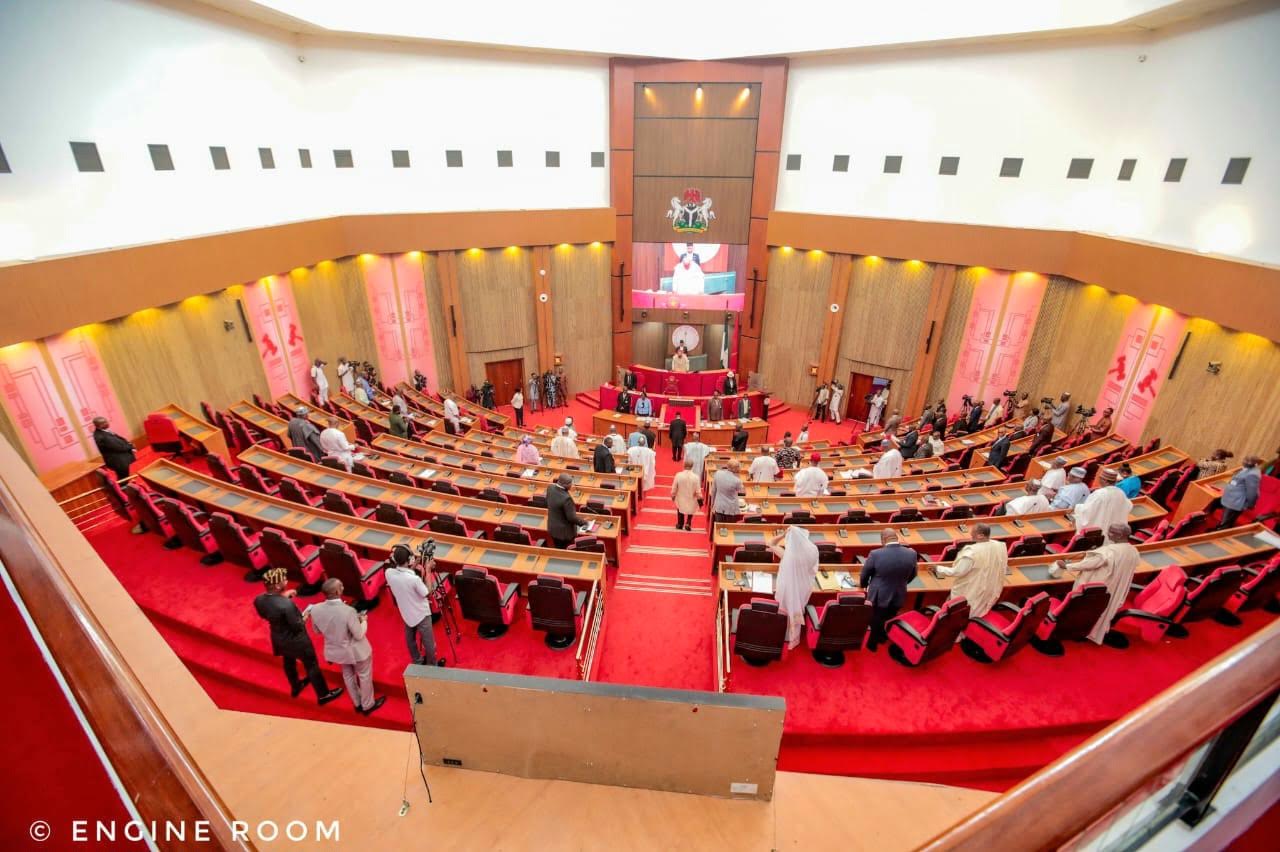
The Senate has ordered security agencies to investigate reported attacks on President Bola Tinubu, Presidential candidate of the African Democratic Congress (ADC), Atiku Abubakar, Nigerian Democratic Congress (NDC) presidential candidate, Peter Obi, and other political leaders, amid growing concerns over political violence ahead of the 2027 general elections.
This is just as it directed its committees on National Security and Intelligence, Public Affairs, and Independent National Electoral Commission (INEC) to engage relevant institutions and report back within one week on measures to prevent political violence and safeguard the elections.
The resolutions followed the adoption of a motion of urgent public importance sponsored by Abdul Ningi on Tuesday, which drew attention to what lawmakers described as an alarming escalation of attacks on political leaders, supporters and political gatherings across the country.
Specifically, the motion urged the Federal Government to direct the Inspector-General of Police (IGP) and other security agencies to strengthen protection for political leaders, candidates, supporters and political gatherings nationwide.
It also called for the establishment of effective early-warning and rapid-response mechanisms to prevent violence as political activities gather momentum ahead of the 2027 elections.
In the motion, the Senate expressed concern over the reported attack on Tinubu’s motorcade on November 13, shortly after the President observed Jumat prayers at the Shehu Shagari Central Mosque, Garki, Abuja.
The convoy was reportedly attacked with stones and other dangerous objects as it departed the mosque, resulting in damage to vehicles and injuries to security operatives.
Lawmakers also recalled the reported attack on Obi and other political stakeholders in Benue, the disruption of a political procession involving supporters of the NDC and the Obidient Movement in Asaba, Delta State, on November 7, which reportedly left one person dead and five others injured, as well as the attack on Atiku’s convoy in Sokoto State.
The Senate said the incidents reflected a disturbing pattern of political intolerance, intimidation and violence capable of undermining public confidence in the electoral process and discouraging citizens from exercising their democratic rights.
Contributing to the debate, Mohammed Ndume said the National Assembly must take a firm position against political violence, warning that the attacks could extend to other political leaders and lawmakers if not checked.
“What we need to do as a Senate is to stand up solely against any form of violence,” he said.
Ndume described the reported attack on the President as an embarrassment to the country rather than to Tinubu.
“What happened last Friday to Mr President is not an embarrassment to Mr President, it is an embarrassment to Nigerians,” he said.
He questioned the justification for attacking political leaders because of their positions, adding: “What are the youths saying, that who God chose as president is wrong?”
The senator said Tinubu’s response to the incident reflected his democratic disposition, arguing that the consequences could have been different under a military government.
“The President is a democrat. If it were military, those 88 people that were arrested that day would have been dead,” he said.
Ndume called on the police to prohibit the carrying of objects that could be used as weapons, including knives and sticks, at political rallies.
He also advocated the immediate trial and conviction of anyone found culpable in electoral violence through mobile courts.
The former Senate Chief Whip further warned against political slogans calling for the removal of leaders, arguing that such rhetoric could encourage intolerance.
“Tinubu must go, Atiku must go, Obi must go. So if everybody goes, who will remain?” he asked.
Senator Samaila Kawu, while condemning the attack on the President, accused politicians of sponsoring much of the violence witnessed during political activities.
“We are the sponsors of all what is going on,” he said, alleging that some politicians supplied weapons and drugs to youths to perpetrate violence.
He cited an incident involving a candidate for a National Assembly seat who was allegedly seen carrying weapons without any reported consequences, arguing that the problem required action against those financing and encouraging the perpetrators.
Kawu, however, cautioned security agencies against excessive use of force, citing an alleged incident during an All Progressives Congress (APC) rally in Sokoto where security operatives reportedly shot at supporters wearing party insignia as they entered the venue.
The Minority Leader, Senator Abba Moro, warned that the violence trailing political campaigns could eventually disenfranchise voters if left unchecked.
He urged security agencies to rise to the occasion and meet Nigerians’ expectations by ensuring that political activities were conducted peacefully.
Also contributing, Babangida Hussaini recalled the recommendations of the Justice Mohammed Uwais-led Electoral Reform Committee on addressing electoral violence through the establishment of a commission and specialised courts.
Hussaini said the country was beginning to experience the consequences of failing to implement measures to tackle the problem.
“We have begun to see the results of what we have not done,” he said.
He also alleged that a candidate of the ADC openly brandished a pistol in his state without any known action being taken over the incident.
“We have paid lip service with this matter and we have to be serious about it,” he declared.
In his remarks, Sampson Ekong called for a level playing field for candidates across political parties and urged the Federal Ministry of Information and the National Orientation Agency to embark on intensive public enlightenment campaigns against electoral violence.
In his closing remarks, Senate President Godswill Akpabio called for the full implementation of the 2026 Electoral Act, particularly its provisions on electoral violence.
He drew attention to Sections 121 to 128 of the Act, which he said provided sanctions against candidates whose agents incite violence.
According to him, any candidate whose agent incites violence could be disqualified if INEC establishes a prima facie case against the candidate.
He added that candidates who carry weapons or encourage thugs to surround them could also face disqualification under the law.
Earlier, Akpabio had warned parents and guardians to caution their children against attacking political leaders, noting that the consequences could extend beyond ordinary criminal charges.
“We must warn our children because there are certain things you can do and it will turn out to be treasonable felony,” he said.
The Senate President said those implicated in the reported attack on Tinubu could have faced charges of treasonable felony, adding that an encounter with security operatives could have had fatal consequences.
“If the security agents had attacked, such a child may not get back home,” he said.
The Senate consequently mandated the three committees to engage relevant security and electoral institutions and submit their report within one week.