Follow Us on Google

Founder and Executive Chairman of BUA Group, Abdul Samad Rabiu, has said President Bola Tinubu’s economic reforms are restoring investor confidence and easing longstanding obstacles to industrial expansion, but warned that Nigeria must create at least 100 more major indigenous companies to translate the gains into jobs, increased production and improved living standards.
Rabiu, who disclosed that BUA Foods and BUA Cement now command a combined market capitalisation exceeding $17 billion, said the group’s ongoing investments in flour milling, pasta, noodles, edible oils, rice milling and animal feed production were expected to double capacity across the affected food manufacturing operations by 2027.
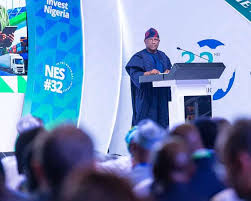
Delivering the keynote address at the 32nd Nigerian Economic Summit in Abuja on Monday, the industrialist commended the Tinubu administration’s foreign exchange, fiscal and tax reforms, removal of petrol subsidies, banking sector strengthening and infrastructure investments, saying the measures were beginning to address structural constraints that had discouraged large-scale business investments.
He, however, maintained that economic stabilisation alone would not deliver prosperity unless the government and private sector worked together to expand manufacturing, create employment, strengthen domestic production and reduce the country’s dependence on imported finished goods.
“We must move from reform to results, from stabilisation to expansion, and from economic adjustment to shared prosperity,” Rabiu declared.
Speaking on the theme, “Growth That Works: Building a New Economic Accord for Nigeria,” he identified improved access to foreign exchange as one of the most significant changes in the business environment, recalling how manufacturers previously struggled to obtain dollars for machinery and raw materials despite having sufficient naira to finance their investments.
According to him, the reforms have reduced businesses’ dependence on discretionary foreign exchange allocations from the Central Bank of Nigeria (CBN), making investment planning more predictable.
“Legitimate businesses can now access foreign exchange through the market at prevailing exchange rates, rather than depending on direct allocations from the Central Bank,” he said. Rabiu recalled that businesses previously had to approach the apex bank frequently for foreign exchange allocations, a situation he said had changed substantially since Olayemi Cardoso became CBN governor.
He disclosed that he had met Cardoso only a handful of times since his appointment, unlike the previous arrangement under which businesses routinely approached the Central Bank to secure foreign exchange for legitimate transactions.
The BUA chairman maintained that predictable access to foreign exchange was critical to industrial development because manufacturers often committed substantial capital to projects requiring several years to complete and even longer periods to recover their investments.
He acknowledged that the reforms had imposed difficulties on households and businesses, but urged the government to sustain measures capable of improving investment conditions while ensuring that the benefits reached ordinary Nigerians.
Turning to BUA Group’s operations, Rabiu disclosed that its two companies listed on the Nigerian Exchange, BUA Foods and BUA Cement, had achieved a combined market capitalisation exceeding $17 billion.
He put the valuation of BUA Foods at more than $10 billion and BUA Cement at approximately $7 billion, describing their growth as evidence of the opportunities available to indigenous manufacturers willing to undertake large-scale investments.
He said the group’s expansion projects in flour milling, pasta, noodles, edible oils, rice milling and feed mills were progressing, with completion expected in 2027.
“These investments will strengthen Nigeria’s food security, create jobs, support farmers and suppliers, and expand our capacity to serve markets across Africa,” he said.
“Our ambition is not simply to become bigger. It is to make Nigeria stronger.”
Rabiu challenged policymakers and business leaders to create conditions that would encourage the emergence of more major indigenous industrial enterprises across manufacturing, agriculture, mining, technology and other productive sectors.
“But the question we must ask ourselves is not simply how BUA can continue to grow. It is how Nigeria can create another one hundred BUAs,” he declared.
He identified inadequate access to affordable long-term financing as a major impediment to industrial growth, explaining that large manufacturing investments often required between 10 and 20 years to realise their full potential.
The BUA chairman consequently called for greater mobilisation of financing from commercial banks, pension funds, insurance companies, development finance institutions and capital markets to support productive investments.
He also urged the government to maintain policy stability, improve infrastructure and strengthen the investment environment to enable indigenous manufacturers to expand their operations.
Drawing attention to Nigeria’s cement industry, Rabiu recalled that the country previously imported almost 80 per cent of its domestic cement requirements but had since achieved self-sufficiency and become a net exporter through sustained investment in local production.
He said the experience demonstrated how deliberate industrial policies, access to raw materials and substantial private sector investment could transform import-dependent industries into major contributors to economic growth.
The industrialist advocated similar investment in agriculture, food processing and other manufacturing sectors, citing BUA’s integrated sugar project at Lafiagi, Kwara State, as an example of the opportunities available through local processing and value addition.
“Nigeria must not remain simply a supplier of raw materials or a market for finished products. We must become a nation that processes, manufactures and exports,” he said.
Rabiu also called for a new economic accord among government, businesses and citizens, anchored on policy stability, productive investment, human capital development, access to long-term capital and shared prosperity.
He urged Nigerian businesses to take advantage of the African Continental Free Trade Area by expanding production, strengthening competitiveness and exploring opportunities in regional and international markets.
According to him, Nigeria’s industrial future must involve producing more of what the country consumes, processing locally available raw materials and exporting finished goods rather than remaining dependent on imports.
“But potential alone is not prosperity. It must be organised, financed and converted into production,” he said.
“No one will build Nigeria for us. We must build it ourselves.”
The 32nd Nigerian Economic Summit, organised by the Nigerian Economic Summit Group (NESG), brought together Vice President Kashim Shettima, government officials, state governors, business leaders and policymakers to examine strategies for improving productivity, accelerating economic growth and delivering shared prosperity.
The summit also featured discussions on the need to translate economic reforms into measurable improvements in employment, industrial output and household welfare.