Follow Us on Google

From Romanus Ugwu, Isaac Anumihe and Godwin Tsa, Abuja
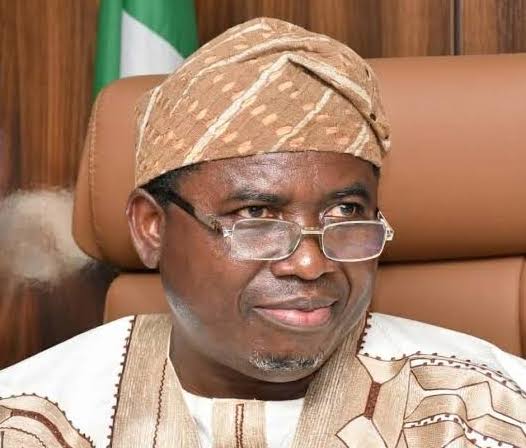
Chairman of the Independent National Electoral Commission (INEC), Joash Amupitan, has raised the alarm over the escalating wave of political violence across the country ahead of the 2027 general elections, warning that unless urgently checked, attacks on campaign convoys, party supporters and electoral officials could undermine voter participation, threaten the deployment of over 1.41 million ad hoc personnel and plunge the country into prolonged post-election instability with far-reaching consequences for the West African sub-region.
Consequently, the commission said it was working closely with the Nigeria Police Force and other security agencies to prosecute electoral offenders, disclosing that identified perpetrators would face prosecution under the Electoral Act 2026 as soon as the relevant security agencies forwarded their investigative case files.
However, National Security Adviser (NSA), Nuhu Ribadu, has assured Nigerians that security agencies would operate impartially and provide adequate protection for voters, candidates, political parties, electoral officials and other stakeholders, irrespective of their political affiliations, before, during and after the elections.
Similarly, as part of efforts to strengthen security preparedness for the polls, the Nigeria Security and Civil Defence Corps (NSCDC) has commenced an intensive three-day strategic workshop for management officers and heads of intelligence and operations across its formations nationwide, with emphasis on intelligence gathering, inter-agency collaboration, professionalism and respect for citizens’ fundamental rights.
Amupitan and Ribadu spoke at the INEC-Office of the National Security Adviser (ONSA) Strategic Election Security Conference held in Abuja yesterday, while the INEC chairman also addressed the 2026 National Conference of the National Association of Judiciary Correspondents (NAJUC), Abuja chapter, through his Chief Press Secretary, Adebayo Oketola.
The INEC chairman, who identified Lagos, Edo, Ekiti, Enugu, Ebonyi, Delta, Cross River, Oyo and Benue among states that had witnessed incidents of political violence since the commencement of campaigns in August, also accused some political party supporters of attempting to intimidate the commission’s leadership and personnel, insisting that INEC would neither be intimidated nor blackmailed into compromising its neutrality.
“We cannot speak of preparedness without confronting an urgent and deeply troubling reality unfolding across our political landscape right now.
“Since the commencement of open campaigns in August 2026, Nigeria has witnessed a disturbing escalation in political intolerance, incendiary rhetoric, and coordinated physical attacks on campaign convoys, town hall gatherings, party offices, and supporters across multiple states, including Lagos, Edo, Ekiti, Enugu, Ebonyi, Delta, Cross River, Oyo, and Benue.
“INEC condemns this wave of political campaign violence in the strongest, clearest, and most unequivocal terms. Every Nigerian citizen, every political party, and every candidate has an inalienable constitutional right to canvass for votes peacefully in every ward, local government, and state of this federation without fear of ambush, arson, or intimidation.
“No political ambition is worth the blood of a single Nigerian, and no party or political actor has the right to turn public spaces into theatres of thuggery or declare any territory a no-go area for lawful political engagement,” he warned.
Expressing concern over attacks on electoral officials, Amupitan said the growing harassment and intimidation of the commission’s leadership, staff and ad hoc workers by supporters and agents of political parties, both within and outside Nigeria, constituted a threat to the independence of the electoral umpire.
“Over recent weeks, we have seen party zealots attempt to besiege commission facilities, threaten electoral officers, and subject INEC leadership to coordinated hostility. Let me be unmistakably clear: INEC officials are non-partisan public servants discharging a sacred constitutional mandate.
“When party supporters attack our personnel or seek to intimidate our leadership, they are not merely assaulting individuals; they are attempting to coerce an independent constitutional referee and subvert the democratic order. We will neither be intimidated nor blackmailed into compromising our neutrality, and every attack on INEC personnel, facilities, or materials will be met with the full weight of the law.”
INEC moves against electoral offenders
Reinforcing the commission’s determination to end impunity among political actors, Amupitan, in his goodwill message to the NAJUC conference, disclosed that INEC was collaborating with the police and allied security agencies under a decentralised framework known as ICCES Tentacles to ensure the prosecution of electoral offenders and curb campaign violence.
He said prosecutions would be guided by the Regulations and Guidelines for Political Parties 2026 and the enhanced deterrence provisions of Sections 95, 96, 97 and 148 of the Electoral Act 2026.
The INEC chairman also challenged political leaders to take responsibility for the conduct of their supporters, warning that accountability for electoral violence must extend beyond those directly involved to party leaders and campaign organisations.
“Let me also remind all political leaders and party hierarchies that accountability does not end with the foot soldiers who throw stones or wield weapons. Party leadership bears moral and political responsibility for the conduct of its candidates, campaign councils, and youth wings.
“Signing peace accords in Abuja while tolerating or financing thuggery in the states is a contradiction our democracy can no longer afford,” he said.
Violence threatens deployment of 1.41m electoral workers
Enumerating the implications of unchecked political violence for the 2027 elections, Amupitan warned that the prevailing atmosphere of fear could discourage millions of eligible voters from exercising their franchise, particularly women, youths, the elderly, internally displaced persons and the 232,658 persons with disabilities on the national voter register.
“When bullets replace ballots and rallies end in bloodshed, ordinary citizens stay home, effectively disenfranchising millions of peaceful Nigerians.
“An election marked by low turnout driven by fear weakens the democratic mandate of whoever emerges victorious.”
He also expressed concern over the safety of electoral personnel, noting that the conduct of the general elections across 177,299 polling units would require the mobilisation of over 1.41 million ad hoc personnel.
“Conducting a general election across 177,299 polling units requires mobilising over 1.41 million ad hoc personnel, the overwhelming majority of whom are patriotic National Youth Service Corps (NYSC) members, alongside seasoned academics serving as collation and returning officers.
“No parent or institution will willingly deploy young Nigerians into environments where political thugs operate with impunity,” he said.
Amupitan further warned that violence during campaigns could create conditions for the rejection of credible election results and prolonged civil unrest.
“When campaigns are fought with weapons, hate speech, and existential threats rather than policy ideas, losing parties and their supporters are primed to reject credible outcomes, turning collation centres into flashpoints and triggering protracted civil unrest.”
Beyond the domestic implications, the INEC chairman said electoral instability in Nigeria could have devastating consequences for the West African sub-region, particularly against the backdrop of unconstitutional changes of government, democratic backsliding and insecurity across the Sahel.
“At a critical historical juncture when West Africa is grappling with democratic backsliding, unconstitutional changes of government, and transnational insecurity across the Sahel, a peaceful, free, fair, and credible election in Nigeria serves as the primary anchor of regional stability and constitutional order.
“Conversely, electoral turmoil or protracted post-election instability in Nigeria would send destructive shockwaves across West Africa, disrupting regional trade corridors, triggering cross-border displacement, emboldening anti-democratic forces, and weakening collective security across the entire Gulf of Guinea and Lake Chad basin.
“Safeguarding the integrity of Nigeria’s 2027 polls is, therefore, both a domestic constitutional duty and a vital regional security imperative,” he said.
Ribadu assures of impartiality, protection for all
Ribadu acknowledged that recent incidents of political violence across the country underscored the need for early preparation, improved intelligence gathering and preventive action, assuring Nigerians that security agencies would discharge their responsibilities impartially and protect the constitutional independence of INEC.
He maintained that the government and security agencies had performed fairly well under the present administration compared with previous experiences.
“The duty of government and the security agencies is to protect voters, electoral officials and the wider population before, during and after the election. So far, I think we have done fairly well under this government, compared with what we have witnessed in the past.
“We protect you. We protect the voters. We protect politicians. And even after the election, we make sure there is no violence.
“Security agencies will discharge their responsibilities impartially and in accordance with the law.
“Political parties, candidates, observers, the media and citizens must be free to undertake their lawful activities without intimidation or undue interference,” he said.
The NSA stressed that the credibility of the forthcoming elections would depend largely on the professionalism, transparency and impartiality of institutions charged with electoral responsibilities, noting that public confidence in the process was as important as the conduct of the elections.
“Institutions with electoral responsibilities must discharge their duties professionally and openly, in accordance with the law.
“It must not just be done; it must also be seen to have been done properly. It matters for the confidence and appreciation people have in the process.”
Ribadu said indications of growing voter registration suggested that Nigerians might be regaining confidence in the electoral process, stressing the need for all political actors to respect divergent views, uphold the rights of others and reject violence.
“Democratic practice requires respect for different views, freedom of political participation and responsible conduct. All political actors have a responsibility to reject violence and respect the rights of others,” he said.
Expressing concern over the increasing use of social media and artificial intelligence to spread misinformation, the NSA warned that false narratives could trigger violence and undermine electoral security unless emerging threats were promptly identified and addressed.
“The recent incidents of election-related violence in parts of the country underscore the need for early preparation and preventive action.
“This is especially important now, in these days of social media and artificial intelligence, things we have never known before. It matters a lot how we prepare and conduct ourselves, and how we manage these challenges.
“Social media is a big problem. It creates false narratives and misinformation, causing problems among people.
“One individual, sitting somewhere in a village, could say something that triggers trouble. Often, these are lies. This is the modern form of misinformation that people come to believe. We must rethink our early-warning mechanisms, assess emerging threats and address potential flashpoints.”
He assured Nigerians that security agencies would adopt a proactive approach to addressing emerging threats and protecting all citizens, regardless of political affiliation.
“We in the security sector will be working day and night, looking at these issues honestly and with the fear of God. We will do things properly and correctly, assessing the situation every single day. I can give you that assurance.
“There must be a sense of security and peace, with protection for everyone. Politicians will say things. Please, be fair to all. Give others a chance.”
Ribadu also cautioned against desperation among politicians in their quest for power, urging electoral officials, security agencies, civil society organisations, election observers and the media to discharge their responsibilities without fear or favour.
“Let electoral officials uphold the integrity of the process.
“Security agencies must prevent violence, and political actors must conduct themselves peacefully. They are fighting for power. Sometimes they become desperate. There is almost nothing they may not do.
“Let civil society organisations, observers and the media continue to promote accountability and responsible public engagement. And be fair. Be fair to all. Do not take sides. Look at things critically and make your decisions.
“Our collective responsibility is to ensure that Nigerians can exercise their democratic rights freely, without fear or intimidation, and that their choices are respected. Our duty is to protect all Nigerians and their democratic interests,” he said.
INEC begins nationwide mock accreditation Saturday
Meanwhile, as part of measures to strengthen electoral integrity and public confidence in the forthcoming polls, Amupitan disclosed that the commission would commence a nationwide mock accreditation and result transmission exercise on Saturday, November 28.
In his message to the NAJUC conference, themed “Deepening Nigeria’s Electoral Integrity: The Ballot Versus the Verdict,” the INEC chairman outlined safeguards introduced by the commission ahead of the presidential and National Assembly elections scheduled for January 16, 2027, and the governorship and state Houses of Assembly elections slated for February 6, 2027.
These include automated validation checks on the INEC Result Viewing Portal (IReV), immutable Bimodal Voter Accreditation System (BVAS) logs, faster issuance of Certified True Copies of electoral documents, strict enforcement of political party compliance with the Electoral Act 2026 and institutional neutrality before election petition tribunals.
Amupitan maintained that the ballot and judicial verdict should never stand in adversarial tension, explaining that while the ballot expressed the will of the electorate, the verdict should protect that will whenever genuine disputes arose.
Democracy in danger when ballot, verdict disagree – Osigwe
Delivering the lead paper at the conference, former President of the Nigerian Bar Association (NBA), Afam Osigwe (SAN), warned that democracy was in danger whenever the ballot and judicial verdict disagreed, insisting that an election could only be considered credible when the announced results reflected the actual choices of the electorate.
He said neither the courts nor the electoral umpire should be participants in elections, as their responsibility was to safeguard the process and ensure that the wishes of the electorate prevailed within the framework of the law.
Osigwe linked growing voter apathy to the perception that votes did not count, warning that where votes cast, counted and announced failed to reflect the will of the people, the problem transcended mere irregularities and exposed fundamental weaknesses in the electoral system.
He lamented what he described as a recurring pattern in which polling unit results created a clear expectation among voters, only for the final declaration to leave the electorate bewildered.
While acknowledging that public opinion should not dictate judicial outcomes, Osigwe warned that judgments which ignored realities established by evidence would further damage the image of the judiciary.
“When electoral processes are credible and reflect the wishes of the people, there will be less need for extensive judicial intervention,” he said.
The former NBA president also condemned the growing resort to litigation to resolve internal political party disputes, describing forum-shopping and judge-shopping as direct threats to the integrity of electoral adjudication.
He called for a critical examination of the deployment of judges to handle electoral disputes in unfamiliar jurisdictions, while drawing attention to the difficulties encountered by litigants in tendering electoral documents and securing the attendance of subpoenaed witnesses.
Osigwe warned that the consequences of Nigerians completely losing interest in democracy could be grave, urging INEC, political parties and the judiciary to take deliberate steps to strengthen electoral credibility.
Make election rigging costly – Amadi
In his keynote address, Sam Amadi advocated a more effective judicial approach to electoral malpractice, insisting that courts must be prepared to nullify elections conducted in violation of the law to make electoral fraud costly and unattractive to perpetrators.
He maintained that the judiciary had a legitimate and necessary role in safeguarding elections, stressing that the extent of judicial intervention should depend largely on the conduct of political parties and electoral institutions.
“If political parties conduct real primaries, follow through their process, the court will rightly say, ‘We don’t want to get involved,’” he said.
However, where political parties violated their own rules or the political class threatened democratic integrity, Amadi said the courts had a responsibility to intervene and re-establish democratic stability.
He argued that the reluctance of courts to nullify flawed elections encouraged electoral malpractice by allowing perpetrators to reap the benefits of their actions without suffering corresponding consequences.
“If I invest N2 billion or N10 billion to rig an election, and there’s a possibility that the Supreme Court can nullify that election and then order a re-election, it means N10 billion lost,” he said.
Amadi described a situation in which perpetrators of electoral fraud enjoyed the benefits of their actions without incurring losses as a disservice to democracy.
He also criticised what he described as inconsistencies in Supreme Court decisions on electoral matters and the internal affairs of political parties, urging the Chief Justice of Nigeria (CJN) and President of the Court of Appeal to issue standardised guidelines for election petition tribunals, particularly on cases in which INEC failed to produce requested electoral evidence.
Media aide to the CJN, Tobi Soniyi, urged political parties to strengthen their internal dispute resolution mechanisms and avoid unnecessary recourse to litigation, noting that the proliferation of political cases contributed to delays in the administration of justice.
President of the NBA, Oyinkansola Badejo-Okusanya (SAN), represented by the association’s National Publicity Secretary, Prince Azubuike, said the ballot and the courts must work towards the same democratic objective, urging the judiciary to remain independent and impartial, while charging judiciary correspondents to uphold accuracy, fairness and professionalism in reporting electoral disputes.
Earlier, Chairman of NAJUC, Kunle Olasanmi, lamented that with about 50 days to the commencement of the 2027 general elections, the country was already witnessing violence and thuggery fuelled by political intolerance and desperation to win elections at all costs.
He warned that public confidence in democracy would continue to erode if citizens believed elections were won at tribunals rather than at polling units.
“The danger in allowing the courts to decide who gets what in our elections is that a candidate will perpetuate violence, rig elections, get into office, cover up evidence and have his election affirmed by the courts,” he said.
Olasanmi advocated improved electoral technology, greater transparency, stricter enforcement of the Electoral Act and genuine political will to curb violence and voter inducement.
NSCDC intensifies nationwide election security training
Against the backdrop of growing concerns over electoral violence and the need for preventive security measures, the NSCDC has begun strengthening the operational and intelligence capabilities of its personnel through an intensive three-day strategic workshop involving management officers and heads of intelligence and operations from its formations across the country.
The workshop, themed “Role of Security Agencies in the Conduct of the General Elections in Nigeria: Legal, Institutional and Strategic Command Perspectives,” is designed to enhance the corps’ preparedness, intelligence capacity, professionalism and strategic coordination for effective election security management.
Declaring the workshop open, Minister of Interior, Olubunmi Tunji-Ojo, charged personnel to uphold professionalism, familiarise themselves with the provisions of the Electoral Act and ensure that the knowledge acquired translated into effective operational strategies across their respective formations.
The minister, represented by the Director of Joint Services, Adaji Asmau, stressed the importance of equipping personnel with the requisite knowledge and skills to discharge their election security responsibilities effectively.
Echoing Ribadu’s emphasis on impartiality and preventive security measures, Commandant-General of the NSCDC, Ahmed Abubakar Audi, said credible elections required well-prepared, impartial and professional security agencies.
He called for a comprehensive, intelligence-driven and coordinated approach to election security, anchored on the Constitution, relevant electoral laws and respect for citizens’ fundamental rights.
Audi reaffirmed the corps’ commitment to inter-agency collaboration and the protection of critical national assets and democratic institutions, while commending Alnas Consulting Limited for facilitating the capacity-building initiative.
Earlier, Chief Responsibility Officer of Alnas Consulting Limited, Nasirdeen Usman, urged participants to cascade the knowledge acquired to personnel in their respective formations, stressing the importance of strategic leadership in securing the electoral process.
National Public Relations Officer of the NSCDC, Babawale Afolabi, said in a statement that the workshop also featured goodwill messages from representatives of the Department of State Services (DSS), National Drug Law Enforcement Agency (NDLEA) and Nigeria Immigration Service (NIS).