Follow Us on Google

According to the Wikipedia, on 7 December 2025, several soldiers of the Benin Armed Forces (FAB) led by Lieutenant Colonel Pascal Tigri announced on national television the overthrow of Patrice Talon, the President of Benin, following an attack on Talon’s residence in Cotonou and the residences of other top-ranking military officials. Talon’s government requested military assistance from Nigeria, and hours later, Beninese Interior Minister, Alassane Seidou, said that the coup attempt had been thwarted. The ECOWAS Standby Force was then deployed to maintain security. Several people on both sides, including one civilian, were killed during the attempt.
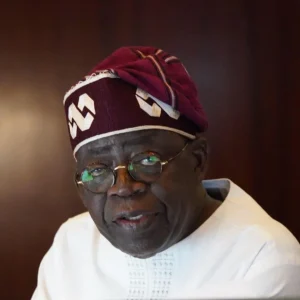
It’s established that President Tinubu invaded Benin Republic, with the armed forces of the Federal Republic of Nigeria, without prior authorisation of the Senate to save Patrice Talon, the President of Benin from being overthrown by the armed forces of Benin Republic. It is also pertinent to note that Tinubu did not rush to Benin Republic to safeguard democracy or rule of law, but to save a despot who has destroyed the democratic institutions of his country, captured the other arms of government, destroyed multi party democracy, persecuted opposition leaders and changed the Constitution to extend the presidential tenure from five years to seven years.
Tafi Mhaka, Al-Jazeera Columnist, stated emphatically that Benin’s real coup, the systematic overthrow of its democracy, had already occurred under Talon. All the attempted takeover did was to lay bare a political system that had already been undermined from within. Before Talon came to power in April 2016, Benin was widely recognised for its peaceful transfers of power, a dispensation anchored in the February 1990 National Conference, which ended one-party rule and laid the foundations for a multi-party democratic system. Talon, a multi-millionaire cotton magnate, positioned himself as a reformer in his first electoral campaign, promising political, administrative, and economic change for the better. Once elected, his course shifted. Instead of strengthening democracy, Talon began to systematically dismantle the democratic institutions that had made Benin, a country of nearly 15 million people, known as an early democratic success in Africa. Since 2016, Benin’s democratic institutions have been hollowed out through legal engineering, judicial capture, and electoral rules rewritten to exclude opponents from power.
The transformation was complete by 2021: In the April presidential election, held amid violent protests and a boycott by several opposition parties, vote counting began under an atmosphere of intimidation, and civil society observers reported widespread irregularities, underscoring how the political environment had changed. Talon won re-election with an impressive 86 per cent of the vote. After this, any illusion of democracy in the country disappeared, and all political competition was squashed through politicised arrests, show trials, and lengthy imprisonments.
In December 2021, according to Mhaka, constitutional scholar Joel Aivo, a prominent opponent of President Patrice Talon, was sentenced to 10 years by the Court for the Repression of Economic Offences and Terrorism (CRIET) after being convicted of plotting against the state and money laundering. Days later, the same court sentenced another Talon opponent, former Justice Minister Reckya Madougou, to 20 years for “complicity in terrorist acts” in a verdict her lawyers and international rights organisations described as politically motivated. By 2022, more than 50 opposition figures had been imprisoned on charges ranging from terrorism to economic sabotage, including 30 freed during French President Emmanuel Macron’s 2022 visit, although high-profile leaders Aivo and Madougou remained jailed. Institutional entrenchment followed. Just weeks before the attempted coup, on November 16, parliament passed amendments extending presidential and legislative terms from five to seven years and creating a partly appointed senate.
The behaviour of Patrice Talon looked so much like the behaviour of the Nigerian Government under Tinubu. The Economic and Financial Crimes Commission (EFCC) has been callously deployed against all the opposition members or sympathisers, while anyone who joins the ruling All Progressives Congress (APC) has his sins forgiven. In the words of Nigeria opposition leaders, the Commission has embarked on political intimidation, selective justice, and selective persecution of the opposition leaders.
Other News
One cannot but agree with the opposition leaders when one considers that the first Humanitarian Minister under Tinubu was removed for financial misappropriation and misapplication. The EFCC invited her, but after interrogation, refused and failed to prosecute her. Also, another Minister of Science and Technology under Tinubu was removed for forged certificate. The prosecution agencies turned a blind eye. An APC Senator blocked an entire airport and nothing happened even after a verbal condemnation by the Minister of Aviation. Senator Ifeanyi Okowa, former Governor of Delta State under the Peoples Democratic Party (PDP), was arrested by the EFCC on allegations of financial impropriety when he was Governor. He quickly organised the entire PDP structure in Delta State to defect to APC and all their sins were forgiven.
On the other hand, all the opposition leaders are being hounded everywhere to send a message to other people that it’s not fashionable to join the opposition parties. Even members of the APC from the Congress for Progressive Change (CPC) who are not singing “on your mandate we shall stand” loud enough are rounded up and cast into prison. These men are always granted stringent bail conditions which they cannot meet as a strategy to keep them perpetually in detention before trial. Can you imagine asking an opponent to Tinubu to provide two government permanent secretaries in the civil service as surety for their freedom? These are the problems with people like Chris Ngige, former Buhari Minister of Labour, and the former Attorney-General of the Federation, Malami. These men left office about three years ago and have been enjoying freedom. Suddenly they started singing tunes that sound critical of the government, and suddenly the government realised they have cases to answer.
Rule of Law means equality before the law. It signifies equal subjection of all classes of the people before the law, administered by the ordinary courts of the land. Nobody is advocating that the government should not bring erring people to justice if they steal, no matter who they are. However, there should not be discrimination as to who should be brought to justice or not. Everyone who commits same offence should be given same treatment. The President of Benin Republic, Patrice Talon, used same tactic to emasculate the opposition and destroy democracy in his country. It was not surprising that he called on a Tinubu, whose government has become a replica of Talon’s government, to salvage him.
The most troubling part of the invasion of Republic of Benin by the Tinubu administration lies in its illegality and unconstitutionality. The 1999 Nigeria Constitution is very clear that the President shall not declare a state of war between the Federation and another country except with the sanction of a resolution of both Houses of the National Assembly, sitting in a joint session; and except with the prior approval of the Senate, no member of the armed forces of the Federation shall be deployed on combat duty outside Nigeria. (See section 5(4)(a)(b) of the 1999 Constitution). Note the phrase “prior approval.” This means that it is unconstitutional for the President to send our men in uniform in harm’s way to fight for the interest of another person or country outside Nigeria without getting approval from the Senate of the Federal Republic of Nigeria. Tinubu sending our armed forces to fight for Patrice Talon, President of the Republic of Benin, to remain in power, without first obtaining the approval of the Senate, is illegal and unconstitutional, and certainly is an impeachable offence.
The argument that the President of Nigeria can seek the approval retroactively because of the provision of section 5(5) is false. For the avoidance of doubt, section 5(5) provides that notwithstanding the provisions of subsection (4) of this section, the President, in consultation with the National Defence Council, may deploy members of the armed forces of the Federation on a limited combat duty outside Nigeria if he is satisfied that the national security is under imminent threat or danger: Provided that the President shall, within seven days of actual combat engagement, seek the consent of the Senate and the Senate shall thereafter give or refuse the said consent within 14 days. The coup in Benin Republic to remove a democratic tyrant does not bring our national security under any imminent threat or danger. As a matter of comparative analysis, Niger Republic’s border with Nigeria is twice Nigeria’s border with Benin Republic. The military coup that took place in Niger Republic to remove the democratic tyrant of Niger Republic did not threaten our national security. Indeed, it was even Nigeria that threatened their national security. Tinubu, therefore, could not stand on section 5(5) to send our armed forces to go to Benin Republic without prior approval of the Senate.
The Senate must insist that our armed forces should immediately return to Nigeria to face the multifaceted security challenges we have in Nigeria. Any death of any member of our armed forces as a result of this illegal deployment should be treated as a murder case against Tinubu and any government official who aided and abetted the deployment. Enough of this illegality of the Tinubu administration. If President Tinubu illegally goes gun a-blazing into another country, he should not blame another democratic tyrant who goes gun a-blazing into his own country. What goes round comes round.