Follow Us on Google
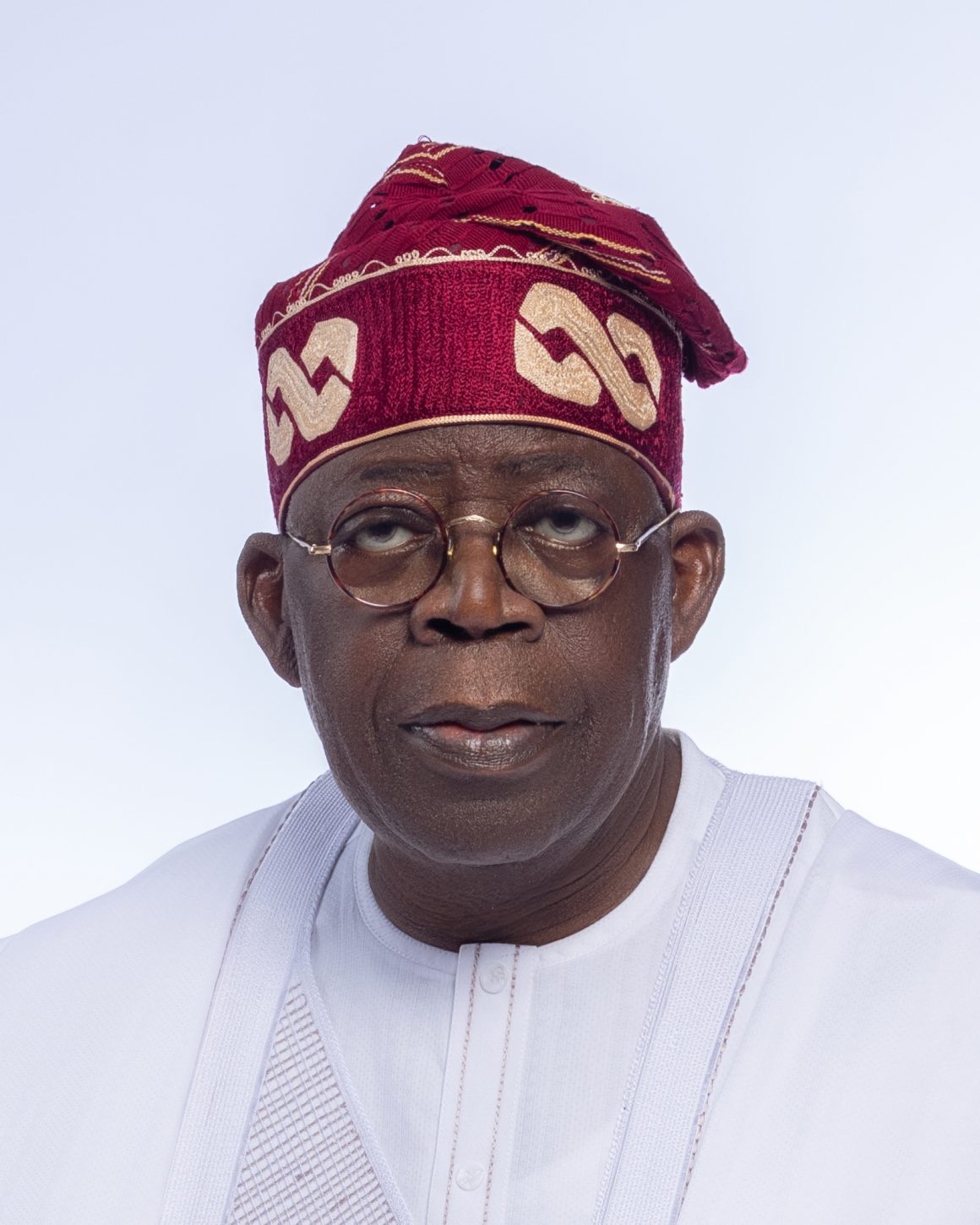
By May 29, 2026, President Bola Tinubu had spent three years steering Nigeria through what many observers describe as one of the most turbulent economic periods in the country’s democratic history. When he mounted the podium at Eagle Square on May 29, 2023, and declared that “fuel subsidy is gone,” few Nigerians anticipated the scale of change that would follow. That brief statement set in motion a series of economic reforms that have fundamentally altered the nation’s fiscal and economic landscape.
Three years later, the Tinubu administration argues that the difficult choices made at the beginning of its tenure have saved Nigeria from a deeper economic crisis and laid the foundation for long-term prosperity. Critics, however, contend that while macroeconomic indicators may be improving, many Nigerians are yet to experience relief from the hardship that accompanied those reforms.
The story of Tinubu’s first three years is therefore one of bold decisions, economic pain, infrastructure expansion, and a continuing struggle to convince citizens that sacrifice today will translate into a better tomorrow.
Few presidents in Nigeria’s recent history have taken politically risky decisions as quickly as Tinubu. Upon assuming office, the administration admitted it inherited an economy burdened by mounting debt obligations, dwindling revenues, foreign exchange distortions, and a costly fuel subsidy regime that consumed trillions of naira annually. At the height of the subsidy regime, Nigeria spent ₦18.4 billion daily on petrol—over ₦4 trillion in 2022 alone—while more than ₦8 trillion was lost to forex arbitrage and rent-seeking over three years.
Government officials argued that maintaining the status quo was no longer sustainable. The removal of fuel subsidy and the unification of foreign exchange rates became the administration’s signature policies. While economists had long advocated both measures, previous governments often avoided fully implementing them because of their potential social and political consequences.
Tinubu chose a different path.
The immediate effects were painful. Petrol prices surged, transportation costs increased sharply, inflation climbed, and the cost of living became a daily struggle for millions of households. For many Nigerians, the reforms translated into difficult conversations around kitchen tables, shrinking purchasing power, and growing uncertainty about the future.
Yet the administration insists that those measures prevented a looming fiscal collapse.
“Together, we chose reform over ruin and decisiveness over hesitation,” the President said in his third anniversary address. On Democracy Day, he sharpened the message: “Democracy must be felt in the pocket.”
That statement captures the philosophy that has defined his administration: short-term pain in pursuit of long-term stability, and democracy that delivers economic freedom.
Three years after those reforms, the government says evidence of recovery is beginning to emerge.
Public finances have improved considerably. Federation revenues have risen, providing states and local governments with significantly higher allocations, enabling them to undertake more development projects and meet financial obligations. Fiscal transparency has improved, leakage has been reduced, and public funds are better directed to national priorities.
Investor confidence has also shown signs of recovery. The Nigerian stock market has witnessed remarkable growth, with market capitalisation rising from about ₦30 trillion in 2023 to approximately ₦160 trillion in 2026, according to figures released by the Presidency. The All Share Index surged from 53,000 to a record 250,000.
Corporate earnings have similarly improved, with several companies reporting stronger profits and dividend payments. International oil companies that once shunned Nigeria are returning, with the $5 billion NLNG Train 7 project nearing completion.
Supporters of the administration view these developments as proof that difficult reforms are beginning to yield results.
Economic analysts, however, note that while stronger fiscal indicators and market performance are encouraging, the ultimate measure of success remains whether ordinary Nigerians experience improvements in their daily lives.
For many citizens, economic recovery is not measured by stock market performance but by the prices of food, transportation, rent and basic necessities. That remains one of the administration’s most significant challenges.
Perhaps nowhere is the government’s footprint more visible than in infrastructure development.
Across the country, road construction projects have become a defining feature of the administration. From the Lagos-Calabar Coastal Highway to the Sokoto-Badagry Super Highway, the government has embarked on projects designed to improve connectivity, facilitate trade and stimulate economic activity.
According to the President, more than 2,700 kilometres of highways and major roads are currently under construction, reconstruction or rehabilitation. Rail modernisation efforts are also continuing, with the government seeking to strengthen transportation networks and improve logistics efficiency.
Across the country, infrastructure projects are connecting producers to markets and creating opportunities for enterprise and employment. For communities benefiting from new roads and transportation links, the impact is already becoming visible through increased commercial activity and improved access to markets.
Infrastructure has historically been a major factor in economic growth, and the Tinubu administration appears determined to leave a legacy defined by physical development across the federation.
Another area receiving significant attention is the energy sector.
For decades, Nigeria’s dependence on imported refined petroleum products placed enormous pressure on foreign exchange reserves and exposed the country to external shocks. The administration says local refining capacity is gradually improving through the operation of large-scale and modular refineries. Domestic gas utilisation is expanding. Government officials argue that these developments will strengthen energy security, reduce import dependence and conserve foreign exchange.
Meanwhile, the oil and gas sector has witnessed renewed investor interest following regulatory reforms aimed at improving the investment climate. Projects such as the NLNG Train 7 expansion are expected to boost production capacity and export earnings. The administration believes these investments could play a crucial role in strengthening government revenues and supporting broader economic growth.
No issue illustrates Nigeria’s development challenges more than electricity.
Successive administrations have promised improvements in power generation and distribution, yet millions of Nigerians continue to rely on generators and alternative energy sources. By 2023, the electricity sector generated less than its 13,500MW installed capacity, transmitted less than it generated, distributed less than it transmitted, and collected revenue far below what it needed. Distribution companies were burdened by massive losses and a metering deficit of over four million. Worst of all, the value chain was drowning in legacy debt.
Tinubu’s government says it is tackling the problem by addressing legacy debts, expanding transmission infrastructure and investing in renewable energy solutions. The administration signed the Electricity Act granting states authority to generate, transmit and distribute power. The Presidential Power Sector Task Force is reducing the metering deficit and authorised to raise a ₦4 trillion bond to settle verified legacy debts. The Rural Electrification Agency, supported by the World Bank and African Development Bank, has deployed off-grid and mini-grid power to underserved communities, universities, markets and hospitals.
Other News
Tinubu called electricity “a democratic dividend we owe every Nigerian.” While progress has been recorded in some areas, power remains one of the sectors where Nigerians are eager for faster and more visible improvements. The success or failure of ongoing reforms could significantly influence public perception of the administration in the years ahead.
Beyond economic reforms and infrastructure, the government has also prioritised programmes aimed at improving social welfare and expanding opportunities.
One of the administration’s flagship initiatives is the Nigerian Education Loan Fund, which has provided access to higher education financing for more than 1.5 million students, disbursing more than ₦282 billion. For many young Nigerians, the programme represents an opportunity to pursue tertiary education without the financial barriers that have historically prevented countless students from completing their studies.
The Renewed Hope Housing Programme has also become a key component of the administration’s social intervention strategy. The programme, along with that of the Federal Housing Authority, is delivering over 10,000 housing units across 14 states and the FCT, creating over 300,000 jobs and addressing housing shortages. Major Renewed Hope Cities in Abuja, Lagos and Kano are progressing steadily. The consumer credit initiative CREDICORP is opening up new economic opportunities for workers and families.
Healthcare reforms have focused on revitalising primary healthcare centres and expanding insurance coverage for vulnerable populations. Agricultural interventions have supported millions of farmers by improving seedlings, fertilisers, mechanisation, irrigation and access to finance and markets. The National Agricultural Development Fund is deploying 10,000 tractors over five years. New agricultural corridors are being opened to create jobs and reduce pressure on household incomes. Over 1,000 SMEs have been certified for export. Non-oil exports grew by 21 per cent last year.
These programmes form part of the administration’s broader effort to ensure that economic reforms are accompanied by investments in human development.
On Democracy Day, Tinubu declared a security emergency, approving recruitment of more than 50,000 new police officers and thousands of military recruits. The 2026 budget commits ₦5.41 trillion—its largest ever—to defence and security. Though this year’s mood is dampened by the abduction of children in Oyo and Borno, he remains hopeful for their safe return. “Democracy without security is a mirage,” he said.
The government has moved from training with allies to precision targeting. In Arege, Borno State, it degraded ISWAP’s command centre. Terror-related deaths are down by 81 per cent since 2015. Over 13,000 terrorists have been neutralised in the past year. Over 124,000 fighters and dependents have laid down their arms since 2023 through Operation Safe Corridor. To bandits, kidnappers and sponsors of terror: “Surrender or face the full force of the Nigerian State. These windows of surrender will not remain open forever.”
While the administration has recorded gains in several sectors, security remains one of its most difficult tests. Officials point to safer highways, improved intelligence gathering and stronger inter-agency cooperation as evidence of progress. However, insecurity continues to affect several communities across the country. Kidnappings, communal conflicts and criminal attacks remain concerns for many Nigerians.
For many Nigerians, the fear of insecurity remains as immediate as concerns about food prices and the cost of living. Parents worry about the safety of their children in schools. Farmers remain cautious about returning fully to their fields in some areas. Businesses continue to factor security risks into their operations.
Security experts note that isolated successes often struggle to resonate with citizens when high-profile kidnappings continue to dominate headlines. In a country where insecurity directly affects education, agriculture, investment and social stability, each major abduction serves as a reminder that the challenge remains far from over.
Tinubu recognised that democracy is undermined when people do not feel its impact. His administration has sought financial autonomy for all 774 local councils. “A fundamental challenge to our nation’s advancement has been ineffective local government administration. The insecurity we are addressing is partly due to the collapse of grassroots governance,” he said. The Renewed Hope Agenda is about ensuring that all Nigerians benefit from governance.
On June 12, Tinubu framed democracy not merely as ballots but as economic freedom. “June 12, 1993 revealed the possibility of a true Nigerian nation. The heroes of June 12 secured political freedom. Our challenge is to secure economic freedom. Democracy must be felt in the quality of people’s lives—in opportunities for youth, in prosperous farmers, successful entrepreneurs, and the dignity of our workers.
“Every generation has a defining responsibility. The generation of founding fathers secured independence. The generation of June 12 secured democracy. Our generation must secure prosperity.”
As Tinubu begins the final stretch of his first term, perhaps his greatest challenge is not implementing reforms but convincing Nigerians that those reforms are working for them.
Economic indicators may suggest recovery, but public perception is often shaped by personal experience. The administration’s ability to lower food prices, create jobs, improve transportation and deliver more reliable electricity will likely determine how history judges its performance.
For supporters, Tinubu has demonstrated political courage by taking decisions previous administrations avoided. For critics, the burden of reform has fallen disproportionately on ordinary citizens who continue to struggle with high living costs.
The reality may lie somewhere between both perspectives.
Three years into his presidency, Tinubu has undeniably altered Nigeria’s economic trajectory. The foundations for reform have been laid, major projects are underway, and investor confidence appears to be returning.
As President Tinubu enters the fourth year of his administration, his government stands at a critical juncture.
Three years ago, he embarked on a bold and controversial reform agenda that fundamentally altered Nigeria’s economic trajectory. The administration can point to increased government revenues, renewed investor confidence, large-scale infrastructure projects, educational support programmes and efforts to revitalise key sectors of the economy.
Yet, the everyday reality for many Nigerians remains shaped by high living costs, unemployment concerns and lingering insecurity.
The administration’s strongest argument is that it inherited deep structural problems and chose difficult solutions over political convenience. Its critics counter that the promised dividends of reform have yet to sufficiently reach ordinary citizens.
Ultimately, history is unlikely to judge Tinubu solely by the courage of his decisions. Rather, it will judge whether those decisions improved the lives of Nigerians.
The coming months may therefore prove decisive. If economic stabilisation translates into lower food prices, more jobs, improved electricity supply and safer communities, the administration’s reforms could be remembered as a turning point in Nigeria’s development journey.
But if insecurity continues to threaten communities and schoolchildren, and if the benefits of economic reforms remain beyond the reach of ordinary citizens, questions about the true impact of those sacrifices will persist.
Three years on, the Tinubu presidency remains a story of ambition, bold reforms and unfinished promises. The foundations may have been laid, but the ultimate verdict will depend on whether Nigerians can not only see the changes being made, but also feel them in their homes, businesses and daily lives