Follow Us on Google
From Adesuwa Tsan, Abuja
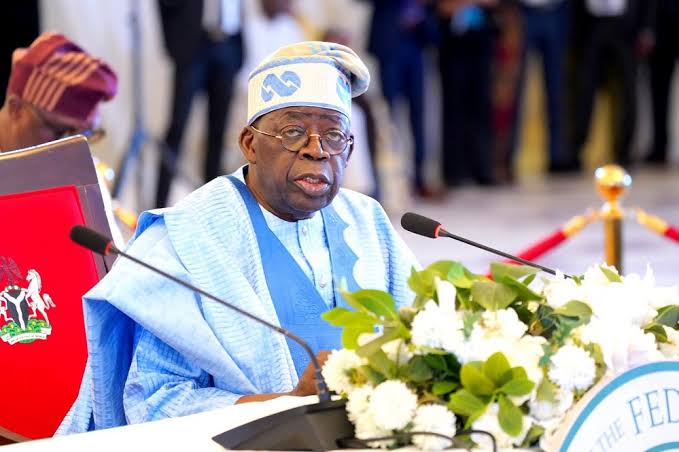
President Bola Tinubu has asked the Senate to repeal the Indian Hemp Act and the existing National Drug Law Enforcement Agency (NDLEA) Act under a proposed overhaul of Nigeria’s drug-control laws while also seeking approval for a ₦100.5 billion reimbursement to Yobe State for its airport project.
The requests were presented during yesterday’s plenary, at which lawmakers also considered a proposal to repeal and re-enact the National Agency for Food and Drug Administration and Control (NAFDAC) Act to strengthen the agency’s regulatory and enforcement powers.
In a letter read by Senate President Godswill Akpabio, Tinubu said the NDLEA Bill, 2026, sought to repeal the NDLEA Act, Cap. N30, and the Indian Hemp Act, Cap. I6, both contained in the Laws of the Federation of Nigeria, 2004.
The proposed legislation would establish a consolidated framework for enforcing laws against the cultivation, processing, trafficking and use of illicit drugs, and empower the agency to investigate persons suspected of drug-related activities.
Transmitted pursuant to Section 58(2) of the Constitution, the bill was referred to the Senate Committee on Rules and Business for further legislative action.
On the airport reimbursement, the Senate referred Tinubu’s request to its Committee on Local and Foreign Debts for scrutiny, with Akpabio directing the committee to submit its report within one month.
The President sought approval for the establishment and issuance of promissory notes by the Debt Management Office to reimburse Yobe State for constructing the Muhammadu Buhari International Cargo Airport in Damaturu.
The request was presented as part of the 70th Promissory Notes Programme, following the Federal Executive Council’s approval of the airport’s takeover and reimbursement at its second extraordinary meeting on May 23, 2023.
According to the request, the Bureau of Public Procurement reviewed the project and recommended reimbursement of N100,509,017,234.55.
“In view of the foregoing, the Senate was asked to consider and approve the establishment and issuance of a Promissory Notes Programme by the Debt Management Office in the sum of N100,509,017,234.55,” the request stated.
Other News
The reimbursement remains subject to legislative approval.
Meanwhile, Suleiman Sadiq, sponsor of the NAFDAC proposal, said the agency’s existing law had become inadequate to address emerging public health challenges, scientific advances and increasingly sophisticated cross-border trade in counterfeit products.
He said NAFDAC had contributed to the regulation of food, medicines, cosmetics, medical devices, chemicals, packaged water and related products, but needed a more comprehensive framework to respond to modern developments.
Sadiq identified biotechnology, artificial intelligence, advanced medical devices, diagnostics, biological products and active pharmaceutical ingredients as areas inadequately addressed or absent from the existing law.
“It has therefore become necessary not merely to amend the isolated provisions, but to repeal the entire Act in a comprehensive manner so that a more forward-looking legal framework capable of responding to present and future regulatory challenges is enacted,” he said.
The proposed law would authorise designated officers to inspect premises and vehicles, seize and detain illegal products, seal offending facilities and obtain relevant orders from competent courts.
It would also revise the agency’s institutional structure and governing council, strengthen accountability and modernise funding and financial management arrangements. Sadiq said enforcement would remain subject to due process and constitutional safeguards.
“Ultimately, this bill is about protecting the lives and health of Nigerians, strengthening confidence in our healthcare system, promoting local manufacturing, facilitating legitimate commerce, improving regulatory efficiency and ensuring that Nigeria’s food and drug regulatory framework remains responsive to evolving global realities and challenges,” he said.
Also transmitted to the Senate was the Nigerian Safety Investigation Bureau Amendment Bill, 2026, which proposes expanding the bureau’s mandate beyond aviation to cover maritime and other transport occurrences.
The bill also seeks to transfer oversight of the bureau to the Presidency and strengthen its institutional, operational and administrative framework. It was referred to the Committee on Rules and Business for further legislative action.