Follow Us on Google

…Projects cheaper transport, improved security, food stability, lower inflation, expanded credit, jobs and stronger purchasing power
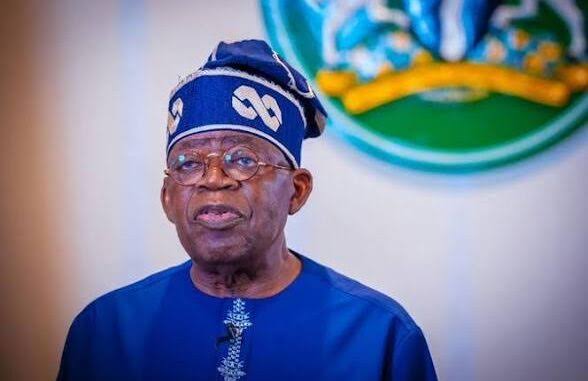
Nigerians should expect cheaper transportation, stronger security, more affordable food, expanded access to education and business credit, greater employment opportunities and improved purchasing power if President Bola Ahmed Tinubu secures a second term in 2027, presidential campaign spokesman Ima Niboro has said.
Niboro, a former presidential spokesman and former Managing Director of the News Agency of Nigeria, outlined seven areas in which he said the effects of reforms undertaken since 2023 should become increasingly visible in the lives of ordinary Nigerians.
He said the next phase would increasingly be about translating the administration’s structural reforms into tangible benefits for households, businesses and communities across the country.
First, Niboro projected cheaper transportation as the continuing expansion of Compressed Natural Gas and electric mobility progressively reduces Nigeria’s dependence on petrol.
He said lower operating costs for commercial transportation should translate into cheaper fares, leaving Nigerians with more disposable income for food, education and other essential goods and services.
Second, he projected greater security and more affordable food, arguing that farmers must be able to work safely and move their produce to markets at reasonable cost.
Niboro said ongoing efforts to strengthen policing, establish state police, deploy trained and properly equipped forest guards, expand military formations and increase security presence closer to communities should provide greater protection for farmers and rural communities.
Combined with cheaper transportation, livestock development and greater investment in food production and processing, he said improved security should increase food supply and help stabilise prices.
Third, Niboro said Nigerians should expect a smarter and fairer tax system, with fewer nuisance levies, reduced multiple taxation, and greater protection for low-income earners and small businesses.
He described the philosophy as “tax smarter, not harder,” with wealthy Nigerians and large corporations expected to carry a greater proportionate burden while small neighbourhood businesses are protected.
In practical terms, he said, the system should ensure that people such as Aliko Dangote, Femi Otedola, and Abdul Samad Rabiu pay appropriately while the government protects businesses such as “Chukwudi Supermarket and Iya Risi Amala” in communities from Karu to Ogbomoso, Awka, Etiti, and Kaura Namoda.
Fourth, Niboro projected a major expansion of student loans, consumer credit, SME financing, and credit guarantees, saying these programmes could open opportunities to millions of Nigerians previously excluded from formal financing.
He said a young Nigerian should increasingly be able to obtain an education, start a business, or pursue a legitimate ambition without depending on wealthy parents or a “rich uncle.”
Fifth, he said the administration’s massive investments in roads, power, gas, ports, and other critical infrastructure should increasingly translate into factories, private investment, new businesses, and jobs.
According to him, the ultimate value of the infrastructure drive would be measured by its ability to reduce the cost of doing business, attract investment, improve productivity, and put more Nigerians to work.
Sixth, Niboro projected lower inflation and stronger purchasing power as the cumulative gains of economic reforms begin to filter more directly into household finances.
He said the most important measure would ultimately be how much food, transportation, housing, and other necessities Nigerians can buy with their earnings.
“The naira in the hands of ordinary Nigerians will strengthen and purchase more things,” he said, adding that salaries should consequently gain greater purchasing power.
He also pointed to another round of minimum-wage negotiations after the lifespan of the current ₦70,000 national minimum wage, saying the combination of lower inflation and future wage adjustments should improve real household incomes.
Niboro returned to security for his seventh and most emphatic projection, saying an increasingly intelligence-led and technology-driven campaign against terrorism, banditry, and kidnapping should progressively deny criminal groups space to operate.
He said strengthening the Armed Forces, Department of State Services, Nigeria Police, and forest guards, alongside coordinated operations and international security cooperation, should translate into safer communities, highways, schools, and farms.
“Terrorists, bandits, and kidnappers will have lesser and lesser space to operate, and, God help this nation, our abducted citizens will be brought back home,” Niboro said.
“Nigerians will increasingly live, farm, travel, and do business without fear the way it’s never been in the last 20 years.”
Niboro said the seven projections ultimately provide practical benchmarks by which Nigerians can assess the benefits of policy continuity, arguing that the true measure of economic and security reforms must be their impact on everyday life in homes, markets, farms, workplaces, and communities across Nigeria.