Follow Us on Google
From Juliana Taiwo-Obalonye, Brasilia, Brazil
President Bola Tinubu has taken a decisive step to strengthen Nigeria’s agro-industrial sector by imposing an immediate temporary ban on the export of raw shea nut.
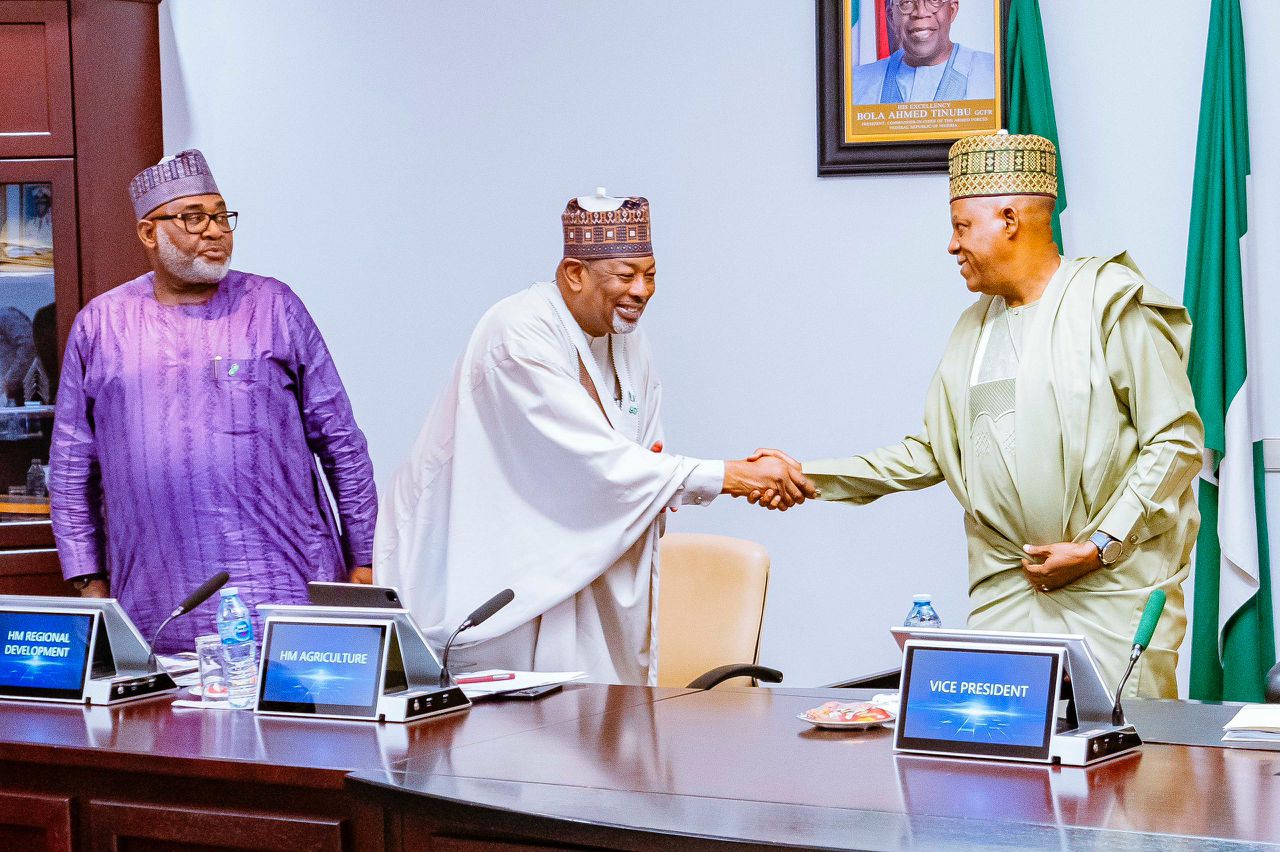
Announced on Tuesday, August 26, by the Minister of Agriculture and Food Security, Abubakar Kyari, and supported by Vice President Kashim Shettima, this six-month ban aims to curb informal cross-border trade, enhance local processing, and significantly increase the value derived from Nigeria’s vast shea resources.
In a detailed statement by his media aide, Stanley Nkwocha, the Vice President emphasised that this directive “is not an anti-trade policy but a pro-value addition policy designed to secure raw materials for our processing factories and enabling industries, allowing them to run at full capacity, thereby boosting rural incomes and creating jobs for our people.”
He added that the policy “will transform Nigeria from an exporter of raw shea nut to a global supplier of refined shea butter, oil, and other derivatives” and represents a commitment to industrialisation, rural transformation, and gender empowerment.
Highlighting Nigeria’s untapped potential, Shettima shared that although Nigeria produces nearly 40% of the global shea product, it currently holds only about 1% of the market share in the estimated $6.5 billion global industry. Under this new policy, Nigeria is projected to increase earnings from its shea industry to around $300 million annually in the short term, with ambitions to achieve a tenfold growth by 2027.
Shettima summarised, “Today, we plant the seeds of an industry that will yield fruit for decades to come—for our women, our economy, and Nigeria’s place in global trade.”
Other News
The ban follows a collaborative decision between the federal and sub-national governments grounded in extensive data. Senator Kyari pointed to a rapid assessment conducted by the Presidential Fertiliser Supply Chain Unit (PFSCU) in partnership with the Ministries of Industry, Trade, and Agriculture, which revealed that “over 90,000 metric tonnes of raw shea are lost each year to informal cross-border trade.” Meanwhile, local processors are operating at only 35 to 50 per cent capacity despite having an installed national capacity of 160,000 metric tonnes.
Kyari raised concerns that Nigeria remained “an outlier and hotspot for opportunistic and unregulated buying” while neighbouring countries such as Ghana, Burkina Faso, Mali, and Togo have implemented restrictions to protect their industries. He stressed that Nigeria’s shea sector “could generate more than $300 million annually in the short term and position Nigeria to capture a significant share of the projected $9 billion global market by 2030.”
The minister underlined Nigeria’s natural advantage with over five million hectares of wild-growing shea trees and identified shea as a strategic non-oil export within the government’s Zero Oil Plan. A key social benefit of the policy is its focus on women, who represent 90 per cent of the shea pickers and processors, meaning that “investing in the shea value chain directly translates into women’s empowerment, rural job creation, and sustainable livelihoods.”
Vice President Shettima also announced promising trade opportunities, revealing that Nigeria and Brazil are prioritising access for Nigerian shea butter and oil into Brazilian markets, with formal processes expected to conclude in three months. He declared, “We are not closing doors; we are opening better ones,” underscoring the transformative vision of nurturing an industry that will yield benefits for decades to come.
This initiative aligns with broader West African trends seen in countries like Ghana and Burkina Faso, where export bans are used strategically to promote local processing capacities, industrial growth, and employment creation. The Nigerian government’s action signals a renewed commitment to leveraging the shea sector not only for economic diversification but also for social impact, especially for rural women’s empowerment.