Follow Us on Google

• Says era of white elephant projects over •NEDC moves from ISO standards to implementation
From Juliana Taiwo-Obalonye, Okwe Obi, Abuja and Timothy Olanrewaju, Maiduguri
President Bola Tinubu, yesterday, ordered the timely release of all funds accruable to Nigeria’s Regional Development Commissions, warning their boards and management against corruption, waste and execution of projects that do not directly benefit the people.
The President declared that the era of white elephant projects was over, insisting that the commissions must justify public funding through projects capable of unlocking the economic and industrial potential of their respective regions.
Tinubu gave the directive while declaring open the first North Central Stakeholders Development Summit organised by the North Central Development Commission (NCDC) in Abuja.
Represented by the Secretary to the Government of the Federation, George Akume, the President said the Federal Government would provide the political and financial backing required by the commissions to deliver on their mandates.
“I therefore direct the Secretary to the Government of the Federation to ensure that all funds accruable to the Commissions are released as and when due.” Tinubu, however, warned that government funding must not become a licence for waste, charging the commissions to explore alternative financing, including public-private partnerships, donor funding and development financing, where permitted by law.
“Government will continue to give the NCDC and other Regional Development Commissions the political and financial backing to embark on key projects that will unlock the economic and industrial potentials of the nation,” he said. He warned that the commissions must not become conduits for wasting public resources.
“The era of white elephant projects is over and there is no excuse for the Commissions to become another conduit for wasting public funds,” he said. The President also warned their leadership against corruption, marginalisation, politicisation and ethnicisation of government operations.
“Such actions will not be tolerated and government will not hesitate to sanction anyone found culpable,” he said. Tinubu explained that the creation of the Regional Development Commissions was part of his administration’s Renewed Hope Agenda to accelerate development and bridge longstanding infrastructure and socioeconomic gaps across the country.
According to him, the commissions were not established to replace, duplicate or usurp the constitutional functions of any tier of government.
“Rather, it is our way of looking at why development gaps still exist and trying to close them up for the benefit of our people,” he said.
He directed the commissions to concentrate on projects capable of unlocking the economic potential of their regions and strengthening interconnectivity across the country.
The President identified roads, rail and air transportation, industrialisation, security, investment, human capital development, education and healthcare as critical areas requiring sustained attention.
He also charged the commissions to develop “clear, concise, attainable and fundable” programmes and directed the Ministry of Regional Development to ensure that they operate strictly within the Regional Development Policy Document.
Tinubu urged the legislature to provide effective oversight of their activities.
On the North Central, he said the region possessed enormous potential in agriculture, food production and agro-processing, solid minerals development and processing and industrial development, but had operated below its potential for too long.
The President also acknowledged the security challenges confronting the region, saying the Federal Government had intensified surveillance and intelligence gathering, established additional security formations, deployed more personnel, increased prosecution of criminals and supported dialogue and reconciliation efforts.
Other News
He charged the NCDC to complement these efforts, stressing that meaningful development could only thrive in an atmosphere of peace and security.
Tinubu described the summit’s theme, “The Great Leap Forward: A 20-Year Economic, Infrastructural and Social Development Plan for the North Central Region,” as timely, saying it provided an opportunity to chart a new development trajectory for the region.
He, however, warned that the summit must not become another talk shop.
“This Summit should not end up as one of those platforms where ideas are ventilated and reports generated only to be left dusting on the shelves. The NCDC should show a better example by following through to implementation,” he said.
Meanwhile, the North-East Development Commission (NEDC) has begun a three-day strategic forum aimed at strengthening its institutional processes, accountability and service delivery across the six states of the region.
The 2026 Excellence Forum, which opened in Maiduguri, Borno State, brings together staff from the commission’s headquarters and offices across the North-East.
The commission said the forum would examine how the principles of quality, accountability, integrity and improved service delivery could be better reflected in its day-to-day operations.
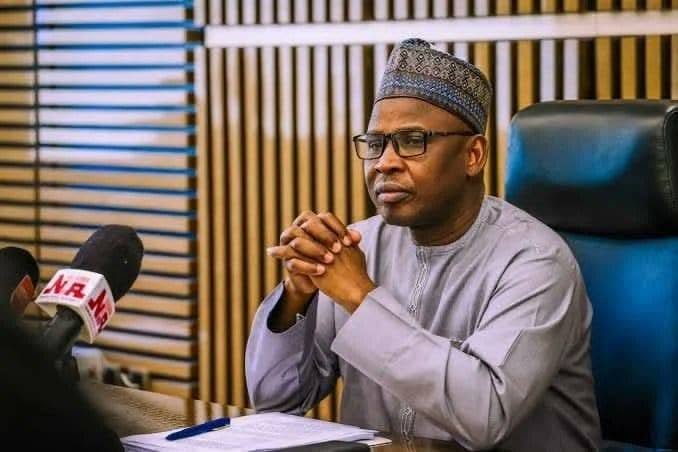
NEDC Managing Director and Chief Executive Officer, Mohammed Goni Alkali, said the commission was moving beyond obtaining international standards certification to ensuring that the standards translated into better services and development outcomes.
“For us, excellence must ultimately be measured by the quality of development we deliver to the people of the North-East,” Alkali said.
“Our ISO certifications established important standards, but the real work is ensuring that those standards are reflected in how we work, how we serve and how we deliver.”
According to the commission, the forum follows its certification to five International Organisation for Standardisation (ISO) management system standards covering quality management, environmental management, occupational health and safety, anti-bribery management and sustainable development in communities.
Alkali said the emphasis was now on moving “from standards to practice,” stressing that the value of the certifications would ultimately be determined by their impact on the commission’s operations and service to the people.
Rather than concentrate on paper presentations, participants at the forum are expected to undertake practical exercises, simulations and real workplace situations aimed at improving collaboration, problem-solving and service delivery.
Alkali said the ability of the commission to deliver roads, schools, healthcare facilities, water, livelihoods and other interventions across the North-East also depended on the strength of the institution behind those projects.
“Building capable people, improving internal systems and strengthening accountability are therefore an important part of the NEDC’s wider development mandate,” he said.
He stressed that physical projects alone could not define the success of the commission, saying planning, sound processes, responsible resource management and capable personnel were equally important.
“Institutional reform must be judged by whether it produces more effective, accountable and sustainable outcomes for the people and communities of the North-East,” Alkali said.