Follow Us on Google
From Juliana Taiwo-Obalonye, Abuja
President Bola Tinubu has directed the Secretary to the Government of the Federation (SGF), George Akume, to establish a quarterly policy dialogue forum between the Federal Government and civil society organisations (CSOs) to strengthen public accountability and ensure citizens’ concerns inform government policies.
The initiative is one of four commitments announced by the President to deepen collaboration between the government and civil society organisations, particularly in public finance transparency, budget monitoring, humanitarian interventions and national development.
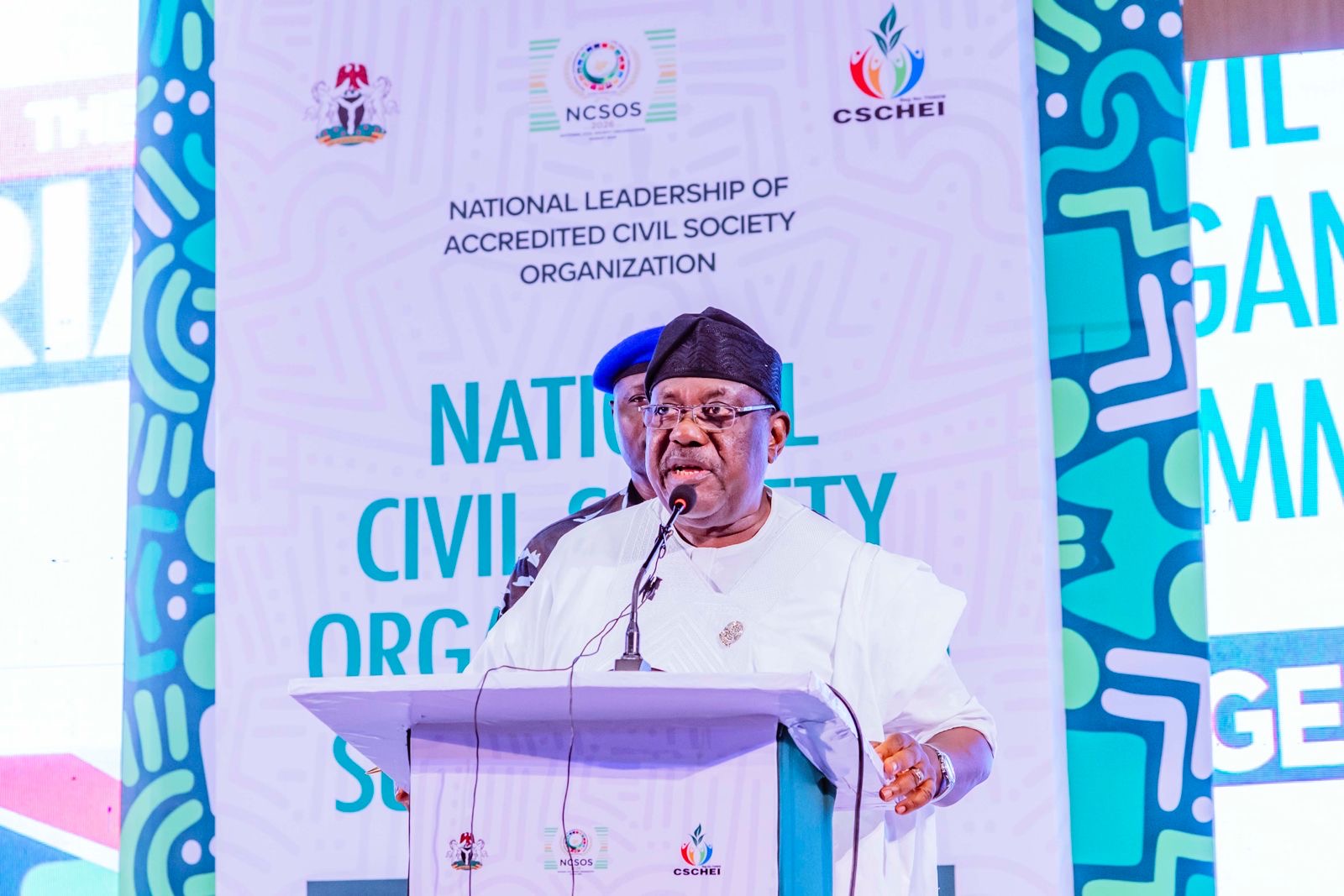
Tinubu, who disclosed this on Friday at the 2026 National Civil Society Organisations Summit in Abuja, said the government was committed to expanding civic space and making civil society organisations strategic partners in governance.
Represented by Akume at the summit, held at the Bola Ahmed Tinubu International Conference Centre, Abuja, the President said the proposed forum would provide a platform for evidence-based advocacy and ensure that community perspectives were incorporated into policy formulation, implementation and evaluation.
He said the government was transitioning from difficult economic reforms to an agenda focused on prosperity, social inclusion and rebuilding public trust.
“Four years down the line, we wish to modestly assure Nigerians that Nigeria is moving from reform to prosperity,” he said.
The President acknowledged the difficulties associated with the economic reforms introduced in 2023, noting that they had presented challenges to both government officials and citizens.
He, however, said the administration was now focused on ensuring that the gains from the reforms translated into inclusive growth and improved accountability.
Tinubu said the government recognised that achieving its development objectives required sustained collaboration with civil society, citing Nigeria’s participation in the Extractive Industries Transparency Initiative and the Open Government Partnership as examples of existing cooperation.
Under the other commitments, he said the government would work with accredited civil society organisations to expand civic participation in public finance transparency, budget tracking and the monitoring of humanitarian interventions.
He also announced plans to work with the United Nations, development partners and the private sector to strengthen the capacity of civil society organisations and improve their access to technical and financial resources to support the implementation of the Sustainable Development Goals.
According to him, the partnership would focus on poverty reduction, youth and women’s empowerment, healthcare, education, climate resilience and peacebuilding, in line with national development priorities.
The fourth commitment, he said, was to promote national cohesion and sustain peace through joint initiatives involving government and civil society groups.
On the 2027 general elections, Tinubu urged civil society organisations to intensify voter education, monitor electoral processes and advocate reforms to strengthen democratic institutions.
He also called on them to collaborate with law enforcement agencies, the judiciary and the media to promote credible elections, while countering misinformation and encouraging interfaith dialogue.
The President, however, urged civil society organisations to develop a common code of conduct to strengthen ethical standards and public confidence in their activities.
While reaffirming his administration’s open-door policy and commitment to transparency, he acknowledged that the actions of some civil society actors had strained relationships with government.
Tinubu also restated the four priority areas he outlined at the Southern Civil Society Summit in Lagos on July 9, 2026, namely food security, poverty eradication through job creation and enterprise, improved governance and human capital development.
He described civil society organisations as the conscience of the nation, commending their contributions to Nigeria’s return to democratic rule and their advocacy for human rights, social justice, poverty eradication and the fight against corruption.
The President reaffirmed his administration’s commitment to protecting freedom of expression, association, assembly and the press, describing them as inalienable rights.
He urged civil society organisations to match their advocacy with integrity, professionalism and accountability, stressing that their role in national development required a commitment to the country’s unity and progress.
The summit, themed “Nigeria First and National Development,” brought together civil society stakeholders to discuss their role in governance and national development following Nigeria’s 66th Independence Anniversary.