Follow Us on Google

From Adesuwa Tsanenyi, Abuja
Barely hours before the expiration of the National Assembly’s November 17 deadline, all 36 State Houses of Assembly have endorsed the constitutional amendment bill seeking to establish state police in Nigeria, bringing the country’s decades-long campaign to decentralise its policing system closer to fruition.
The unanimous endorsement, announced yesterday, followed last-minute legislative consultations that saw Cross River and Niger states, earlier identified as the two outstanding states, join the other 34 assemblies in approving the proposed alteration to the 1999 Constitution.
The development represents a major milestone in the constitutional amendment process, which had already secured the mandatory approval of at least 24 state legislatures but was deliberately delayed by the National Assembly leadership to build a broader national consensus on the contentious issue of state policing.
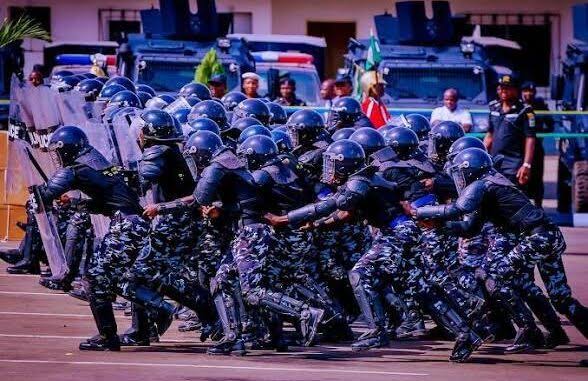
It also comes amid growing concerns over insecurity across the country, with terrorism, banditry, kidnapping, communal violence and other violent crimes intensifying demands for a policing structure that would enable state governments to respond more effectively to security threats within their territories.
Clerk to the National Assembly, Kamoru Ogunlana, who announced the development in Abuja yesterday, disclosed that his office had completed the verification of resolutions transmitted by the 36 State Houses of Assembly, confirming that the bill had secured 100 per cent endorsement, far exceeding the two-thirds requirement stipulated under Section 9(2) of the Constitution.
“The Clerk to the National Assembly wishes to announce that all the thirty-six (36) State Houses of Assembly have approved ‘A Bill for an Act to Alter the Constitution of the Federal Republic of Nigeria, 1999 to Provide for the Establishment of State Police Services and for related Matters.
“This represents one hundred per cent endorsement by the State Houses of Assembly, which exceeds the threshold of twenty-four (24), provided under Section 9(2) of the Constitution (as amended),” he said.
The announcement came a day after Senate Leader, Opeyemi Bamidele, disclosed that 32 state assemblies had formally endorsed the proposal, while four others were expected to communicate their decisions before the National Assembly resumed plenary today.
Subsequent reports indicated that the number of approvals had risen to 34, leaving Cross River and Niger as the last two states yet to complete the process.
Bamidele had maintained that the National Assembly would proceed with the constitutional amendment process once the deadline elapsed, regardless of whether the outstanding states submitted their resolutions, since the bill had already met the constitutional threshold for approval.
However, Ogunlana’s announcement effectively removed the uncertainty surrounding the outstanding resolutions and gave the proposed amendment the backing of every state legislature in the federation.
The clerk explained that although the bill had earlier satisfied the constitutional and administrative requirements for transmission, the leadership of the National Assembly deliberately withheld the process to allow wider consultations and ensure that all states were carried along.
“It is important to note that the Bill had long satisfied all the constitutional and administrative requirements for transmission as prescribed by the Constitution and the Acts Authentication Act Cap. A2, Laws of the Federation of Nigeria, 2004, but the Leadership of the National Assembly directed a brief delay of transmission to allow for broader national consensus and engagement of all the States of the Federation.”
Ogunlana described the unanimous approval as an unprecedented demonstration of cooperation between the federal and state legislatures, as well as the executive arms of government at both levels, stressing that the achievement underscored the importance of consensus-building in constitutional reforms.
“The unanimous endorsement of the Bill is an unprecedented demonstration of synergy between the National Assembly and the State Houses of Assembly, as well as constructive cooperation between Executive Arms of government at both Federal and State levels.”
He added that the successful conclusion of the process would provide fresh momentum for other proposed alterations to the Constitution being pursued under the Sixth Constitution Alteration exercise.
“This achievement serves as a foundation for the National Assembly to complete and transmit the other Sixth Constitution Alteration Bills to the State Houses of Assembly for their consideration as soon as possible.”
The clerk commended the 36 state governors, Speakers and members of the State Houses of Assembly, as well as other stakeholders, for their cooperation and commitment to the constitutional amendment process.
The state police bill had earlier passed through the National Assembly before being transmitted to the state legislatures for concurrence, as required under the constitutional amendment procedure.
The Senate approved the proposal on June 24, 2026, while the House of Representatives followed on July 23, with the bill subsequently transmitted to the 36 state legislatures on September 16. Although the assemblies were initially expected to communicate their resolutions within 30 days, the consultation period was extended as the National Assembly sought to secure broader support for the reform.
By early November, the bill had already crossed the constitutional threshold of 24 states, with the number of approvals rising steadily until the final unanimous endorsement announced on Monday. The development marks a significant milestone in the campaign for state police, which has remained one of the most contentious issues in Nigeria’s constitutional and security reform discourse since the return to democratic rule in 1999.
Other News
Under the existing constitutional arrangement, policing is principally a federal responsibility, with Section 214 of the 1999 Constitution establishing the Nigeria Police Force and prohibiting the creation of another police force for the federation or any part of it, except as otherwise provided by the Constitution.
The centralised arrangement has long generated controversy, particularly because state governors, although commonly described as chief security officers of their states, exercise limited operational control over police formations deployed within their jurisdictions.
Successive governors have complained that the arrangement undermines their ability to respond promptly to security emergencies, especially in rural communities where police presence is inadequate and reinforcements often depend on decisions taken through federal command structures.
Advocates of state policing have consequently argued that Nigeria’s size, population, diversity and increasingly complex security challenges make a centrally controlled policing system insufficient to meet the country’s internal security needs.
They maintain that state police would strengthen intelligence gathering, improve community participation in crime prevention and enable law enforcement personnel familiar with local languages, geography and social conditions to respond more effectively to threats.
The agitation gathered greater momentum as insecurity spread across the country, with insurgency in the North-East, banditry and mass kidnappings in the North-West, farmer-herder conflicts in the North-Central region and violent attacks in several southern states exposing gaps in existing security arrangements.
The security challenges prompted some state governments to establish complementary security organisations, including the Western Nigeria Security Network, popularly known as Amotekun, and other state-backed vigilante and neighbourhood security outfits.
However, these organisations operate within legal limits that distinguish them from fully constituted police services, reinforcing demands for a constitutional framework that would give states clearly defined policing powers.
The clamour for state police has also featured prominently in successive national conferences, constitutional review exercises and debates over restructuring, devolution of powers and the proper operation of Nigeria’s federal system.
Despite growing support, the proposal has encountered sustained opposition from stakeholders concerned that state governors could deploy police formations under their control to intimidate political opponents, suppress dissent, manipulate elections or pursue partisan interests.
Others have questioned the financial capacity of some states to maintain professional police services, particularly where governments struggle to meet existing salary, pension and other recurrent obligations.
Concerns have also been raised over recruitment standards, training, funding, command structures, jurisdictional boundaries, disciplinary procedures and the relationship between federal and state police institutions.
These reservations have informed demands for strong constitutional safeguards, independent oversight mechanisms, transparent recruitment processes and clear provisions to prevent political interference in police operations.
President Bola Tinubu has previously expressed support for the establishment of state police as part of broader efforts to strengthen Nigeria’s internal security architecture and improve the protection of lives and property.
The Federal Government has also been working on complementary legislation intended to provide the institutional and operational framework for the proposed policing arrangement.
A Presidential Working Group on the National Policing Bill, chaired by Chief of Staff to the President, Femi Gbajabiamila, had submitted a draft National Policing Bill, 2026, alongside consequential amendment proposals for further legislative consideration.
The proposed framework is expected to address critical issues relating to the powers, responsibilities, funding, supervision, accountability and coordination of federal and state police services.
With all 36 state legislatures now endorsing the constitutional amendment, attention has shifted to the National Assembly, which is expected to conclude the remaining legislative formalities and advance the bill towards completion.
The unanimous approval has given the proposed reform an unusually broad political consensus, reflecting growing recognition among federal and state authorities of the need to reconsider the country’s policing structure in the face of persistent security challenges.
For proponents of decentralised policing, the development represents the culmination of years of advocacy and constitutional debate over the distribution of security responsibilities in a federal system.
However, the ultimate test of the reform will lie in the safeguards established to prevent abuse, the capacity of states to fund and manage professional police institutions and the effectiveness of arrangements for cooperation between federal and state security agencies.
If successfully concluded and implemented, the constitutional amendment would fundamentally alter Nigeria’s policing architecture, ending the existing constitutional restriction on state-established police services and creating a new framework for shared responsibility in the maintenance of law and order.